Feature: Ripple Effect
Carrie Vaughn’s story The Evening of Their Span of Days is one of those featured in Jonathan Strahan’s new collection for Solaris, Infinity Wars, and here she explains its very […]



Carrie Vaughn’s story The Evening of Their Span of Days is one of those featured in Jonathan Strahan’s new collection for Solaris, Infinity Wars, and here she explains its very […]
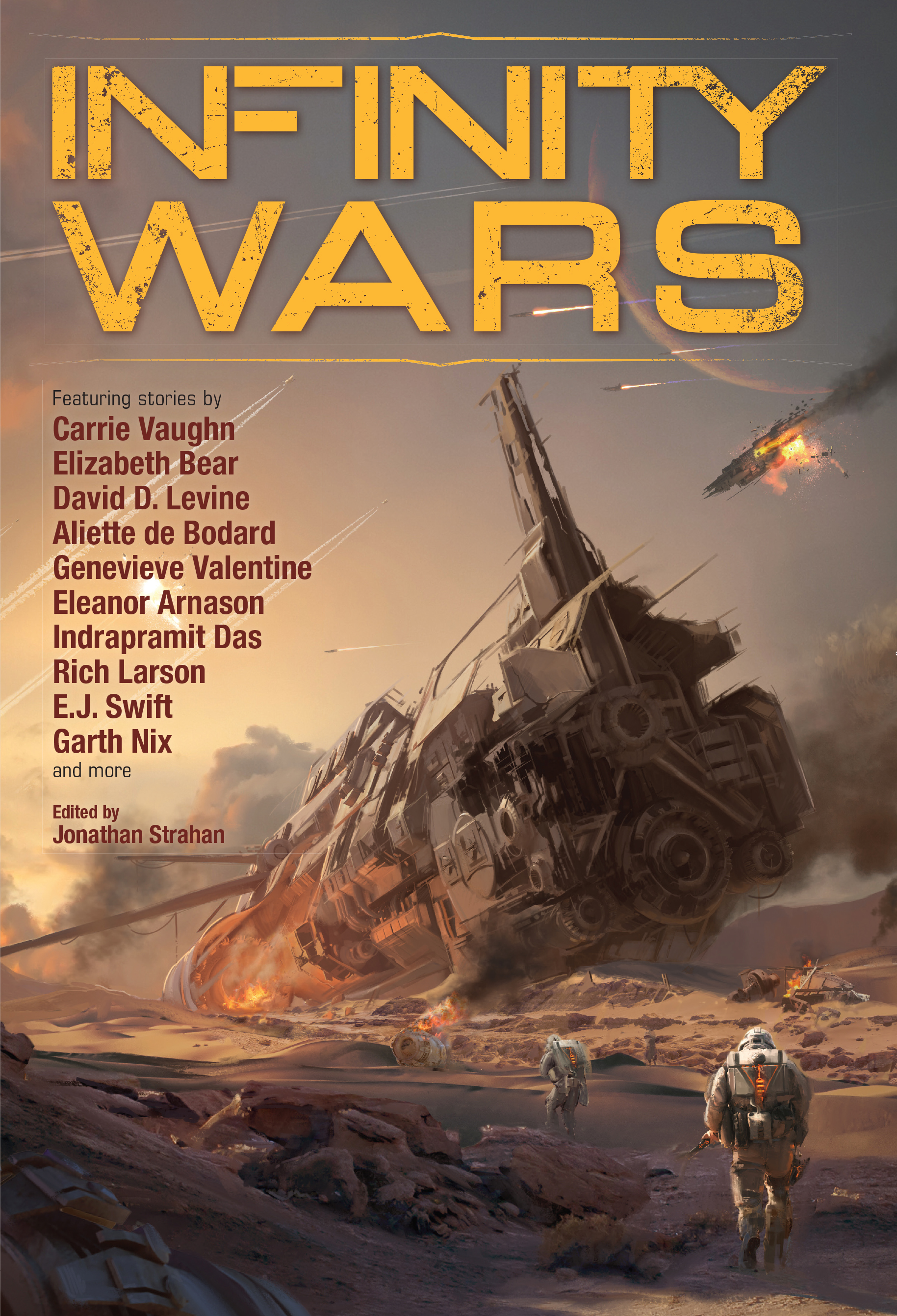 Carrie Vaughn’s story The Evening of Their Span of Days is one of those featured in Jonathan Strahan’s new collection for Solaris, Infinity Wars, and here she explains its very personal roots…
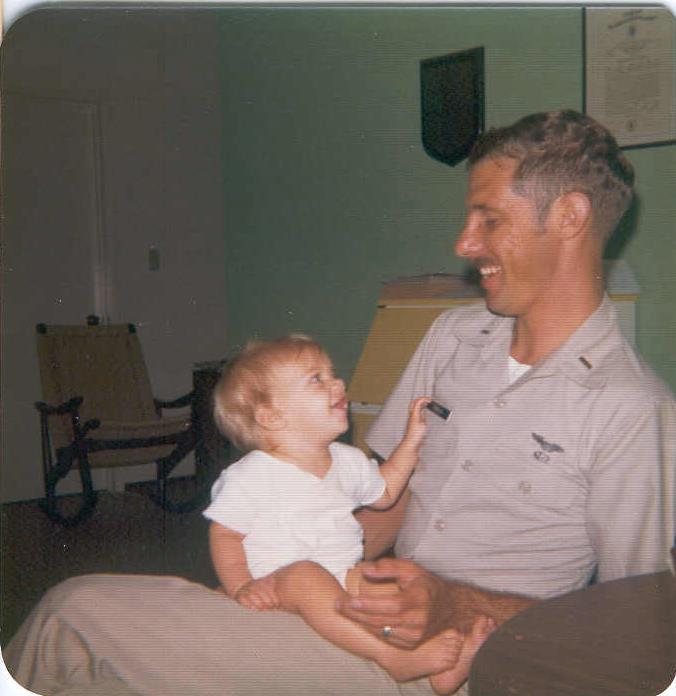
On the day I was born, my father was fighting in a war halfway around the world.
I have a different perspective on war, from growing up in the military. While the stories of generals and soldiers, of tactical details and strategic overviews, the back and forth of weapons and fighting usually occupy center stage, I like to look at the ripples. The effects that wars have on everything else. On families, of course. But also on the logistics and bureaucracies that make war possible. On the aftermaths of the great forces of history that roll over millions of individuals. Millions of stories, really. I like these stories because they resemble my own experiences. History remembers battles. But I’ve seen firsthand how history has impacted my own family.
 Dad spent the first few years of his Air Force career as a B-52 pilot stationed at Mather Air Force Base. His transfer to Guam in early summer 1972, to fly combat missions in southeast Asia, was abrupt. The squadron got notice Saturday evening, and were flying to Guam on Sunday afternoon. Mom recently told me a story about that day (this is why I’m constantly asking my parents about this, because they always reveal something new): Sunday morning, the squadron brought in a room full of lawyers to meet with all the families at once, to sign powers of attorney, make sure bank accounts were squared away — and also wills, I imagine — so that the wives would be able to keep their lives going as smoothly as possible. I picture my mother there, just shy of twenty-two years old, having just found out she was pregnant with their first child (me), confronting that administrative onslaught. On the one hand, this shows a lot of foresight and care paid to military dependents. But I put myself in that room full of lawyers and young families, and the image horrifies me. It’s war pressed into quiet, practical bureaucracy. The tightly wound tension that must have been there, the ruthlessly suppressed grief, anger, unhappiness – it happened forty-five years ago and I was embryonic at the time, but I can still just about feel it. The thing about being a military family is you’re part of the effort, in a support role. You have to be brave, you have to not cause trouble. You put on a good front, and keep your emotions buried. The phrase “war stories” conjures one kind of image for most people. But my imagination always goes to the women giving birth to children who might never know their fathers.
 Another detail of my dad’s deployment always jumps out at me, which is that his squadron wasn’t technically deployed. They were TDY–“temporary duty.” This meant that technically, their transfer to Guam was temporary and didn’t trigger all of the official procedures that happens to military personnel and their families when a true deployment happens. I imagine it saved the Air Force some money and paperwork, for all the heartache it caused. Because really, they were deployed. They racked up combat hours. Bureaucratic sleight-of-hand didn’t change that. (This was all part of Operation Arc Light, for those interested in more details.)
On the other hand, it also meant Dad was able to hop on a plane and come visit me pretty soon after I was born, rather than having to wait months and months for the mission to end. Funny, how these things play out.
All of this goes a little way to explaining why, when Jonathan Strahan asked me to write a story for Infinity Wars, I went in a completely different direction than he was likely expecting. In “The Evening of Their Span of Days,” I didn’t write about soldiers or combat. I didn’t write about an army. I didn’t really write about the military at all. But I did write about what happens when war comes to people who don’t expect it. Or to people who do expect it but must live as if they don’t, if they are to function day-to-day.
For Infinity Wars, authors had to imagine war in the future, altered by time, technology, by changes we haven’t even imagined. By the unforeseeable. But I followed the old adage to write about what I know, and what I know is what war looks like on the outside, but adjacent. What the ripples do. I wrote about someone getting swallowed up by events bigger than herself, and rising to the occasion, whatever that entails.
War does that, engulfs whole societies whether they recognize it at the time or not. I don’t think the future will change that.
Infinity Wars is available now from Solaris Books.
 Doctor Who News Star Trek News
 Sci-Fi Bulletin: Exploring the Universes of SF, Fantasy, Horror and Spy-fi!