Feature: A Letter to Past Me about Sequels
Stephen Cox’s new novel Our Child of Two Worlds is out today from Quercus, and in this short piece, he briefs his earlier selfabout the challenges of penning a sequel… […]



Stephen Cox’s new novel Our Child of Two Worlds is out today from Quercus, and in this short piece, he briefs his earlier selfabout the challenges of penning a sequel… […]
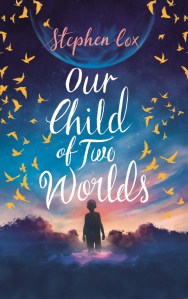 Stephen Cox’s new novel Our Child of Two Worlds is out today from Quercus, and in this short piece, he briefs his earlier selfabout the challenges of penning a sequel…
Hi 2018 me!
Our Child of the Stars is about to hit the world and it’s going to get lovely reviews.
Here’s what you need to know about writing the sequel. I hope to spare you a lot of wandering around in the first couple of drafts.
One issue is what bands call the Tricky Second Album. You spend five or ten years pouring your life and craft into the first album. It is a success, and suddenly the label wants a second album in nine months! and a six-month live tour! and the one thing gripping your mind is that if it’s even a little less original, all your new fans will be disappointed. Books are often the same.
Are sequels different from all other books?
A sequel has no inherent right to exist. The good news is, a sequel is still a novel and it doesn’t need some radical new technique to write. It needs narrative structure, themes, character arcs, its own definition of plausible, etc. The sequel has backstory from three places – the universe created for the first book + plus the first book + whatever else needs to be added.
Who does it centre?
For some stories this might be complicated. Or it might be a free choice to move some characters into the limelight and others out of it. With ours, it’s simple – people want to know what happens next to Molly, Gene and Cory as the main course, with some ‘what happens to the world?’ needed around it.
What narrative questions must be answered by the book?
 Look, lots of interesting stuff might happen. But a book needs more coherence than that.
In Our Child of the Stars, it was ‘How can Molly and Gene keep Cory safe unless they keep him a secret?’ That pulls the whole thing together – from first chapter right until the ending.
Our Child of the Stars finishes with Cory not being a secret – we can see how he might be safe for a while. What questions drive the second book?
It is a book about the family. These simply must be questions involving the family or at least seen through their eyes.
One question is totally set up by the end of first book. Cory’s people haven’t come to rescue him. Will they come and what happens if they do? Or will it be danger that comes from the stars?
In your thinking about the first book, you sketched two sorts of endings – where his people come, and where they don’t. In your heart, you’ve already decided between them.
What’s the focus?
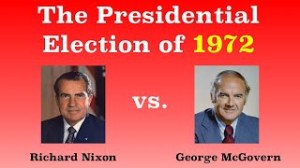
There’s just so much that would happen. Aliens are real! How would commercial America respond, or other world leaders? The 1972 Presidential election, children. Madison Avenue, haute couture, organised crime, the intellectuals… How would it affect the Cold War, civil rights, the environment? You could write stories or chapters or threads about all of these.
What readers asked for, and what you’re interested in, is ‘what happens to the family next?’ You can weave that other stuff in.
Must every character with a lot of airtime in the first book get it in the second?
That depends on the focus. Characters need stuff to do to pay a significant role. I know you want to develop the family’ friends more, but their airtime needs to matter for the whole book.
Where do you start?
 Look, this is a big one and you need to get it right. A sequel is a book, and it deserves a strong start.
Mate, you’re making the exact same mistake you made with the Great Unpublished Novel! Remember cutting the first 19,000 words because it was fun to write, and fun to know, but wasn’t necessary? You started the book in the wrong place.
You like the ending of Our Child of the Stars, and the Coda – a chapter set a few months later allowing the first ending to settle down.
For some books, sequels can start at the next murder case, or the next secret mission, or the next school term. Ged is a lot older in the second Earthsea book – he doesn’t appear until half-way through. Dumas went Twenty Years Later for the Three Musketeers – Aldiss centuries later for Helliconia.
Bite the bullet – don’t give the full story of how the Myers got between the end of the last chapter to the Coda. You can treat all that stuff as useful backstory to drop in.
Start after the Coda when all is new, and when things can be knocked off their courses.
Upturning certainties
First book – defeat the first monster. Second book – defeat a bigger second monster. Sequels can easily feel samey. It’s true that the stakes need to seem bigger. Those are two good reasons why some sort of significant change – a reversal, a dramatic change in understanding, losing something they took for granted – puts the same characters through something different. Gareth Powell points out that The Empire Strikes Back needs to start with a Rebel Alliance defeat. But that’s not the only reversal in that film, just the first one.
Ask yourself, why is book two more than another episode?
***
That’s enough to get on with. Good luck. And buy masks. There’s going to be this pandemic…
Stephen 2022
 Doctor Who News Star Trek News
 Sci-Fi Bulletin: Exploring the Universes of SF, Fantasy, Horror and Spy-fi!