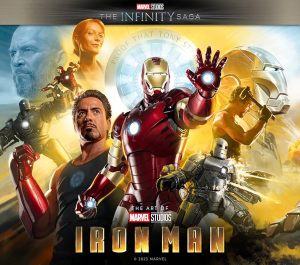
Review: Iron Man: The Infinity Saga 1: The Art of Iron Man
Written by John Rhett Thomas Titan Books Behind the scenes on the movie that started it all… Titan’s decision to reissue the Art of books for the MCU to date […]



Written by John Rhett Thomas Titan Books Behind the scenes on the movie that started it all… Titan’s decision to reissue the Art of books for the MCU to date […]
 Written by John Rhett Thomas
Titan Books
Behind the scenes on the movie that started it all…
Titan’s decision to reissue the Art of books for the MCU to date in a more affordable, and unified, format is a great chance to re-examine the movies and the concept of Art books themselves. I have a lot of these, regularly use them to dial in the tone for projects of my own, and also just enjoy reading about other people’s creative processes. Movies, like all big creative endeavours, tend to get created at a dead sprint and a good Art book will tell you as much about the roads not travelled as the one they went with. As well as being crammed full of beautiful production art of course.
This is an exceptionally good art book. John Rhett Thomas’ style is the sort of invisible mending that a project like this demands, highlighting each part of the process and the voices behind it but always keeping their insights on point and heading to the same location. The most interesting process insights here speak to that. Iron Man was a production that was in flux until production, and the re-shoots (a word that strikes fear into film enthusiasts) led to some of the movie’s most iconic moments. There’s some particularly interesting stuff about the practicalities of Tony Stark getting into, and out of, the suit. The exact nature of that process dictated the design of the suit, and in turn led to the cheerfully burly practicality of the Mark II in particular. It also speaks to the practical, grounded approach taken by the entire movie. The F-22 dog fight sequence embodies this: the sequence was actually shot with two real (non F-22 because oh boy are they expensive to rent). They were then digitally replaced by F-22s and Iron Man added in. Digital and real. Big and clever. All of it smart, all of it resourceful. The movie’s production process echoing and amplifying the frantic invention of the lead.
That invention is visible on every page. Adi Granov’s comic work is a vital part of the movie and there’s a great section exploring how Granov’s design influenced Iron Monger in particular. There’s some great points made here, design as character made explicit. I especially loved the offhand mention of how the Iron Man suit’s weapons are concealed because it isn’t just a piece of ordinance. Iron Monger’s are all on the surface because Obadiah Stane knows exactly who he is and owns that. You get this level of subtlety throughout, this level of parity between production and character too. Tony’s first arc reactor looks like it was built in a cave from scraps because… well… it was. The first version was designed from the ground up from available parts. Likewise the Mark 1, and the book does a fascinating job of showing us how the Mark 1 and the Stark weapons it’s derived from influenced each other’s design,
Verdict: Iron Man was, and remains, one of the highlights of the MCU. A book like this reminds you, as we all need to be, of the fact that making any art is incredibly difficult, and making art like this is almost impossible. This book is a testament to how impressive, and vast, the work behind it is. It’s hugely impressive, and a great opportunity to revisit the movie, and the MCU as a whole. 10/10
Alasdair Stuart
 Doctor Who News Star Trek News
 Sci-Fi Bulletin: Exploring the Universes of SF, Fantasy, Horror and Spy-fi!