Interview: Greg Garrett (Living with the Living Dead)
With Fear the Walking Dead currently scaring viewers on AMC, and The Walking Dead set to return for an eighth season next month, the popularity of zombies doesn’t seem to […]



With Fear the Walking Dead currently scaring viewers on AMC, and The Walking Dead set to return for an eighth season next month, the popularity of zombies doesn’t seem to […]
 With Fear the Walking Dead currently scaring viewers on AMC, and The Walking Dead set to return for an eighth season next month, the popularity of zombies doesn’t seem to be diminishing. Greg Garrett, Professor of English at Baylor University, is the author or co-author of twenty books of fiction, nonfiction, and memoir, and (according to BBC Radio), one of America’s leading voices on religion and culture. His book Living with the Living Dead was recently published by OUP, and to mark the occasion, he chatted on Skype with Paul Simpson about all things living, dead, and undead…
Zombies and Christianity don’t feel like a natural mix; what piqued your interest? Was it one particular film?
Actually it was an experience I had a couple of times while I was researching my book earlier book for Oxford on the afterlife, Entertaining Judgment. There is a section in that book about the undead, and in a way Living with the Living Dead is a sort of sequel to that book.
E ntertaining Judgment is about narratives about what happens to us after we die, how we put together these stories, whether from our faith traditions or from literature, or pop culture or art. As I was talking about the zombie phenomenon in a couple of places – the two that come to mind immediately are Magdalene College Cambridge and the American Library in Paris, independently of each other, some hundreds of miles apart – I had audience members come up to me and ask about a book that they had read by the philosopher Alain de Botton called Religion for Atheists.
In that book he talks about how all human beings are spiritual creatures even though we’re not all religious creatures, and he explores the kinds of spiritual needs that people have that even atheists need to explore and find a way to incorporate. The questioners at these lectures asked me if it is possible that people are using these stories of the zombie apocalypse as some sort of way to find meaning, some way to explore their lives and understand where they fit in the cosmic scheme of things.
My answer in both cases was “yes, absolutely” because that’s what we do with stories. It’s been my focus for the last ten years, particularly since I went to seminary, to think about how the stories that we live by in some ways help us to make meaning of what we’re doing here and how we fit in the cosmos.
That was what led me in the direction of asking: “What is it about the zombie apocalypse narrative that has made it such an important story for us at this moment?” The story has never been so popular as it is now, and you can look at not just the genesis for it in 1968 with Night of the Living Dead but a resurgence of the story after 9/11. For me, somebody who explores story and meaning, the question largely was “Why this story at these particular times?”
That for me was the really interesting part and I’m not, as I confess in the book, a huge zombie fan. There are some of these stories that I am very fond of but if I sit down on a Saturday night and pick a movie off of Netflix or out of my DVD stack it’s probably not going to be a zombie movie.
It does feel sometimes that you’re coming at this as an outsider – was that a conscious decision not to look at it as a fan and be more objective?
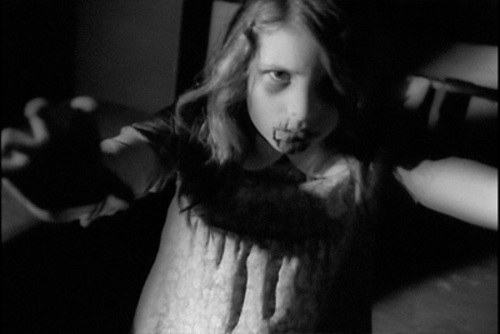 Yes and no! One of the things that I have done with all of these books that I have written about literature and culture – and there are probably a dozen or more now – is that I have to explore my own reaction because that’s the one that I know best. Henry David Thoreau in Walden says early on “I wouldn’t talk so much about myself if there was anybody else I knew as well”, and so your own personal response is often a powerful one. For example the George Romero films, I don’t think of them as my favourite examples of this, even though they’re monumental and ground-breaking but I had some powerful and even visceral reactions to the scenes in Night of the Living Dead when the little girl comes back to life and eats her father and kills her mother. I had a powerful reaction and everybody I’ve ever talked to who has ever seen that movie has had a powerful reaction to it.
There are also some also really stirring moments in some of these films. There are moments of affirmation, life-affirmation in things like Shaun of the Dead, Zombieland, The Road, where I had this very powerful reaction of, “Yes this is what I want life to be like. I would like to live in this reality that is being expressed by these characters and the way they’re living at this moment.”
 Being a person who is not fanatical about the zombie tradition did give me the opportunity to identify with what I imagine to be a large number of readers. As I’ve talked about this book over the last few weeks there have been some people who have been rabid fans who’ve said they love this book because they love zombies and feel they understand them better. And there have been others, including some dear friends of mine, who from the outset have been saying, “I do not understand why you are spending your valuable time talking about zombies” And for those people as well as the fans, I wanted to be able to explain why this phenomenon matters, why Game of Thrones is the most popular television narrative on the planet, why The Walking Dead has previously been, and why we have this wave of games and novels –hundreds and thousands of products on Amazon relating to zombies.
I wanted to be able to step back and say, “I understand. For someone who is not 18 years old, and who doesn’t necessarily like a daily dose of gore in my life, I can see you might wonder why anyone might think about this. But here’s what I’ve discovered, and I think you’ll agree with me this is a phenomenon worth our attention.”
There’s no real Ur-text for zombies, unlike vampires with Dracula. People can say, in our universe these are the rules. Does that make it harder to generalise and draw conclusions?
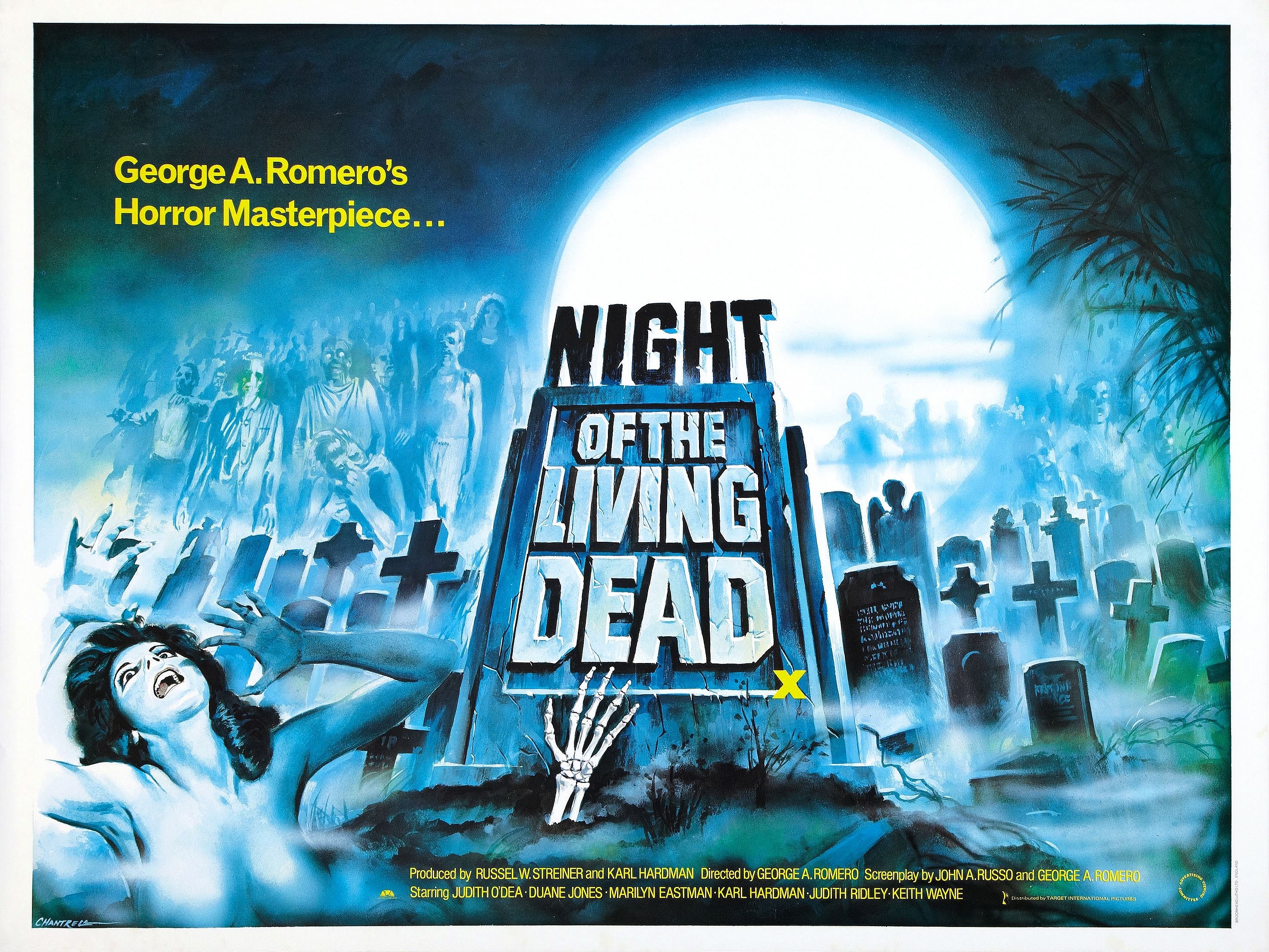 True, there’s not a Stoker vampire and a set-in-stone canon. I think the closest we come now would be the work of Max Brooks. In The Zombie Survival Guide and the novel World War Z, I think he is codifying what the zombie looks like in today’s world. He’s taken some bits from Romero and tried to add some pseudo-science to the mythology to explain all of this. Much as I admire Romero, it’s a hodgepodge: he’s putting together the ghoul legend from Eastern Europe, the zombi legend from the Caribbean, and the situation from Richard Matheson’s I Am Legend. All of these things are coming together and he’s doing it on the fly. It’s not that they sat down and said “We’re going to create a legend for the modern age.” This was a story that they put together and it worked, and much of it has worked for other people as they have put together their own zombie mythos.
 But Brooks was consciously bringing things together?
If you look at The Zombie Survival Guide, a whole bunch of that is about “Why are they zombies, how do they operate?” The question I’ve gotten asked more than once is “How do zombies work?” and I have to say, “I don’t know, they just do.” For Brooks to look at the anatomy and try to explain it, in the context of this narrative, it’s a noble thing he’s trying to do. To clean up the loose ends and say, “I’m going to give you a zombie mythos and a zombie history” – he talks about outbreaks in the history of humankind – “and by the time I’ve done with this, we’ve got a handbook which tells you everything you need to know about zombies and how to survive them, and we’ve got a dramatic work that takes this world that I’ve built for you and put to good use.” I think World War Z is a really fine novel – I’ve read it probably five or six times in the last couple of years and get really drawn into it each time.
Most people now of course think of the movie, not the novel…
It’s not what the novel sets out to be; it’s a big budget blockbuster that uses the zombie apocalypse as a backdrop, but it’s really unsatisfying if you really like the novel, as I do.
 You use The Road a lot in the book – but that’s not a zombie novel. It’s a bleak post-apocalyptic tale: I found it interesting you use it so much in a book about zombies…
I am very well aware that there are no supernatural zombies in The Road, but the reason I chose it was it operates in the same way as these other stories do.
What for me is the determining thing is one of the interviews I did with Angela Kang, one of the writers and executive producers of The Walking Dead. She was reminding me The Walking Dead is not about zombies but about the human beings who encounter them and survive them and what those human beings are willing to do to survive. One of the things that echoed was that “the monsters in our show are not the zombies, they’re human beings.”
One of the things I wanted to explore, particularly in that long chapter on ethics where The Road makes its most significant appearance, is: in this post-apocalyptic world where in a sense it’s eat or be eaten, what do human beings do to survive, to protect the people they love, to protect their communities, and in what ways do those choices resonate with our choices in the post-9/11 West. What is it that we can learn as people living in this world of threat from these people living in this world of threat that they’re experiencing?
I do try to acknowledge that this is not a classical zombie story and the people who are trying to eat other people are people, but in terms of the narrative situation and the ethical dilemmas being faced by the man and the boy in that story, what we are looking at is the same thing we’re finding in 28 Days Later, the same kind of thing in The Walking Dead. It is such a powerfully written version of the story that I wanted to spend some time in it. It really does a beautiful job artistically wrestling with the dilemmas that we face.
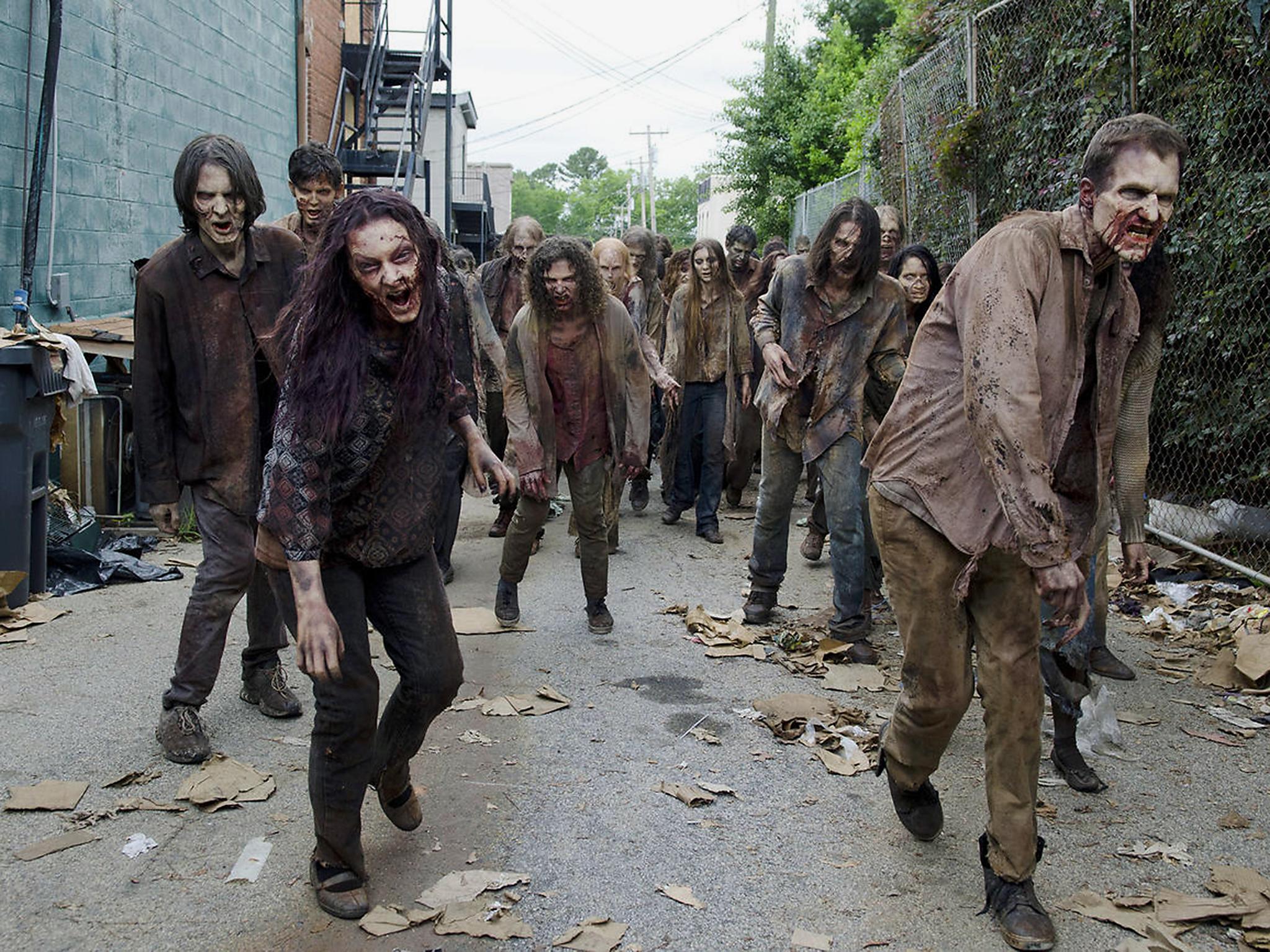 There are lot of other books that use that backdrop for a tale of good vs. evil – such as The Stand.
The Stand was one that had occurred to me, and I’ve been rereading Stephen King this summer. But what I did with this book was very different from the afterlife book – I pared it down, so the number of texts I deal with is pretty small compared to the radically large number that are out there. It was a really conscious decision that rather than talk about hundreds or thousands of things – as I did in the afterlife book – I wanted to come back to the core texts, particularly for that second group of readers I talked about earlier who are not drawn to zombie stories. It’s The Walking Dead, Game of Thrones, the Romero films – because you can’t not talk about them even though they’ve been talked about a lot – and a handful of other things, so people who are not familiar with the zombie mythos get exposure in some detail to these particular stories that I think are significant and I think are worth knowing about.
You discuss the Biblical references; do you think the creators of the zombie myth drew from these?
 I think it’s the sort of archetypal image or story that we have going way back in human history – that passage in Zechariah, the passage in Ezekiel with the dry bones taking on their flesh, that almost disturbing passage from the Gospels where the dead get up and wander around outside their graves…
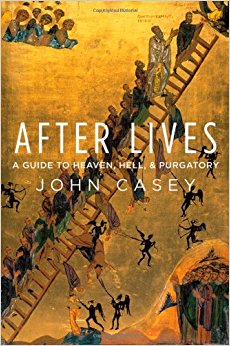
There is a great book by John Casey called After Lives which is also from OUP. One of the most fascinating things he records is that as far back as we have records of funerary practices, it is very clear that in these earliest graves, the humans are not primarily honouring the dead, they’re trying to make sure the dead don’t get up and come back! Thinking about that in our earliest prehistory, and the other occasions in our art and culture where death gets up and walks around, where we’re presented with corpses or cadavers or embodied Death, it seems apparent to me that that is one of the archetypal images of “Wow the world is really messed up and the boundaries between life and death are fluid. This is a really scary thing to think about.”
I think the biblical references to things like that are powerful because in some ways they seem to be hardwired into us as living creatures who want to make sure that we stay where we are and they stay where they are, and when that is not happening it’s usually a sign that something is awry in the larger cosmos.
 What was the most surprising aspect to this?
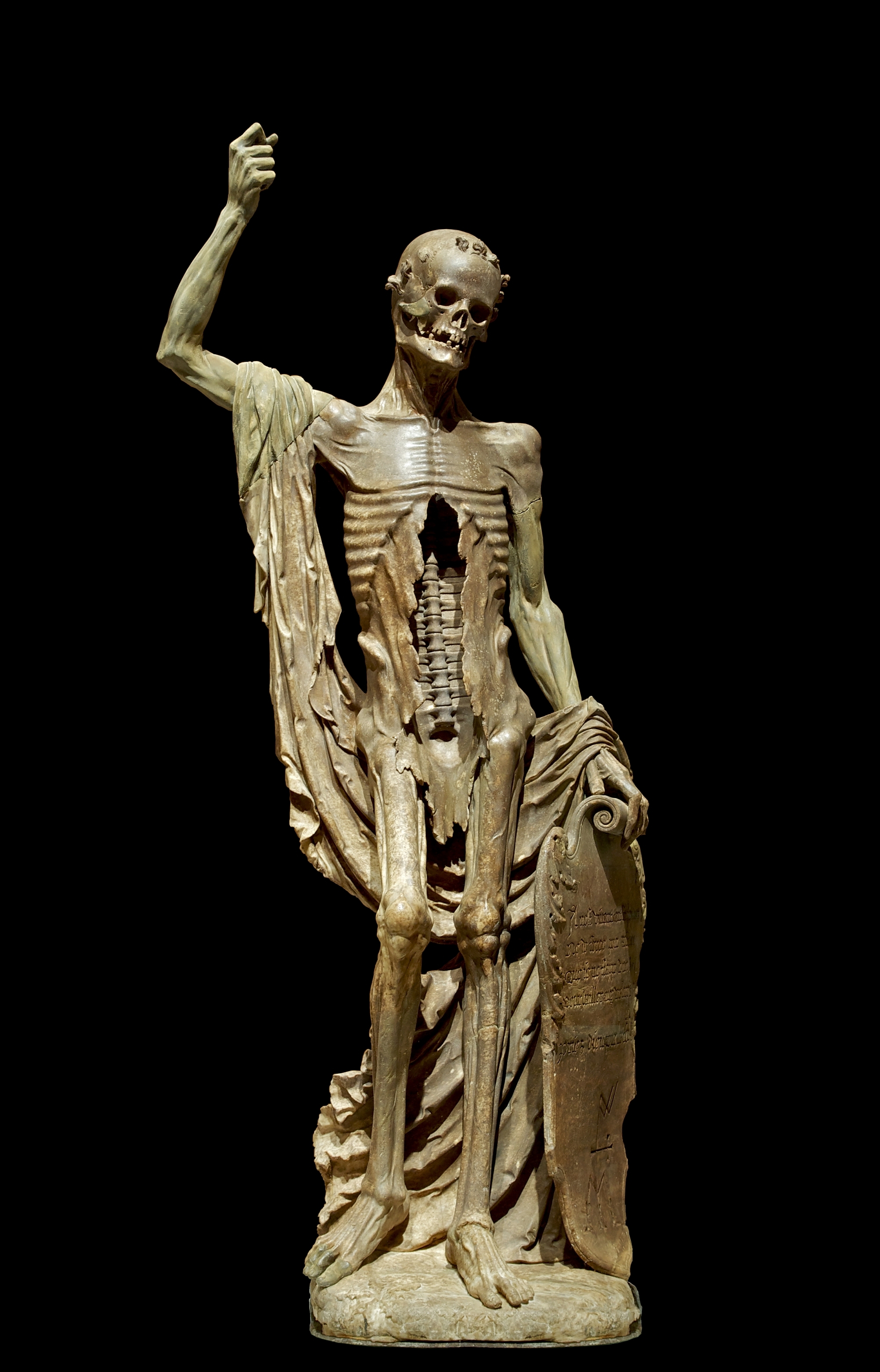
I think the most surprising thing was in Paris. I talk in the book about the tradition of the memento mori: statues and verse that remind their readers and viewers that although they are alive now, later on they will be like the person memorialised in the gravestone or the verse – they will be dead. I was looking at those funerary sculptures that were powerful and disturbing in the Louvre and then I walked around this corner and there was this bronze statue of Death.
I had not expected to see it there. I had read about this statue: it used to stand in the Cemetery of the Innocents in Paris, now dismantled and the bones off to the catacombs below Paris. This was a focal point of my research and I had not realised it was going to be on display.
To run into it was startling. This bronze statue stands arm raised – originally I think it held a spear to strike down the living – and it honestly looks like a third season zombie from The Walking Dead, that sort of level of decrepitude. Like a bunch of other images that I found in Medieval art, if you squint just the tiniest bit, that vision of embodied Death is the zombie that we’re running from in every TV show or movie.
I walked around it, took it in from every angle and thought, “This is a really powerful image for us”, and I think that was the point where my scholarly inquiry into the fact that the dead have gotten up and walked around in art and literature before got melded with the current project. I looked at that thing and thought, “Five hundred years ago people were looking up at this statue, they were surrounded by the most renowned fresco of the Danse Macabre from the Middle Ages, they were surrounded by bones and skulls stacked up to the ceiling, and for some reason they got some comfort from that. That must be what is going on in our zombie stories as well.”
 That’s actually what Max Brooks and other people say: there’s this catharsis that takes place when we come face to face with death, and then we walk out of that room, or close the book or turn off the television, because whatever those zombies have stood in for, whatever fears and menaces, for the moment they’re managed. Tomorrow we’ll take up our tasks again but we can put them down, go to sleep and have that experience of saying, “I was scared, I was reminded of my mortality – but at least the dead are not actually walking…”
We put this skin of fiction around it…
That’s a lovely way to put it – we put a skin of fiction around it and are thus able in some way consciously or unconsciously, to cope with that dizzying array of fears that we’re confronted with in our 24/7 news cycle.
Living with the Living Dead is available now from Oxford University Press; thanks to Anna Gell for her help in arranging this interview
 Doctor Who News Star Trek News
 Sci-Fi Bulletin: Exploring the Universes of SF, Fantasy, Horror and Spy-fi!