Interview: Richard Chizmar (2019)
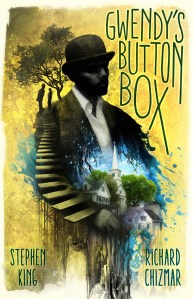
Richard Chizmar’s latest novel, Gwendy’s Magic Feather, continues the sequence featuring Gwendy Peterson begun in Gwendy’s Button Box, the novella he co-wrote with Stephen King. The book picks up Gwendy’s […]



Richard Chizmar’s latest novel, Gwendy’s Magic Feather, continues the sequence featuring Gwendy Peterson begun in Gwendy’s Button Box, the novella he co-wrote with Stephen King. The book picks up Gwendy’s […]
 Richard Chizmar’s latest novel, Gwendy’s Magic Feather, continues the sequence featuring Gwendy Peterson begun in Gwendy’s Button Box, the novella he co-wrote with Stephen King. The book picks up Gwendy’s story at the end of the 20th century following her from her job in Washington, DC, back to the little town of Castle Rock. Paul Simpson caught up with Chizmar to ask about the genesis of the latest tale…
Evidently the reaction to Gwendy’s Button Box was strong enough to warrant a sequel, but what surprised you about the reaction to the first story?
I guess because of the way Steve and I approached this story, we had no set plans for it when I picked up his partial story and ran with it. I think he originally designed it to be a short story, so when I started writing it we had no idea if it would be a short story, a novella, a novel, a novelette… It wasn’t till we were finished and saw the length that we decided to publish it similarly to how we had published Blockade Billy from Steve through the press [Cemetery Dance] and do a little hardcover.
I would say the biggest surprise was because it ended up being a decent length and published in book form that it reached a wide audience. Neither one of us expected Gwendy’s story to be a New York Times bestseller or sell to almost 20 different countries around the world. People responded well to her and it ended up having such a wide reach.
 What did people respond to, do you think? Or was it different in different markets?
When people write to me about Gwendy it’s all about the character. They really like or fear the black box, they’re intrigued by Richard Ferris, and those RF initials of his, and they’re into and appreciate the plot of the story, but most of them focus on and care about Gwendy as a character.
I think it’s because we meet her as she’s about to enter middle school; she’s a adolescent girl with a normal everyday life, with insecurities about her weight and her complexion, her acne, her eyesight and having to wear glasses. And we followed her progression – it’s a coming of age story.
At its core, Gwendy is just a good person – she’s good but she’s not perfect as she’s shown – and I think people liked making that connection. They could relate with her, they either were her as a young girl or boy, or they knew someone like that and it made them invested in following her journey. Early feedback and early reviews of the second book say pretty much the same thing – they’ve enjoyed following her journey from adolescence to her late 30s, and seeing she’s a good person and still trying to do the right thing.
Did you ever discuss with Steve what might happen to Gwendy after the events of the first book, or did all that extrapolation come after its publication?
 It was all after – to be honest, when Steve sent me the first 25 pages of the first novella, Button Box, there was no discussion whatsoever about what might come next, no plot points. That was kind of the point – he didn’t know where it was going next, so he sent it my way. When we finished the book and people enjoyed it and called for a sequel, it was something he and I never really talked about. I know a reporter asked if he had plans to collaborate with me again, and he said, “no set plans on the schedule but no plans not to.” We never really discussed it.
How the second book came about: I went to bed one night after watching a news programme all about the diversity of the new representatives in Congress who had just been elected. I’m not a big politics person but it stuck in my head. I woke up the next morning and I knew what Gwendy had been doing with the next 15 years of her life. I emailed a little two or three sentence note to Steve that morning – “What if after a successful career as a writer, Gwendy is a newly elected member of Congress? Young, energetic, charismatic, like a lot of the members right now, and she returns to her office and the button box is sitting waiting for her, no explanation.” He loved the idea but he said, “Rich I’m busy with this book about Holly Gibney, but you should write this.” Until that email there was no real discussion; I had no other details other than that email – I had no idea how she got there.
With the first book being set back in the 1980s, there’s that potential to revisit. If Button Box had been set in 2016, you’d have been into serious realms of SF to take her forward to this age…
It wouldn’t have been that interesting if I was revisiting Gwendy after three or four years, but it’s a 15 year gap. I was curious myself – I think Steve said that in an article, he was curious to see what Gwendy had been doing.
 The political setup she encounters isn’t quite the political setup we know existed in 1999 – it seems a little more aimed at today.
A little more current, yeah. I tried not to hit the political stuff too heavy; I wanted to introduce a political landscape that was very difficult for Gwendy even with her enthusiasm and energy levels to combat and deal with.
I picture her almost a year in, getting ready to go back to Castle Rock for the holiday break, and she’s frustrated, feeling down, and some hopelessness. She went into this, as I’m sure many politicians do, thinking that she’s going to have a positive effect on what was going on around her, but she finds herself struggling.
Today’s political landscape certainly factored into that, but I tried to keep that in the background and while it casts a fairly large shadow with what’s going on overseas, and the President’s own personality traits, it stays there. That was key – I knew she started this story in Washington, but I wanted to get her home to Castle Rock for the vast majority of the story and that’s what interested me as a reader.
I did wonder if there might be hints that the button box was linked to 9/11 (as it was to Jonestown in the first book), but then the different president’s name showed you were charting a different history. Was that president present in one of Steve’s earlier books?
No, I just made him up. There was some discussion when the book sold to Simon & Schuster for paperback and audio and ebook rights, about whether we should [do that], because everything else was pretty accurate. I tried to look at that time period to see if the button box was responsible for something. But it was a symbolic presence, casting a big shadow.
 There are some lovely Easter eggs to other Castle Rock stories. Did you have to look those up, or have you been steeped in the Castle Rock world for so long that you knew what was happening – everyone’s still picking up from Needful Things etc.?
I knew most of the broad strokes – the Castle Rock strangler from The Dead Zone: I remembered his name, I didn’t remember the dates or who the sheriff was at that time. I mention what happened to Cujo, I talk quite a lot about Needful Things and reference the big fire at the end. People thought that there was no more Castle Rock but he brought that back with Gwendy.
Wasn’t Needful Things called The Last Castle Rock Story at one point?
Yes, it was. There’s a legend attached to [what happened in that story] and I put a statue in the middle of the common dedicated to the rebuilding after the fire. That was a lot of fun.
I didn’t want to nail it too directly, or have too much – just enough of a good thing. Bev Vincent, who’s a King expert and a very fine reader, helped me to get the facts straight – the dates, who was sheriff, who was deputy, who worked front desk at the sheriff’s department. It went through the Bev Vincent wringer to make sure I looked good.
 Gwendy’s relationship with her family – was that a key part of the story as it came, or did you have to work out how things panned out?
I definitely had to work it out. As I said, when I sent that original email to Steve, it was probably three sentences long. Even in my head I didn’t have a lot of the nuts and the bolts put together yet, and when he said go and write it, I was like, “Ok, now what?” I made a lot of notes longhand and I connected the dots a little bit, then I had a working outline, which I rarely do. The actual writing just poured out of me – I look back and I have no idea how I wrote these books. They came out of a different place inside of me and poured onto the page. I love writing about families and the family dynamic.
Once it was clear I wanted to take her back to Castle Rock, which was a day one thought, the holiday break was perfect. I researched what Congress does and they take a nice healthy few week break there around the December January holidays. I knew I would have a good period to take her home to Castle Rock and naturally the next thought was “What is waiting for her back there apart from her constituents? Are her parents still alive and kicking? What about her old friends? How many are here?” Her friend she does the PPA speech for is in Button Box, one she was playing board games with, and teasing her about being smart in school. There was a reference to a few others that had left town.
Her parents had taken a background role in the first book but I wanted to bring them to the forefront. We had painted in broad strokes what had happened with her writing and her film career. To me now it was time to slow down and show people what sort of person she was in the personal and the professional standpoint.
 And it’s now the second part of a trilogy…
That wasn’t something Steve and I discussed, but the audio company came to Simon & Schuster and asked if they could list it as a series book, “book 2”. They had to come to us for permission; they thought it would present marketing avenues for this book.
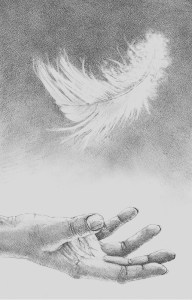
I said to Steve, “This is totally up to you, but we know Gwendy at college, and now in her late 30s, and have an idea of what she’s doing for the future. In the first book we talk about how when her time comes she is lying in bed, surrounded by her loved ones, and she’s looking out the window looking at the birds. We need to connect the dots and take her there. What do you think about a third one? Whether it’s me, you, both of us.”
He said “That’s fine with me.” So we went back and said “Make it a trilogy and book 3 will come one day.” Sooner than later, but my schedule is a mess for the next six months, and Steve’s for longer than that. We’ll figure out a time – the first book was written quickly, so if we can find a little hole, we’ll figure it out when the time comes.
What was Steve’s role in this – you say he did a strong editorial pass on it?
 He did. When I sent him that email he said he was going to be busy for the foreseeable future with Holly Gibney but I should write the first draft, and he’d come on board later. I was not expecting it to be just me – mild terror would have blossomed into sheer terror if I’d known it was going to be just me. But again the story poured out of me, but I thought, “Steve’s got my back, he’ll make it better”.
When I did send him the first draft, he read it fairly quickly, and I said, “Whenever you’re ready and it fits in your schedule.” He emailed me back and said “Rich, this is your story, this is all you.” He was complimentary about the story, and he’s said he fell in love with Gwendy all over again. I said I would never have presumed that, but he said, “No it’s all your story. If you want me to do a copy editing pass…”
He took a couple of weeks, and made notes on a copy of the manuscript (at that point it didn’t even have a title), and it was invaluable. It was so much fun and such a cool thing to happen just to have him go over it page by page. I have this wonderful keepsake. He made the book better, of course, and he cut some adverbs and told me, “Rich, we know this already” at various times when I was overexplaining. It was an amazing process and an amazing gift from him to do that for me.
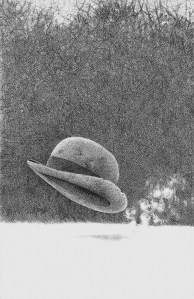
Gwendy’s Button Box and Gwendy’s Magic Feather are available from Cemetery Dance and from Hodder & Stoughton. Illustrations by Keith Minnion, used by kind permission.
 Doctor Who News Star Trek News
 Sci-Fi Bulletin: Exploring the Universes of SF, Fantasy, Horror and Spy-fi!