Interview: John Connolly (2021)
John Connolly’s latest novel The Nameless Ones is now out from Hodder. It focuses on Charlie Parker’s friends and allies Angel and Louis, who head to Europe seeking revenge. Set […]



John Connolly’s latest novel The Nameless Ones is now out from Hodder. It focuses on Charlie Parker’s friends and allies Angel and Louis, who head to Europe seeking revenge. Set […]
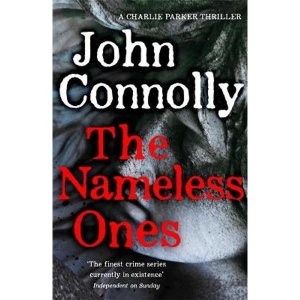 John Connolly’s latest novel The Nameless Ones is now out from Hodder. It focuses on Charlie Parker’s friends and allies Angel and Louis, who head to Europe seeking revenge. Set around the continent, it’s set against the backdrop of the Balkan Wars at the end of the 20th century. Paul Simpson caught up with him to discuss it and other projects…
There’s a change of pace and a very definite change of feel to The Nameless Ones, and there’s a much more human evil at the heart of it. When we meet the Vuksans, you realise that we’re not quite in Charlie Parker land… until, that is, we meet the little girl. It does feel almost as if you’ve changed tack and are writing more of a straight crime book. Where did this one come from?
I have a fondness for globe trotting thrillers. I had never written one and I thought that might be an interesting thing to do.
I had the opportunity to go to Vienna and I thought while I was in Vienna I would take the opportunity to go to Serbia and see if the idea that I had for the book would work. I had started it but I hadn’t progressed very far with it at that stage.
I was just curious about that period in history back – the great failure of the western powers to stop this dreadful echo of the Second World War, which essentially was what it was. It was the settling of scores from the 1940s.
 Then we suddenly ended up being locked indoors and I thought writing a globe trotting thriller where people just hopped on planes willy nilly without a care in the world actually seemed like a nice piece of escapism. Sometimes people can be snooty about escapism but in fact when you’re in a difficult situation nothing is better than a book that takes you out of the world that you’re in.
So I was quite happy to write that kind of novel, a novel that really had no place in the world as it was at the time but a place in the world that we would like to return to, I would have thought. And yes, it was a chance, a bit like The Dirty South, to remove some of the things that were in my comfort zone a little bit. When you’re writing Angel and Louis – this is the second Angel and Louis book – they’re part of that universe but they don’t quite fit in it. They’re the shaded part of the Venn diagram I suppose and that’s what this book falls into.
But I found that as soon as that figure of that girl appeared I thought actually, she had a place in this book too and that would be curious.
Were there specific points that you wanted to move forward in that ongoing plot line? Because obviously you stepped back in time with The Dirty South, but we’re now back “contemporary”.
 Yes, I think it is again, pointing the readers towards a possible conclusion of some stories, and that was an apt moment to do it. I didn’t want it to intrude too much on the book.
As the books have gone, I’ve resigned myself to the fact that I’m not going to add any more readers. A little bit you will but you’re not going to get in any great leaps. By the time you get to 19 or 20 books in the series, your readership is established and so those who come onboard now will probably start at the beginning and move along, I think.
So, there’s a limit to how much information I can really give people as ‘catch up’. I suppose in theory, a first time reader of this book – not that you’ll be lost but maybe the appearance of Parker’s daughter won’t have quite the same resonance as it will for somebody who’s been there all along. By that stage that’s just unavoidable. It’s unavoidable by the nature of the way that the books are being written. The Dirty South was probably an easier entry point, I would have said.
And that’s Parker yet not Parker as well.
Yes.
As I said at the start, the evil feels more human and there are some stomach churning descriptions of what happened during the conflict. Just a sentence like ‘fathers made to sodomise their sons’ – did you downplay some of the reality?
 Yes, actually there are only passing references to what happened. You don’t get those awful pages and pages of italicised remembrances of people in camp. That would be something that would really annoy me now and that’s not what’s there.
There are enough glancing reminders of what happened, just in a sentence for readers to understand just how appalling what was done during the Balkan Wars was. And nothing was solved. Those old resentments are still there. There’s still incredible amounts of Serbian grievance about how they feel they were treated. They are a country seeking EU accession but when you go to Belgrade, the first thing you see are Serbian football shirts with Vladimir Putin’s name on them available for sale.
So there’s going to be tension, I think, and it is regarded as a captured economy, which is an economy that is essentially corrupt from the top down. That’s not to say that people aren’t trying to change and that people are not very anxious that the European Union may allow a development of Serbian society that wasn’t there otherwise.
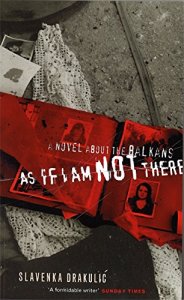
A lot of these problems remain but I’m writing entertainment and there’s a limit to what you can do to a reader. It’s not fair to rub the reader’s nose in things. That’s not what these books are, and there are plenty of histories to read. I refer to two novels at the end of the book written about the war and they’re difficult reads but they often just glance against what happened, just sufficiently to make people aware of just how awful this was.
I took my lead from them. I thought if those people who had lived through it, didn’t need to do it, then I certainly was in no position to shake people and push their faces into it. And it wouldn’t have served the book or the reader
Although, of course, you’ve got a much wider audience than those books would have had.
Sure, yes.
 I’m moderately well read and I knew some things about it but I hadn’t necessarily put all the pieces together. So I think there’s a certain amount of… education is the wrong word… You’re not being didactic but you’re certainly opening the reader’s eyes.
I suppose. I shudder to think about if I had to do a book tour in Serbia, what would happen. But it’s such a complex situation. Even to give the little summary at the beginning for people who were too young – or certainly for some American readers, because just by the nature of American media, quite often reports of things in Europe didn’t really filter through so you’re really obliged to try and explain – I know that if a reader in a Belgrade bookstore picked it up they would probably say, ‘That’s not what happened at all, that’s a complete misunderstanding’.
The best explanation I had for it was from one of the guys who was driving me. He’s quoted in the book, he said ‘You know, a lot of bad things happened and we were responsible for most of them’. That seemed to be a pretty accurate summation of the Balkan Wars in one sentence.
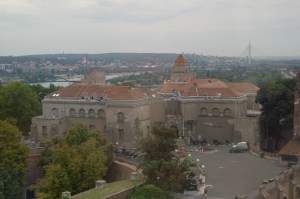 But what’s really interesting is when you go over there, there isn’t really a history museum in Belgrade. Most of the tourism comes from Eastern Europe because it’s quite a cheap place to go for Eastern Europeans. So the only place to go for history is the war museum.
There’s a very good military museum in Belgrade and they cover it. It’s meticulous about Serbian history through the conflicts with the Stasi in the Second World War up to the death of Tito [in 1980], and then it stops and it picks up again in about 2006/7 when Serbia begins sending peacekeepers to the UN.
There is no mention of the Balkan Wars. They’ve just been completely written out. There is no opportunity to read about them and I find that fascinating. It’s like nothing happened between the death of Tito and becoming UN peacekeepers – it’s really quite bizarre.
Louis and Angel, we get to spend more time with them now than we have for ages. How did you find writing them in that detail again? We’ve had little scenes with them during Angel’s cancer, treatment and recovery and that’s clearly, as it would for anybody, thrown one hell of a stick of dynamite into their relationship.
 Yes and yet they have come through. The book actually separates them for quite a long time – it’s probably quite frustrating for people but that was the only way I could make the book work. I didn’t think after The Reapers that I’d ever write a book about the two of them again. I felt that they worked better in the context of the Parker books but like I said I wanted to write a globe trotting thriller, I wanted to write a revenge thriller, and that seemed to suit them better.
The book was interesting to write. I enjoyed it. Violence apart, it is a slightly lighter book than some of the books that have gone before it. But a friend who read it said, ‘You know, it’s a book that spends an awful lot of time with the people who are ostensibly the villains.’
I was trying to explain whether I succeeded or not – I suspect I haven’t if he was quite unhappy – that, not that you want them to succeed, I wanted this sense of people who knew this trap was closing on them and they tried everything to get out of it. That became quite interesting to me as I wrote – particularly the lawyer who’s not a particularly pleasant individual but he is so human, in that all he tries to do is resolve the situation so that he’s safe. He’s prepared ultimately to sell his clients down the line if he has to but he tries to do the best for them as well.
I quite like the idea that they are awful people and yet there is something in their perseverance, this determination to get back, to not give up, to not find themselves cornered, that I quite like.
So as the book went on I became quite interested in them, I suppose and so they take up more time than I might have intended originally.
It is fun watching the bad guys try to get out of the trap.
It is. If we just sat and waited for their inevitable fate to befall them, it would be very very dull but what I quite like is the idea of the rat gnawing at the cage or trying to eat its way out of the trap.
They became interesting to me in that sense, and something of the atmosphere of cities like Belgrade and Vienna began to infect the book I think. You can’t visit those places and not find the nature of the book changing, they are such curious atmospheric places, and certainly the more research I did in Serbia, the more pronounced that supernatural aspect became as well.
I was interested in the Vlaches, this quite odd Romani subculture which mixes Christianity and a version of ancestor worship and who are one of the last vestiges of, ostensibly, witchcraft in Europe. People from Belgrade do visit the Vlach, Vlach country, if they have a problem and a whole lot of superstitions are created around them.
 It was quite curious saying to this driver, ‘We’re going to look for witches’. You know, the terrible thing about witches is that they don’t wear pointy hats anymore and they don’t have broomsticks, so when you go along to a place that’s supposed to be the centre of Vlach culture you arrive and there’s a bread shop and a bakery and a coffee shop and you think, ‘Well this isn’t quite what we wanted.’
So essentially you end up wandering around and we were just fortunate that we were killing time so found this little museum that was closed and the woman came out with a key and opened it up for us. it was her museum essentially. She had been an archaeologist and she had collected all of these extraordinary relics of Serbia’s imperial past including the Romans and everybody else who passed through. She spoke Swedish and Serbian, tiny little bit of English and when she asked what we were doing there and I said, ‘Well, I’m trying to research a book and we were hoping to find a witch’ she said, ‘Oh the man who put up my shelves, he’s Vlach. I’ll give him a call and I’ll close the museum again.’
So she closed the museum again and she said ‘Have you got a car?’ So we got in the car and we drove and this lovely man met us in the centre of this newly deserted village, as the sun was going down, in the freezing cold, surrounded by stray dogs.
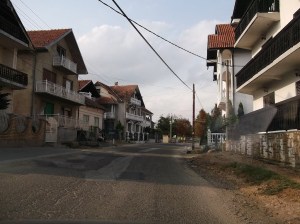 We very pleasantly and politely explained a lot of the background while these two people translated for me and it was one of those fantastic moments that you have occasionally. At one point mining was going to be part of the book and the idea that the child would essentially go to ground in a mine, because I’d read there were a lot of mines. The guy said to me, ‘We don’t have mines here. You need to go a little further down to the south, they had a lot of mines‘ but he said they have a lot of trouble there because they dug too deep and now they have trouble with demons.
The driver looked at me and I looked at the woman from the museum and no one was smiling particularly and I said, ‘OK, do you have trouble with demons?’ and he said ‘No we don’t have trouble with demons here, we have trouble with vampires.’
I looked at the driver, the driver looked at me, we looked at the lady and we looked at the sun going down and we thought, ‘That’s great, we’ll be on our way! Thanks very much, thanks for your time. It’s been great.’
Nobody’s laughing. The woman from the museum is maybe raising an eyebrow slightly but the man standing in front of us is entirely serious. So I thought we’d head back to Belgrade at that stage. We’d had quite enough of the Carpathians, which is where we were. You’re at the border between Serbia and Romania and you have these old monasteries and you do feel like you’ve stepped back into a very different time. It was very curious.
It was great fun. The research was great fun and fascinating, these people were fascinating and hugely helpful. Not the warmest people initially but once they thaw out a little bit they’re quite lovely. I don’t think they get many Western European visitors and I think perhaps there is still some residual animosity towards the West over what happened during the Balkan Wars. But most people couldn’t have been more helpful, people were very very pleasant.
How much of that supernatural element was there when you were planning the book?
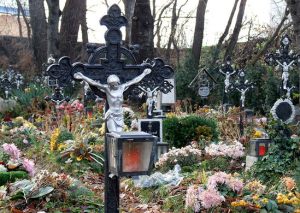 Hardly any at all. I knew the girl was going to be there but I wasn’t sure what she was doing or how it would fit in. I’d done some research on the Vlachs – things to do with water and the soul lingering on after death, these are parts of Vlach culture that I thought I could use. But no, even the title changed.
I had a different title when I went over and then I met a writer over there called Robert Pimm. He and his partner had visited the Cemetery of the Nameless. So I’m in this gorgeous imperial city of Vienna and thinking I could go and look at the horses or one of the great art galleries and instead I got the subway out to the last subway stop and then the metro out to the last metro stop, a bus to the last bus stop and then I walked for a while to this cemetery that’s behind a grain silo filled with all of these unmarked graves. It took me the best part of a day to do this but sometimes you need a hook for the book to hang on, and that became it. That gave me the title and gave me a scene in the book where these two lawyers have a conversation in the cemetery and that became very important
 Sometimes things are just good fortune and that willingness to go out of your way for something that might not produce results at all. I could have just gone to the cemetery and thought, ‘Well, this is pointless. Why don’t I just descend and drink beer and wine in the centre of Vienna and look at Dürer engravings?’ And instead you’re traipsing out to the middle of nowhere. But actually the book began to concretise at that point.
So, what is next?…
When I began writing the Parker books I couldn’t find Irish precedents for what I wanted to do. There really were no 20th century Irish crime writers that I could look to and actually during the 20th century, genre writing in Ireland shrinks to next to nothing. From the period in the 19th century where Irish writers were producing ground-breaking work – in gothic, in science fiction, in horror, in supernatural, in mystery, in romance, they were best selling writers – it almost ceases entirely in the 20th century. And I think that’s one of the reasons why we have conversations here about genre that were finished and done with in other countries fifty years ago, where people will still look down their nose at genre fiction, where there is no real crossover in Irish festivals between genre and literary fiction, where there’s still quite a dismissive attitude.
I began researching it and I thought ‘Well, all of these writers have been forgotten. So many of them who were hugely important have been forgotten. Why did we stop writing it?’
I ended up with a 400,000 word book called Shadow Voices which will be published in October, which I’m painstakingly going through. It has a very long introduction explaining, because I think if you don’t understand genre fiction, you don’t understand fiction and you certainly don’t understand Irish fiction. It’s an attempt to explain to the general reader just how integral rather than incidental genre writing is, not just to Irish literature but to literature in general. To explain the origins of science fiction and horror and gothic and crime fiction, and what we mean when we talk about a bestseller, what do we mean when we talk about a classic, what do we mean when we talk about a novel.
So it’s got a very long general introduction and then it takes 76/77 stories and writes introduction to them, some of which are longer than the stories themselves and traces over 300 years, the development of Irish genre fiction. It sets romance beside science fiction, beside horror, beside the gothic, beside crime fiction and pulls in a lot of writers who have been forgotten and some who were probably not even remembered in their own lifetime.
It tries to explain to people that this attitude we have to genre fiction is wrong, it’s just wrong. It’s a complete misreading of Irish literary history and also it’s very dangerous because when we began, so many women wrote genre fiction. It’s always been a way to explore, it’s always been a great carrier. When you exclude genre fiction from the discussion, you automatically exclude women’s writing from the discussion, so the book began to assume a very feminist viewpoint as well.
It also looks at the lives of these people, some of whom were extraordinary individuals.
 There’s a woman called Beatrice Grimshaw, who I don’t think most people will have read, who grew up in a Protestant family in Northern Ireland in the 19th century, who gets a bicycle. We forget how important bicycles were to the liberation of women because before then you had to be driven somewhere. You couldn’t make a decision on where to go. And she thinks, ‘Well if I can ride a bicycle and go twenty miles up the road why should that be the limit of where I go?’ And she ends up exploring Papua New Guinea by herself at a time, when just shortly before, the British settlers there had been slaughtered by the natives, and she begins writing these extraordinary fantasies. She wrote a story called The Cave which I’m not sure is very good but it’s a story about sailors being hunted by the ghosts of dinosaurs. There isn’t a woman in it, it’s the least likely piece of women’s writing by an Irish writer. And yet she’s largely forgotten. So it was a chance to rescue the reputations and the lives of these writers.
 Shadow Voices is out at the end of October. If I do nothing else worthwhile with my life, I might have rescued some of these people from [obscurity]. There are science fiction anthologies, there are crime anthologies but no one’s ever tried, certainly not in Ireland, to give an overview of genre in that way and say look, it’s all one story, it all hangs together.
It’s actually nearly killed me! I spent three hours this morning doing…trying to establish the date when Fitz James O’Brien received the bullet wound that killed him six weeks later. Even checking facts takes hours, if it’s disputed, because we’re at that stage now where it goes to proof next week and so you’re trying to get down to the very final questions.
You’ll be delighted when it’s done. What about another Parker? Is that percolating?
 Yes, there are two short novels coming. I went back and looked at The Sisters Strange and that’s now twice the length because it didn’t work once you took it away from the phone and small screen. It was designed and written on the hoof during lockdown so it’s now instead of about 36 or 37,000 words it’s 72 or 73. And there’s another short Parker novel which I’m fiddling with titles at the moment. I think that’ll be published in one volume.
So that’ll be next year?
I think it’ll probably be April next year, so that’s done or it’s in draft stage but it will be done.
 And anything else or is that enough?
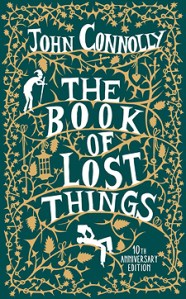
Well, I wrote a script for The Book of Lost Things but I think now the company that’s doing it is looking more towards long form television for that book and to expand the universe.
The problem was when it was done in script form I think everything that everybody liked about it had to be cut out. So it was an interesting experiment, it just wasn’t going to work as a piece of film I don’t think.
So yes, other than that, Shadow Voices has taken up an awful lot of time and mental energy but it’s done.
The Nameless Ones is out now from Hodder; click here to order from Amazon.co.uk
 Doctor Who News Star Trek News
 Sci-Fi Bulletin: Exploring the Universes of SF, Fantasy, Horror and Spy-fi!