Interview: Elodie Harper
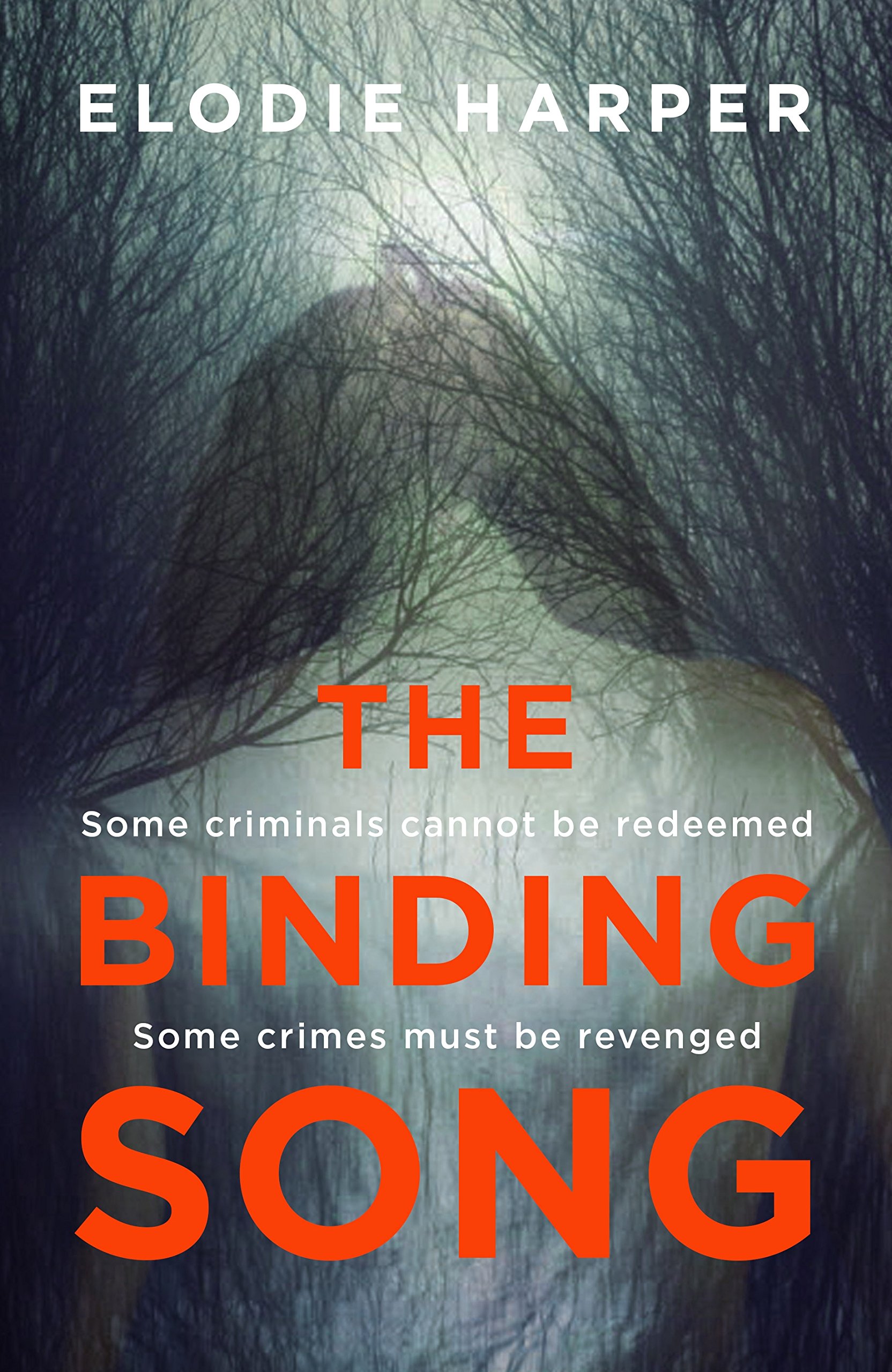
ITV journalist Elodie Harper’s first novel The Binding Song (see our review here) was published at the end of June by Mulholland Books, living up to the promise shown in […]



ITV journalist Elodie Harper’s first novel The Binding Song (see our review here) was published at the end of June by Mulholland Books, living up to the promise shown in […]
 ITV journalist Elodie Harper’s first novel The Binding Song (see our review here) was published at the end of June by Mulholland Books, living up to the promise shown in her short story “Wild Swimming” that won first place in the competition judged by Stephen King to promote his short story collection The Bazaar of Bad Dreams. On publication day, Paul Simpson chatted with her about the roots of her fiction…
Was The Binding Song triggered by a particular image or event?
Working in television I am quite a visual person, and the figure that haunts the story came to mind when I was driving home in the winter dark from reporting jobs through Elveden Forest. I work for ITV Anglia and I lived for a few years in Norfolk, based out of their office there. I was driving past the trees on what’s now the old A11 route – they’ve now made it dual carriageway and less atmospheric – and the way the trees crowded round, I just had this image of this figure in the woods in my head.
I report on crime and was thinking a lot about the after effect of it really rather than the crime itself and solving it; just the way that it impacts people for years and years. Those two things came together in my head.
How would you describe the book?
I didn’t have a genre in mind when I started writing – it was just a story I wanted to tell. It fits, probably, most in the thriller category, but it does overlap into crime and also horror. In terms of from a personal point of view, I suppose I see it as a thriller but I think it does cross three genres.
It’s often the prism that the author sees it through that dictates a lot of the POV stuff.
How does it strike you?
 Ruth Rendell writing as Barbara Vine…
That’s very flattering, thank you.
It’s that sort of thing where the knowledge of the criminological procedures – or in this case, the prison stuff – backs up a psychological story about the people involved, but there’s enough “fantasy” to it…
I’ve got really eclectic tastes – and I’ve written a book that embraces a lot of genres that I love. It can be a little bit daunting, because genres can be quite polarising – some people love only crime, horror….
Did you find during the edit process that it was being honed in a particular direction or was your editor’s attitude “this is the story you want to tell” – how do we do that?
I was amazed by the editing process. My editor, Ruth Tross, is wonderful – I feel like she helped me make it the book I really wanted to make it, and she had such fantastic ideas. I owe a huge debt to her really for that. It was such a pleasure to work on it with her because she came up with so many great suggestions, but always with the proviso that this was my book ultimately, so I never felt under any pressure that I had to make the changes, or it would be a very difficult situation.
I think Ruth wanted to make it more clear-cut about the genre and make it more obviously crime/thriller, so the horror element is more of a flavour than the whole heart of the book.
It feels as if the horror is on the sides now: you start off with something that is an horrific sequence, and there’s an ambiguity…
 It’s a really difficult balance as a writer. I do like books that retain some mystery – it’s a difficult tightrope to walk. I hope the editing process with Ruth, who’s massively experienced in the field, helped me make an ending that’s satisfying enough so you don’t wonder what’s happened, but enough mystery that you don’t feel it’s overexplained and there’s no room for the reader to make up their own mind about what happened.
My favourite thriller and horror books – and even some crime novels – are ones where you are left as a reader to make some judgments. [Daphne du Maurier’s novel] My Cousin Rachel – we never know if Rachel did try to poison Philip or not, if she was truly wrong, or it was Philip’s delusions. That really appealed to me as a writer.
For me it wasn’t a genre issue so much as a story issue in terms of: how far was this supernatural, how far was it to do with mental health? I wanted to leave an element of doubt so people could make their own decision but with enough that they could very easily choose to have a clear ending if that’s how they chose to read it.
I am interested in mental illness as a subject, and I wanted to explore what that means – Janet, the central protagonist, how much is she suffering from her own problems as well as treating people?
One of the strengths of the book for me is that although we do understand Janet, there’s always that slight sense of being on the back foot – and you’re not surprised that there’s more to come out because you feel that she’s holding back on us…
That’s nice to know because that is what I hoped to achieve by introducing aspects of her life gradually.
In terms of the prison system, how much research did you have to do for The Binding Song?
I had to do quite a lot of fresh research. The side of crime that I tend to report is either from the scene when something’s happened, covering the court case, or reports on conviction and interview with families. That side I’m very familiar with. Obviously the prison service is not particularly open to journalists in quite the same way. I was very lucky that a colleague of mine knew a retired prison governor, Andy Barclay, who lent me a load of books and I interviewed him. It’s much easier to interview people for a fictional book than as a journalist.
 I also contacted HMP Grendon which is one of the few prisons that have a very open policy, and went to one of their open days and met prisoners – they’re called residents at Grendon – and staff as well. That gave me the sense of a physical space, and I did borrow quite a bit of Grendon’s physical space for the book – but I should stress that Grendon is nothing like Halvergate. It’s a very open place, and the fact they’re called residents is a mark of respect as they’ve actually chosen to be there. You have to apply to go to Grendon from elsewhere in the prison estate – it’s a wholly therapeutic community. When I went there, they were doing mock sessions, like the ones Janet has in the book, with residents talking about the type of therapy they have and a psychologist was explaining how it works.
One of the things that Andy Barclay said to me when I was talking to him and I was feeling really bogged down by the research was: “You don’t have to cram it all in, it’s your prison ultimately. It’s fiction. Just use the stuff that’s useful.” It’s such an obvious point but as a journalist, I got so caught up in the idea that it had to be an exact representation of a prison. I did feel free to deliberately change things around: I had to create a prison that would be an entertaining read.
One of the things that informed the way I treated the supernatural in the book was that I interviewed a former assistant chaplain at HMP Holloway who said that prisoners would quite frequently say that a cell or section of the prison was haunted. Her dilemma was where do you draw the line as a priest? Perhaps people are picking up on a real sense of horror or sadness. Prisons are very unhappy places. Horrible things happen there. You don’t have to believe in a ghost to believe that people have picked up on an inherent sense of wrongness or sadness or horror that’s there.
I did feel a lot of sympathy with the people in the book who were in the prison, the inmates who were having these difficulties. I have no idea how much sympathy readers may or may not have. I didn’t intend for them to be wholly unsympathetic – I realise it’s quite a challenge to empathise after what people have done.
G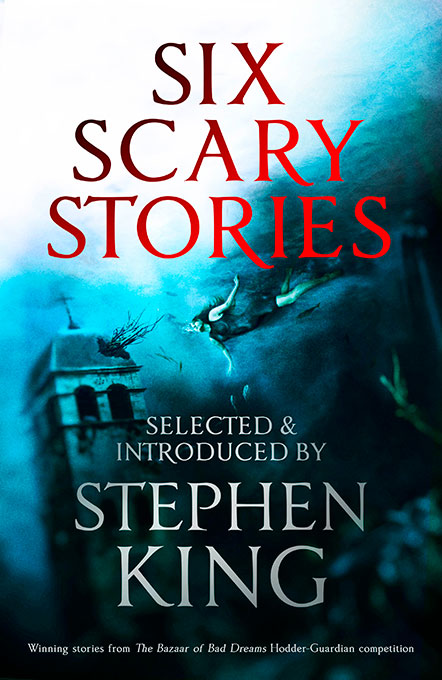 oing back to your short story, “Wild Swimming”, what was the inspiration for that?
My sister in law told me about the competition, and I thought it would be great fun as I’m a big Stephen King fan. I wrote one story and my husband read it and said it wasn’t scary enough – always good to have honest feedback at home – so I wrote another one, which is “Wild Swimming”.
There were a lot of inspirations for it: I am a huge fan of Night Shift, Stephen King’s collection of short stories, so the form was quite important to me in terms of the email. That was a way of paying tribute to the form of the first short story (“Jerusalem’s Lot”) in his book which is told through letters. That also appealed to me because it’s one sided and you can create an instant feeling of mystery if you don’t get somebody’s replies.
In terms of the actual topic, I have been wild swimming myself – I’m not an expert by any means – and it is an inherently creepy activity. It really is. I don’t think there’s anything quite like being in the middle of the lake at Grasmere and you’re aware that hundreds of feet below is just… who knows what? You can’t see beyond your own feet, it’s absolutely black. It’s very freaky.
Is that part of the attraction?
I think it probably is. I didn’t realise it would be quite that freaky when I went. I don’t think I’d become one of those people who need to go off and be obsessed with finding remote places to wild swim. It’s a beautiful thing to do because you are in wild water which is great, but it’s also risky.
I’m not much of a thrill seeker to be honest – I’d rather sit and write about it than go off and do lots of dangerous stuff – but the fact that it is dangerous from a physical point of view also made it a topic I wanted to explore in the short story. You can get horribly cold very quickly and go into shock when you’re wild swimming. It can be very dangerous – I certainly didn’t go on my own and I would not advocate it: I went with someone who was trained and very experienced.
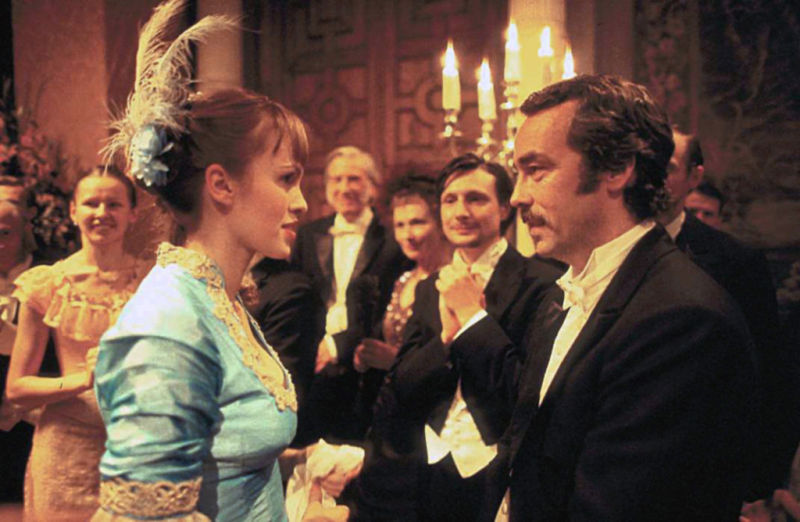 The other aspect of this story is that I worked in Lithuania for a period over ten years ago. When I left university I worked for a couple of years as an actress and I did a television drama over there called Dr Jekyll and Mr Hyde, with John Hannah. For me, because I filmed horror in Lithuania, it’s associated with the creepy. And I did a lot of night shoots – I saw it mainly at night, with sinister lighting.
What’s next in terms of writing?
I’m currently writing my second book for Hodder called The Death Knock – which is a reference to an activity that all news journalists will be familiar with. It’s written as a split point of view narrative between a journalist covering a serial killer case and the woman who’s been kidnapped. It’s also set in Norfolk – it’s connected to The Binding Song, and one of the characters does recur, but it’s not a “book two”, it’s a total standalone. Anyone who’s read the first will find a few references that I hope will be interesting, but you can come to that having not read the first one.
Having written about serial killers myself recently, I know it’s a very dark subject..
I have found this book quite hard to write from that point of view in terms of it being a similarly dark subject. I wanted to approach it in the same way as The Binding Song – the serial killer themself I wanted to make the less important aspect of the story, and instead focus on the impact of what’s happening on the families, on the victims, the journalists covering the case.
I’m a regional journalist, and we cover cases when the national media has more than moved on. We cover the anniversaries of crimes that haven’t been solved, and we go back and talk to people ten, in some cases even twenty, years after the event, and you’re very conscious that families are often living in the same area, the same houses. They’ve known the same journalists for a long period of time. You’re hyperaware of the fact that your coverage can be compounding the problem and people’s ability to grieve. That certainly comes out in the second book.
The Binding Song is out now from Mulholland Books
Thanks to Rosie Stephens for her help in arranging this interview; author photo by Sophia Spring (c) Hodder & Stoughton
 Doctor Who News Star Trek News
 Sci-Fi Bulletin: Exploring the Universes of SF, Fantasy, Horror and Spy-fi!