Interview: Chuck Hogan
Chuck Hogan is the author of several acclaimed novels, including Devils in Exile and Prince of Thieves, which won the 2005 Hammett Award, was named one of the ten best […]



Chuck Hogan is the author of several acclaimed novels, including Devils in Exile and Prince of Thieves, which won the 2005 Hammett Award, was named one of the ten best […]
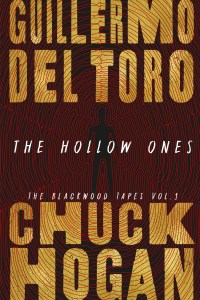
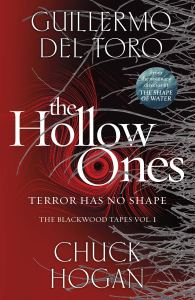 Chuck Hogan is the author of several acclaimed novels, including Devils in Exile and Prince of Thieves, which won the 2005 Hammett Award, was named one of the ten best novels of the year by Stephen King, and was the basis of the motion picture The Town. He co-authored The Strain trilogy of novels with Guillermo del Toro and was a writer and executive producer on the TV series based on that. His new novel with del Toro has just been published: The Hollow Ones follows a rookie FBI agent, Odessa Hardwicke, as she’s thrown into a world she never expected to experience, with her guide the mysterious Hugo Blackwood. Hogan chatted with Paul Simpson about the genesis of his partnership with del Toro and the creation of their work.
Before we talk about The Hollow Ones specifically, let’s step back a minute. How did you first become a writing partner with Guillermo?
My literary agent at the time, who’s now my manager, had attended a meeting where Guillermo was presenting some ideas. This is going back to I think 2006. I guess he’d finished Pan’s Labyrinth and it wasn’t about to come out for another six months so he was taking meetings. Anyway, my agent called me from the airport and he said, ‘I just had this great meeting with Guillermo del Toro, do you know who that is?’ and I said ‘Yeah, the producer of Hellboy’ and he said ‘Yeah, he’s got this other movie coming out’. Couldn’t tell me anything about it because he hadn’t seen it yet but he’s like, ‘He has this great idea and I thought it might make a good book.’ I said ‘Send me the outline and I’ll take a look’ and it was a twelve page outline of The Strain.
I got a page and half in and I called him right back before he got on the plane. I’m like, ‘This is awesome, I would love to talk to him about it’. I didn’t know what Guillermo was interested in. I’d never collaborated with anyone, I’d never ghost written for anyone. I didn’t know if that was what he was looking for but it turned out what he was looking for was a collaboration between him and someone, taking a horror idea and marrying it with a crime procedural way of telling it, which I thought was brilliant. I still think it’s brilliant.
So that’s how we first met. We had our first long breakfast, the first of many, where he filled in more parts of the story and I chipped in a couple of ideas, he didn’t hate them and then we established a trust over time. It just kept growing and growing and it’s been almost fifteen years now, with the TV show thrown in the middle of us working together on these books.
 Does it tend to be one of you more focused on characterisation and one of you more focused on the drive of the plot? How does it work between you?
I don’t know. It’s developed over time. I don’t want to say it’s equal because at times he’ll come in with something big character and sometimes I’ll contribute something big plot, but then both of us contribute some of each.
It’s funny: we don’t divide it either. We don’t think of it in terms of character or plot, it really is establishing who and where and then just building up the story and figuring out what the characters need and what the plot needs. I don’t want to use tired tropes like organic or fluid but it really is. We get together, we start talking, he has an idea and we build on that; we grow it from a discussion into an outline; the outline grows into a treatment, generally at some point a critical mass is achieved. I’ll start writing, I send it to him. In the discussion he’ll say ‘Leave me that section, I want to write that’. He picks and chooses what he absolutely wants to write and we just keep going back and forth. It’s a long game of tennis that results with a novel sitting there on our desks.
Are you editing the other as you go? He’ll send you a portion, you edit that and move onto your next bit, chuck it back to him?
Yes. In terms of editing it’s more like adding, it’s more like growing it. It’s rare that I’m going to be striking things. If I have an idea and he thinks that’s great, that goes in; if we have an idea we don’t like, we’ll discard that before we write it. You could call it editing but it’s really embellishing or extrapolating and saying, ‘Well, that’s great – what if we do this on top of that?’ And keep going and going and going.
 So, do you reach the end of a first draft and then one of you go through it?
We’ll both have seen a lot of it to that point. Generally we want to make sure we’re both happy with it and it depends: if it’s ready, it’ll be seen by editors and we keep our fingers crossed and hope that people like it.
But no, by the time we’re into it we’re both very familiar with what’s there, so in terms of finishing editing the first draft, it’s probably more me that’s smoothing it over, making sure that it feels like one voice, and doing all the boring grammar things that have to be done.
From my own experience co-writing, the voice that I have writing my own stuff and the voice of the stuff that I write with somebody else, there’s a difference. There is a synthesis voice where occasionally I can spot a phrase that was definitely me or a phrase that definitely wasn’t me but I couldn’t say, a year later, which bits I’d written first draft of and which bits my co-writer had written. Do you have that same experience?
Yes, absolutely. It’s so difficult once the cake has been baked to go back and figure out who sprinkled it, who put in this cup of sugar. Which is great – that’s what you want. You don’t want to be reading it and saying ‘That’s mine, that’s his’. That’s not going to scan well and it’s not going to read well.
It’s kind of a point of pride that we’re able to pour two different liquids into one beaker and have it uniform colour and consistency.
 Before you were working on The Strain and now on this you were writing crime novels. There’s a certain mindset that goes with that sort of noir, seeing the worst in people and then it being realised. Do you bring that mindset to the characters in these books or do you have to reset because it’s a different sort of thing?
I’ve never really thought about that. I don’t feel like I do. I don’t feel myself making substantial creative or philosophical developments.
I grew up reading a lot of horror so I’ve always been a fan of that and the supernatural. The thing that bugged me in some books growing up was you’d throw in something supernatural and you didn’t have to explain, didn’t have to do the procedural work or the character work. That was expected to explain why everything was going on.
That tool, if used carefully, I think opens up a book, and to me that’s the big difference between crime genre and a supernatural genre: by combining the two we’re able to insert elements that just open up a world that doesn’t exist otherwise. But so long as you have that base of… I call it procedural but just realism, and platforming off of that, I find that mix really interesting. Without getting at all strident or didactic, it’s a great way of being able to comment on the world as it is because you pull back a little bit. &ou’re looking at it from a bit of a distance and you’ve introduced something in the world that in real life doesn’t exist.
There’s definitely an element of fatalism in noir fiction and crime fiction,
 It sounds like you’re using your writing muscles in a different way.
Yes, it’s really kind of freeing. Especially when the original idea is Guillermo’s and then building off of that, I don’t have any real skin in the game in terms of ‘Should we do that or not do that?’ because that decision’s been made.
When I’m writing my own book I’m making all the decisions and you live and die with them if it’s not the right one. With The Strain for example, I would probably have never, just on my own, written a book about vampires in New York. That’s the setting, so I have a lot to learn and a lot to think about and it really opens up my mind to different things that I wouldn’t consider. For me, it’s freeing in that sense to have a few givens and then build a new book that I wouldn’t write normally out of that with Guillermo.
With The Hollow Ones did Guillermo come to you with the original idea?
This was another idea of his that he’s had for some time. It was in the early days – I think The Strain had just come out, which would be 2009 – when we talked seriously about doing something else after we did that trilogy of books. Obviously we did those books then the TV show intervened and Guillermo’s been quite busy so it’s taken a while, but we’ve been talking about it for quite some time and it was definitely his. He had the character, he had the idea of The Hollow Ones…
 By character do you mean Blackwood or Odessa?
I do, Blackwood specifically. From what I can remember from our first discussion it was about pairing him up with a rookie FBI agent but it was really the Blackwood character that was his initial focus to the best of my recollection, ten years ago.
So you have the characters of Blackwood and the agents – plural because obviously there’s Earl Solomon involved with him as well. How did it progress from there? Were you working out who these characters were, or were you finding out who they were through working out what the Hollow Ones were up to?
Again, I’d really have to back think everything. We definitely had Blackwood and it was very early on that Guillermo had an idea of an old agent who was dying and someone else taking over. That part was so long ago!
He also had the idea of the Hollow Ones and I think it was pretty straightforward with the way it came out.
The great thing about that is if you’re interested in something or it makes you think of something that you’re then interested in, it gives us a chance to explore that. Guillermo taught me a lot about who John Dee was for the 1582 section of the book. I had to do a lot of research on my own: what a great real life character to introduce into our fictional story. I learned a lot doing that.
That’s a great example of something he threw in that became something bigger because I didn’t know anything about it so I’m in the reader’s perspective, adding things to it saying ‘This is interesting, let’s bring this out’.
 Did you come over to the UK for any research?
I didn’t, no. That would have been a lot more fun than what we did – we toured some old, recently discovered or disinterred African American slave grave sites in Manhattan. We went over to Newark, New Jersey, to visit some botanicals where they sell a lot of religious articles. It was really interesting but it would have been a lot nicer to go to Mortlake.
I went to New Orleans over the new year and the description of the botanical is exactly like the Creole shop, that we went into, very realistic. Talking of real things, Is the post box there on Stone Street [that is used to get a message to Blackwood]?
Is there a post box there? No. Not that I know of but during that same research trip we walked all over the area and there is a spot that’s a half numeral where there’s not much there. So, no I don’t think there’s any mailbox there but the rest of what we were talking about does exist in and around that Wall Street area.
The “Mississippi Burning” element in 1962 again is a period that I’ve studied – there’s a great William Shatner/ Roger Corman film about that time [The Intruder]. Did you go to the area or what were you using for research for that? The area has changed so much and yet so little.
 Sure has, yes. I didn’t do any travelling for that.
Obviously the setting in terms of time and place is real; the town is fictional and we came up with all that. As I say, we’ve been talking about this story for so long, and what amazes me now is that these issues have bubbled right up. I can honestly say when we were writing it, the whole point of that part of the book was to be writing about something in the past. Yes, we wanted the story in the three different timelines to come together, not in a cliched way, not in an easily resolved way, but thematically or symbolically to pull together at the end. Never thought we would be talking about civil rights now. From 1962 to 2020, it’s incredible how little has changed. That’s really been a revelation for me, personally: something that we were talking about in terms of the past has come around caught up with us. I’m just glad we didn’t write about a pandemic or anything because that would be too much.
Hang on a minute, you’ve done that already!
Separately, thankfully.
Will book 2 reflect the civil rights issues and COVID?
I don’t want to say too much but this book takes place in 2019 so unless we leap ahead, which I don’t see us doing, then I think it has to address and involve it in some way but it’s tricky. This is a really tricky time to be setting anything: you want to have a good couple of years’ perspective to be able to do it justice and not have things seem so dated. It’s going to require a bit of a deft touch I think.
Presumably there is the possibility of an earlier Blackwood story where he’s working with Solomon, so the timeline doesn’t have to totally move forward all the time.
I love Earl’s character, and our plan and our hope is that he is involved in each book in the past, in a previous case that was committed to one of the tapes in his home.
 What was the biggest challenge of working on this one, as compared to The Strain or your own books?
I do consider these to be completely apart from my books but compared to The Strain: that was a real worldwide [canvas], the scope of it was immense, we would go country to country and we’d ping pong from character to character, followed the victims for a long time. It was really great and really fun. This one is different: there’s still some scope to it but it’s really focused on a few characters.
It was nice to dial back on that and really think about splitting it up in terms of the three different timeframes and having a character who exists through them – and then the other characters, and what the comparisons and the contrasts between those relationships in the different timeframes would be, how those add up and what that tells us about the characters moving towards the end.
It was just a very different approach, which I liked. I hope people aren’t coming into this expecting another worldwide, massively scoped book the way The Strain trilogy was. This is more of a series where we’re going to develop the characters as we go on.
What’s been the most fun part for you of working on it?
 The most fun part? First of all Blackwood’s character is very mysterious and he can do a lot of things but I feel like we’ve revealed only 20% of who he is and what he can do. Part of the fun of being a writer is what you’re holding back and what you know is still behind the curtain waiting to be revealed.
Beyond that, I go back to what I mentioned earlier: the best thing about working with Guillermo in general is he knows so much about so many things and I will try to catch up. As I’m following his interest in occultism, I do my research, I do a lot of reading and it’s really just a great exercise to pursue something I might not pursue on my own, to learn something about it, get interested in it and transfer that interest to the reader who might be reading something that they wouldn’t ordinarily stumble across. I guess the discovery aspect of it for me is fun.
Thanks to Rachel Kennedy for assistance in setting up this interview.
The Hollow Ones is out now from Del Rey Books; click here to order from Amazon.co.uk
 Doctor Who News Star Trek News
 Sci-Fi Bulletin: Exploring the Universes of SF, Fantasy, Horror and Spy-fi!