Interview: Wonderland: Editors Marie O’Regan and Paul Kane
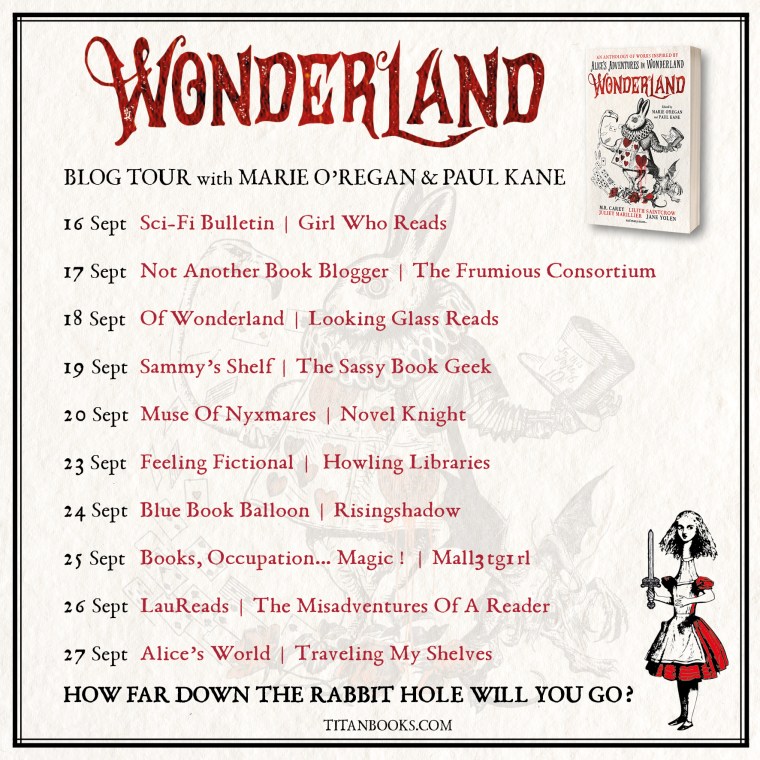
Marie O’Regan and Paul Kane’s Wonderland – a new anthology of tales based on characters from Lewis Carroll’s Alice’s Adventures in Wonderland – is out this week from Titan Books, […]



Marie O’Regan and Paul Kane’s Wonderland – a new anthology of tales based on characters from Lewis Carroll’s Alice’s Adventures in Wonderland – is out this week from Titan Books, […]
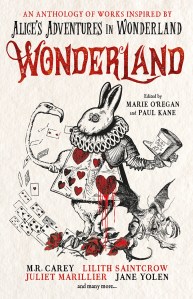 Marie O’Regan and Paul Kane’s Wonderland – a new anthology of tales based on characters from Lewis Carroll’s Alice’s Adventures in Wonderland – is out this week from Titan Books, and to mark the occasion the couple, both regular contributors to Sci-Fi Bulletin, answered some questions from Paul Simpson.
What’s your first memory of Alice in Wonderland?
Paul Kane: For me it was definitely the Disney cartoon, though I did come to the books after that when I was at school. I remember being struck by how gorgeously animated it was – well, it was Disney! – but also what a celebration of the bizarre it was too.
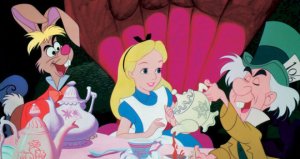 I’ve always been into things that are surreal or outlandish, for example my favourite painters are Magritte and Dali, so you can imagine my joy at finding something like this at such an early age. It had a huge impact on me and my work, so much so I’ve referenced it in all kinds of things, including recently Sherlock Holmes and the Servants of Hell.
Marie: I’m with Paul, it was the Disney cartoon. I read the books, and loved them, as a child, but after I’d seen the Disney movie – and I fell in love with that film; it had such charm. The same thing happened when I showed it to my children, years later; we all loved it and that’s never really changed.
What character did you most identify with / enjoy spending time with from the original Lewis Carroll stories?
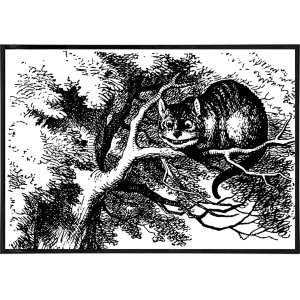 Paul: Probably the Cheshire Cat for me. He’s clearly the only one who knows what’s really going on, like this wise kind of Buddha figure, but at the same time is completely and utterly insane. I love his turns of phrase, there’s one about imagination being the only weapon in the war against reality and I can really get behind that. Besides, Muriel Gray once described me as a Cheshire Cat in human form in an introduction so it just makes sense.
Marie: I’d have to say Alice – but not because she’s the heroine. She’s so curious, and so determined, and you could say the same of me. I love learning new things, and I can be extremely determined.
What was the genesis of this project?
Marie: Our editor at Titan, Cat Camacho, deserves a mention here. Paul and I were pitching anthology ideas, one of which was dark fairy tales themed around a curse (Cursed, due out next March). Cat said she’d love to see a Wonderland anthology, and of course we leapt at the chance to edit that one! Then we started talking about who should be in it, pulling together a wish-list, and it took off from there.
What parameters did you give the writers for their stories? Particularly, were there any restrictions in terms of dealing with the “real world” background to the originals’ creation?
 Paul: We try not to set any limits on what people write for our anthologies, other than it relates to the subject matter – we did the same with our crime one, Exit Wounds. We’ve found it makes for a more varied and imaginative book that way, and encourages authors to think outside the box. That was definitely the case with Wonderland. Obviously it helps to get a sense of what they might be tackling before they sit down to write, so we don’t get too much repetition but other than that…
Marie: We deliberately keep guidelines quite loose as it gives the authors more freedom and – hopefully – results in a more diverse range of stories. It certainly has so far. As long as the story is true to the theme, the author is free to do what they want.
How did you assemble the writers for it?
Marie: As we always do, really, although Cat also threw some names into the mix. We draw up a list of authors whose work we admire and feel would fit well into the theme, start contacting people and go from there. If someone’s not available, we try another name from the list, and so on – we were very lucky with our author list for Wonderland, and were delighted with the stories that came in.
What surprised you most about the stories / story pitches that you received?
 Paul: Just the sheer range, no two ideas were alike at all. From the western-theme of Angela Slatter’s ‘Smoke ’em If You Got ‘em’ to the Japanese reworking of Laura Mauro’s ‘The Night Parade’ and the SF takes of MR Carey and Lilith Saintcrow, the scope is just amazing.
Marie: We deliberately try to get a wide range, as we’ve mentioned earlier, but the authors certainly took the theme and ran with it – there’s such a broad range here. From ridiculous to scary, from heartbreaking to funny; there’s something for everyone.
What was the most challenging aspect of preparing this anthology?
 Paul: It’s always challenging pulling everything together towards the end with the deadline looming, but I think that encourages you to think outside of the box as editors as well. Similarly deciding what order stories should be in can be tough, not having two tales of the same kind of length or in first person, or which tackle similar themes, too close together. You can’t work all that out till everything is in and you can see the shape of the anthology as a whole.
Marie: I think the most challenging aspect is making sure the anthology as a whole is cohesive, as Paul’s basically said here. You have to try and make sure the book as a whole flows well, one story moving onto another in as seamless a fashion as possible. Hopefully we’ve achieved that.
 Why do you think the original stories still resound, 150 years after their creation?
Paul: They’re just timeless really, like all good classics. They’re being enjoyed now all these years later and still will be 150 years from now I feel sure. A terrific story is a terrific story and those always stand the test of time.
Marie: I agree, they’re timeless. The setting and the language might be old-fashioned now, but the characters and the themes are as fresh and enduring as they always were. Every child would love such an adventure as Alice’s, and it taps into a child’s innate sense of wonder in a way that’s so easy to identify with, whatever your age.
Wonderland is published by Titan Books on September 17; order a copy here from Amazon.co.uk
 Doctor Who News Star Trek News
 Sci-Fi Bulletin: Exploring the Universes of SF, Fantasy, Horror and Spy-fi!