Interview: Owen King
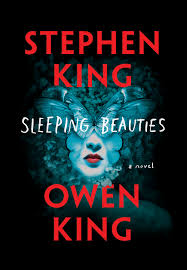
Sleeping Beauties, the first collaboration between father and son Stephen and Owen King, hits shops worldwide today. The story follows the inhabitants of the town of Dooling, somewhere in the […]



Sleeping Beauties, the first collaboration between father and son Stephen and Owen King, hits shops worldwide today. The story follows the inhabitants of the town of Dooling, somewhere in the […]
 Sleeping Beauties, the first collaboration between father and son Stephen and Owen King, hits shops worldwide today. The story follows the inhabitants of the town of Dooling, somewhere in the Appalachians, as they cope with a very unusual worldwide epidemic – women are falling asleep and not waking up. Instead they’re covered with a web-like substance… but woe betide anyone who tries to wake them! A few days before the book’s release, Owen King chatted with Paul Simpson…
Thank you for Sleeping Beauties which I thoroughly enjoyed, as did my daughter who texted me afterwards to say, “I liked that there weren’t really bad guys. Everyone was trying to do the right thing. Except Don. Don was a douchebag.”
Yeah, Don’s definitely not trying to do the right thing!
I don’t find myself drawn to purely heroic characters and one of the things that I like about the book and am happy with is that all the characters are flawed in their own particular way. They’re all striving to do the right thing, but they’re all complex. Real people are like that; real people aren’t entirely driven by pure goals. I feel like that works and that’s definitely the way we wanted it. We didn’t want anybody to be entirely bad or entirely good; we wanted them all to be realistic, within the context of this highly fantastical situation.
I f everything around it is treated credibly, you can believe the one bit of it that isn’t; but if people don’t react as you know you would in that circumstance, then the audience is blown straight out of the story.
Oh yeah, I think we’re on entirely the same wavelength on that.
I haven’t written a whole lot of fiction in a genre setting, or fiction that had a supernatural or fantastic bent. I’ve written a little bit but not anything near this kind of scope. One of the reasons that I never have was I never found an idea that I felt that I could get myself to fully commit to and figure out how everybody would react in the context of these extraordinarily unlikely supernatural occurrences.
But with this book I was able to get into that headspace, and you have to be able to, really, because people can tell if you’re not serious about it, if you’re not fully believing in it. That’s really essential; whether or not you’re writing about the civil war, or something going on in Siberia in the 18th century or you’re writing about the 1950s in the American West, you really have to be able to get into the headspace of the people that are there and what it would feel like to have something unlikely happen, otherwise it’s just going to feel false.
And although human nature may stay the same, people’s moral outlooks do definitely change from period to period – Sleeping Beauties would be very different if you’d set it in the 1960s…
Oh yeah. It would be fascinating to think about how that would play. I would really have to sit down and chew that over. If Evie shows up in that context, or if she turns up in another part of the country, or another country altogether it would probably play a bit differently.
We really locked in on the time and the place as much as we possibly could. There are hints of what’s going on in the wider world; within the book you get a sense of these things going on all around the world, but there is a cascading effect, and you have a pretty good sense that things are going extremely poorly everywhere. But we were really, really focused on this Appalachian locality and what was happening there.
But you do make a point (and this isn’t really a spoiler) that what’s going on in Dooling is what’s controlling what’s going on everywhere else in the world…
That’s right.
And it’s not just a microcosm of the battle, it is the battle…
It is, yeah.
 Why that location? I was delighted to discover it wasn’t Maine!
I think that we felt that the story was going to get into some very contemporary American experiences and in a lot of ways, we both felt that sort of central pocket of America – it’s not exactly in the centre of America – but that whole Appalachian region is very central to a lot of things that are going on in our country at this time in terms of economic changes, political changes. It’s a part of the country that is in flux and has been in flux for a while and that made it very interesting to us. It was very suggestive to set the book in that different place.
I think I was the one who suggested that, but maybe it was my dad; I can’t remember. It’s one of the things that happen when you collaborate: you do forget who did what, it all mixes together.
I was very enamoured that my dad’s Mr Mercedes series takes place in a city that’s never named. It could be Detroit, it could be Akron, it could be Cleveland, it could be Flint, it could be a whole bunch of different places – you never know [contrary to the TV series which is specifically located]. You just know that it’s this upper midwest city that is undergoing some changes and is on a great lake. It could be Chicago!
What we tried to do with Sleeping Beauties is it could be taking place in West Virginia, it could be taking place in Eastern Kentucky, it could be taking place in Southern Ohio – it’s of its region, and we tried to be very specific to the place that we created but we tried to leave it a little bit open, so that we could be imaginative about it and not feel beholden to the specifics of a real place.
Geography can get in the way all too easily!
It really can!
 You’ve mentioned elsewhere that the book started life as a television series, and you wrote a couple of episodes before switching to prose; before you started doing that, had you plotted it through, or worked out the character arcs? What was the mechanics of getting it to the stage where you could start telling the story?
We had the premise, which was pretty vague but evocative: “What if one morning women don’t wake up? What happens?” We started to talk about where it might take place, what kind of settings would be interesting and the idea of a women’s prison immediately occurred to one or the other of us because of the enclosed space and just the idea of being tracked and you’re trying to stay awake. That seemed to have huge potential for all kinds of drama,
Then we thought to ourselves, “Who are the sort of people who work in a prison?” And we settled on the prison psychiatrist, and we thought “What would be an interesting contrast to that?” And it turns out his wife is the Sheriff. We set up interesting contrasts and an interesting setting.
Certainly when we were working on it as a TV pilot – we wrote two episodes that we thought were pretty good – it was much more centred at the prison. The prison is a very important setting in the book – we spend a lot of time there and the characters that populate the prison are very important and central – but the town is a lot more a part of it. When we were working on the TV episodes, we had a lot of action and a lot of things that ended up making it into the book but we were very localised on the prison.
 After we had written the two episodes, I said to Dad, “I feel like this is a little bit bigger than we are making it.” There’s more things going on in the town, and I just wanted to see a little bit more of the minor characters that we’d introduced. Pursuing it as a novel, rather than keeping up the driving pace that we had for the TV episodes, seemed like a better way to explore some interesting avenues that we were cutting off at the foot.
That’s how we ended up expanding it, but at the same time we had these two television episodes that we had written, and they provided us with a whole bunch of guideposts and a lot of scaffolding for what happens in the first couple of hundred pages of the book, and gave us the germ of the different characters.
I think Evie we understood right away. We had her in those episodes and she came right off the page in a really electric way. We had a really good idea of what her motivations were and we understood that right away. When we were doing the TV show some of the other characters weren’t anywhere near as rounded as they turned out to be and had as many facets as we found when we did the book.
But you’ve got a huge amount of prose and the whole ability to go inside people’s thoughts once you’re in prose.
Yes, the closed third person, where you’re seeing the point of view of the different characters, gives you a lot more.
I was at a screening of the first two episodes of Mr Mercedes and at the Q&A afterwards Harry Treadaway noted that when he was filming scenes as Brady, he was going back to your father’s book to read the scene so he understood what Brady was thinking.
It’s almost a whole separate conversation to figure out how can you carry across those messages, what the reader’s told in a book. The magic of the actor’s art is to figure out how to present those things and come up with staging and gestures that encapsulate large portions of backstory that you can get in a book but you don’t necessarily get on film or on stage. It’s a real challenge for sure.
I’ve seen those first two episodes too – I thought they were great! I liked them a lot.
 What was the biggest challenge in terms of working with your father on it? When you’re writing alone, you’re your own boss (until it goes into the editing stage) but when you collaborate, you’re working with an editor all the time. Did you find it restricting or liberating?
I found it mostly very easy. The big thing for me when I am collaborating with somebody is that I have to be able to take ownership of their work, and they have to be able to take ownership of my work.
He rewrote me, and I rewrote him, and when we would write, I would write 25 or 30 pages and I would very consciously leave a gap in the middle somewhere. I would say, “Dad I want you to write this scene that we were talking about; here’s how I think it might play out”. Then he would write the scene and do his section and leave a gap for me and he would present the same directions – “Can you put this character in this situation and play this out?”
Meanwhile we’re rewriting each other the whole time and matching each other’s number of pages roughly, so that way you get a really good mix and what develops is a novelistic voice that is neither mine nor his but its own.
I am really comfortable with that – my dad really knows what he’s doing. It’s not his first rodeo, you know!
If anything, I would say it’s always challenging to figure out the structure of a story and figure out the things that are going to happen but we’re both very easy-going and had a lot of fun with it. We really had no arguments whatsoever, more a matter of once in a while someone says “I don’t think this is going to work – what else could we do?” Once we sorted out the story, which could be a little frustrating at times, but we got it all done, then the big challenges are sometimes the other person sends you something and it’s so good and so smart it’s a little daunting. How are you going to match that? But that’s also inspiring. Every once in a while – no frequently, he sent me a bunch of pages, and I’m like, “What a bastard, this is so good, how am I going to keep the level?” But you do your very best and it’s inspiring. And you want to impress the other person and give them something to top, so that’s challenging.
And the other thing is, my dad is a super fast writer, so the pace of production is quite a bit quicker than I’m accustomed to, but I do think collaborations to tend to go a little faster by necessity than a solo creative project. It’s not fair to leave the other person cooling their heels because they’ll lose the rhythm. You have to keep the ball going back and forth and keep the other person involved. You have to be quicker than you would normally be but he’s quite a bit quicker than me. I had to get into that pace but I was able to and once I did, that’s how we did it.
What was the best part of the experience for you?
 I think that the very best part was I got to spend all this time with my dad. It sounds corny but when we set out to do it I was not really thinking of publishing a book, I was thinking, “This is going to be really cool to spend all this time”.
It’s not like we write in the same room, but to spend all this time communicating with my dad about this story, you don’t get to do that when you’re grown up. I’m 40 years old, my dad turned 70 yesterday – as an adult you don’t spend that much time with your parents. You see them at the holidays, you do talk, but you don’t get to carry on this kind of adult creative conversation. It’s an opportunity you can’t pass up and I feel so lucky that we are both at places in our lives where we could do that. That’s a part that I loved: I’m proud of the book and I hope people like it. I know not everybody’s going to but I’m very proud of the book and happy with what we did, but that’s secondary to that experience. That’s the thing that meant the most to me.
On just a writing level, I would say it was… not exactly an education because it’s alchemy watching him do this. My dad has many gifts as a writer and storyteller, but as a collaborator one thing that you marvel at the most is that he’s able to create narrative circuit breakers, or find ways to get from point A to point C to close gaps, that feel so organic to the story. His plotting mastery is incredible.
The only other person I can think of that does it with such ease and such naturalness is JK Rowling in the Harry Potter books: you’re stunned at the connections that get made and how it never feels contrived. It always feel very natural but surprising.
He’s just a genius at figuring things out – every once in a while you find yourself in a bit of a dead end, or think, “How are we going to fix this particular problem?” and his solution is always just beautiful.
I got to witness that up close: a couple of times I’d finish my section and say, “I love what I’ve got here but how are we going to get this character out of this situation and get them to where we need them to go? How is this all going to work out?” And he’d be like… “We’re going to do this.” And it’s always just poetry.
Sleeping Beauties is available now from Hodder in the UK and Scribner in the US. Special thanks to Kerry Hood for her assistance in arranging this interview
 Doctor Who News Star Trek News
 Sci-Fi Bulletin: Exploring the Universes of SF, Fantasy, Horror and Spy-fi!