Interview: Lavie Tidhar
Lavie Tidhar has two very different projects out this Spring – his Victorian-set comic Adler, featuring “the woman” herself Irene Adler (with art by Paul McCaffrey), and By Force Alone, […]



Lavie Tidhar has two very different projects out this Spring – his Victorian-set comic Adler, featuring “the woman” herself Irene Adler (with art by Paul McCaffrey), and By Force Alone, […]
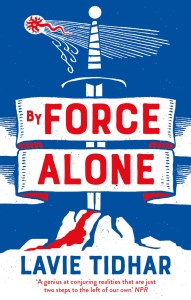 Lavie Tidhar has two very different projects out this Spring – his Victorian-set comic Adler, featuring “the woman” herself Irene Adler (with art by Paul McCaffrey), and By Force Alone, a retelling of the Arthurian legend. Shortly before publication, Tidhar chatted with Paul Simpson about both historical projects…
Thanks for the time and thank you for yet another highly different and enjoyable book in By Force Alone and also issue 1 of Adler.
Oh brilliant, thank you. Yeah it’s fun doing a comic, for the first and last time I imagine.
Why the last?
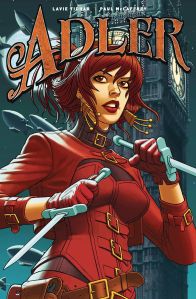 I can’t imagine anyone’s going to ask me to do any again but…
How many issues is Adler?
Five issues, so it’s going to be from now until June. And August I think is the trade.
I like the takes on the characters and there are some fun bits in there. It’ll be interesting to see if the “irritating detective” turns up or not.
Which one? (Laughs)
The one who’s currently down on Dartmoor investigating a certain spectral hound.
Yeah I thought that was very funny but some of the reviews…do they get the joke? What can you do? The weird thing is, I realise now that it’s pretty much a single story; it’s not a really stand alone issue. I don’t know if it’s a leisurely start or what, but it doesn’t really tell you what’s coming next.
 To me, it does effectively what a pilot should do: it introduces you to some interesting characters in situations that you don’t expect to see them and hints at things to come. It makes me want to read the second issue, let’s put it that way.
So it’s achieved its job in that respect.
That’s good. The funny thing is because it took like 7 years to do the artwork on it, which is insane, you can watch it evolve over 5 issues – so by issue 5 it’s pretty much transcendent. I was saying to Paul, if I knew it was going to take 7 years to do this I would have written something a bit better or at least something a bit meatier, because this is mostly a fun sort of comic. It was supposed to be out in a year not 7. But, I’m enjoying it, I’m just riding the whole comic book thing for a moment.
We should talk about a certain Arthurian legend. To me the difference between your version and previous ones can be summed up as: T.H. White has Merlin with Sir Peter Scott’s book of birds up on his bookshelf, you have Arthur quoting from Trainspotting. Lets go back to the beginning, where did you get the idea to treat the legend in this way from?
I never had any interest in Arthur in particular. I knew the basics, I pr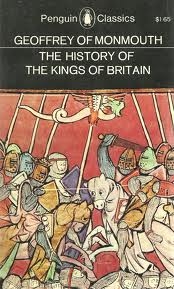 obably watched the 80s Manga series, the anime series, read the stories as a kid, that sort of stuff. Never really paid that much attention.
I ended up having to actually study up on it: I got roped into teaching a course that was set up by a medievalist, so he was really big on Arthur. I started reading about Arthur and two things struck me as interesting. The first one was that it’s not a single work, it’s basically a big work of European fan fiction.
It gets started by Geoffrey of Monmouth who makes up the basic story, and then gets added to over the next few decades by people in France and Germany and the French court and so on, and a few people in England as well, but it’s mostly a European project ironically. So one person adds the sword in the stone, another person adds Lancelot, another person adds the round table. Until we finally end up with this whole grail story that starts being invented by this French guy and ends up being where it is now with this German guy and without these two guys in the 12th century we wouldn’t have The Da Vinci Code, we wouldn’t have Indiana Jones and the Last Crusade. The whole thing is entirely made up in bits.
I thought that was interesting and then as I’m reading the story, this is my problem: I can’t understand why we’re being taught repeatedly that this is about chivalry. Because it’s not. Has anyone actually read this story? It’s a horrible story. It starts with a rape! That’s how British mythology begins – with the rape of Igraine by Uther and that’s how Arthur is born – and it gets worse from there.
 Arthur doesn’t win his kingdom by magic. There’s the whole bit with the sword in the stone that doesn’t make sense to anyone but basically he says ‘I’m the king’ and everyone else says ‘you’re not, we’re the kings’. Then he has to go to war and slaughter everyone who was against him and then he becomes king. I thought, ‘Where is the chivalry? I don’t understand.’
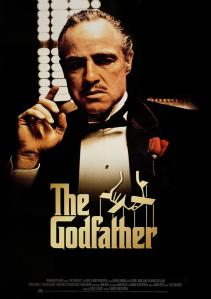
We’re taught this story as one thing but it’s a different thing altogether. I realised it’s basically The Godfather, it’s Scarface. It’s the rise and fall of a gangster and just like it has the rise, it has the fall, where essentially at the end he gets beat by someone younger and hungrier and stronger. It’s a very classic arc.
I thought, surely that’s been done – but every single adaptation of Arthur just takes it at face value that somehow this is a good story, that somehow Arthur is a mythical king who takes his throne by right and goes around having fun adventures. It doesn’t make sense. I was actually working off a Victorian children’s book most of the time, a sort of retelling for children and it’s a horrible story for children. Like, it’s there in the book.
I couldn’t understand why no one’s done it and then, when I realised no one had, I thought I’ll take a crack at it.
You follow a lot of the traditional trajectory of the story; were you tempted to add your own bits to the mythos?
 Do you mean add new bits? No. I think part of the fun is to use the bones of the existing story.
One of the interesting things that happened with it is that when I got to the Lady of the Lake section I really wanted a cat… I don’t know why. I really wanted it narrated by a cat and I was chatting to a writer friend of mine, who’s very knowledgeable about British folklore. I said I wish there was a cat in Arthur and he says ‘there is a cat’ (laughs). Someone came up with a cat; at some point someone had the same thought as me and said. you know what this story really needs is a cat, a monstrous fish cat that kills people called Cath Palug. I looked it up: there’s this cat which floats about in hundreds of Arthurian stories over the centuries, this horrible monstrous murderous fish cat. I thought great! You never need to make stuff up when it’s already there. That’s the way I looked at it.
The same by the way with the Grail: I’ve got both early versions in the book I think, so the saucer of blood is how the Holy Grail actually starts. And then it becomes a comet, a star stone, and only eventually does it become the cup from the Last Supper. I was relying very much on this early stuff, and just messing around with it.
Was there anything that you found when you were doing that that you just went “no I can’t fit that in? It’s just too out there”?
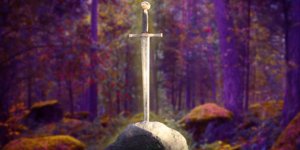 I don’t think so. The biggest problem I had was really that it’s not much of a story structurally. The rise is fine: we have Uther, we have Arthur, the sword in the stone, Excalibur, fighting everyone, marrying Guinevere, Camelot, becoming king.
But nothing happens once he becomes king essentially, which is why the holy grail story starts coming in because you need a filler of some sort.
And then if you look at the ending of Arthur it’s very very quick. Basically Mordred pops up, they have the final battle and that’s the end. So, that was a bit of a struggle because structurally there’s nothing much there and also I think, from a reading perspective I always find the rise a lot more fun than the fall part.
So, that was a bit of a struggle. I think I fit in most of… Is there anything I missed?
Nothing that came to mind but then you’ve been into the source material far more recently that I have. The point you make about once he becomes king not much happens is exactly the same issue that they faced when they did the BBC Merlin. Once Arthur became king at the end of series 4, the fans went “Right, now we’re going to have a season of all the glorious times at Camelot” instead of which they went straight into the end times. Because you haven’t got an awful lot going on, once you go outside that rise and fall bit.
You also give quite a bit of space to some of the other knights, and I love the questing beast. It’s almost a Gary Larson cartoon of Pelinore and the beast sitting there watching the final battle. I can almost see them with a spliff just passing it between them and going, “Yeah… we ready for this?” “Whatever.” (Laughs)
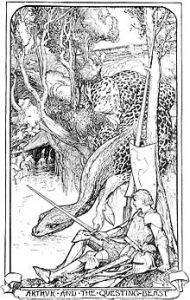 The questing beast and Pellinore they were great, I don’t know where they came from exactly
Where did they turn up in the story originally?
I’ve no idea, I started writing this book on the sly. I don’t think anyone knew I was writing this, I wasn’t really talking about it.
I just sat down one night and I started the first section and I wrote a whole section very very quickly because I was flying to the Singapore Writers Festival and I thought I have to finish this before I get on a plane. So I wrote the first section and then got on a plane, went to Singapore, came back. I kept doing some other and it sat there for quite a while.
That whole section that started the whole book just poured out and then I only came back to the book a couple of months later.
So which bit did you start with?
I started with the beginning. One thing I knew, very early on was that I really wanted to do Lancelot as a Kung Fu… Jewish Kung Fu knight
Why?
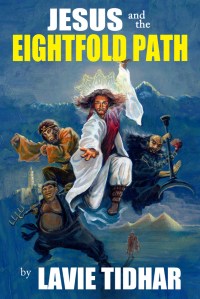 I don’t know, it just seemed funny. I mean it’s a bit of a throwback to this novella I wrote called Jesus and the Eightfold Path, where Jesus, he basically learns Kung Fu from the 3 wise men who are Monkey, Pigsy and Sandy from Journey to the West.
The problem was I knew that I wanted to do it but I knew that that comes much later in the book. So I wrote 70,000 words of the book just to get to the Kung Fu part.
Once you’d finished it how much did it alter in the editorial process?
Well, that was a funny thing. They wanted to change nothing and I’m talking about two different publishers. They wanted to change exactly one thing: there was one line in chapter one that was too offensive, too early on.
I think the book sets out its agenda, such as it is, very clearly very early on. You’re just waiting to see how the hell this is gonna play out because you’ve got science fiction, you’ve got lycanthropes, you’ve got God knows what else and basically a consigliere in Merlin and it’s a sort of “What are we going to get next? Little green men?” Oh hang on yes we do.
 But again it’s very faithful to the original version (laughs).
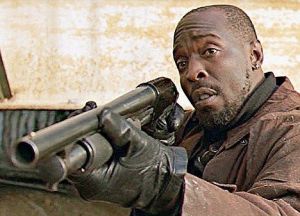
One of the characters I struggled with initially was Guinevere because Guinevere in all the tales in a really drippy sort of character. I mean her main purpose is to marry Arthur and then have an affair with Lancelot and I was like… “Sigh… this isn’t going to work.” Then I realised that it would be much more fun if she was like Omar from The Wire. So I did that instead. And that worked a lot better. I have to say. (laughs)
There’s just so many references to things like Trainspotting, or The Wire. Is that sort of thing something you enjoy reading or watching?
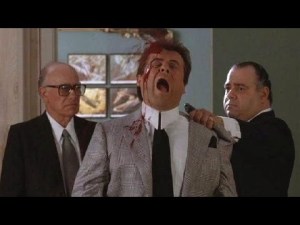 I love watching it, and to get in the mood I was watching not just the films but the making of them. I’m a huge Goodfellas fan so you can find a lot of Goodfellas jokes put in.
I’ll tell you what I tried to do, which I think works: The whole section in the middle when Arthur’s been fighting these kings for too long and it was time to start killing them off? I wanted to kill all the other kings off but what I wanted to do was really replicate in book form that section in Goodfellas when the Cream music starts. Six months later they’re still finding bodies all over town and this guy shows up frozen in a meat truck or something.
I thought, how the hell do you replicate that in a book? There’s no way, it’s like a three minute musical montage.
I think it sort of works that section in the book, but I thought that was a real technical challenge to try and do that.
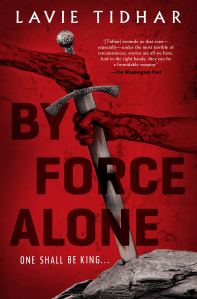 Given the nature of all the different versions was maintaining a consistent tone hard to maintain?
It wasn’t too bad. Because of the way I wrote it, it’s a big book but it’s written in these small self contained sections which made it a lot easier and a lot more tighter. So it’s quite a tight book.
The biggest thing I think initially was I was writing them a little too self contained. So my main thing was to streamline the way each section feeds into the next section. And then it was nice when you have the characters recurring, so we have Merlin, we have the questing beast tying up the whole thing. Just popping up everywhere. But the whole thing was just fun to write.
I would basically take about two or three weeks between sections just to think it through and start getting a shape for it.
But I suppose to a large extent you had a shape given you by “the real story”
Well again, that actually gave me more trouble because that’s such a weird shape that just has a big opening, no middle and then a quick end. So that was less helpful than you’d think.
The ending was interesting to write because that’s a shifting tone and it’s obviously much quicker. But I really enjoyed doing the section before the last section. They’re all going off to war and I was basically writing it as a parody of the soldiers going off to war and yet full of pathos. All these World War 1 soldiers kissing their girlfriends goodbye as they go off to die in the trenches.
There was a sort of 1917 feel to it.
Well, I think the whole book is very much about nationalism and Merlin is giving all these incredibly horrible nationalistic speeches at any opportunity and it’s very contemporary. I just don’t think much has changed necessarily but it’s very much about this supposed English identity and the rise of nationalism.
Of course the great irony is that Arthur is the loser. The people who talk about Arthur now are not the descendants of Arthur, they’re the descendants of people who beat him and took over possibly.
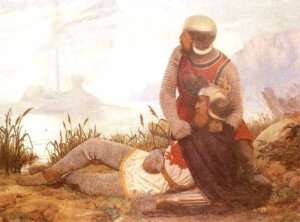 One of my favourite moments is the way Merlin disposes of Arthur…
Yeah, that ending was there from the start. You can see it when he keeps talking about the white sails and the ship sailing off to Avalon. That line was pretty much there from the get go. You just have to get through 125,000 words to get to it. (laughs)
It was partly a response to this whole myth of this sleeping king is going to come back in our hour of need. I thought that had to happen.
So, what’s next for you writing wise?
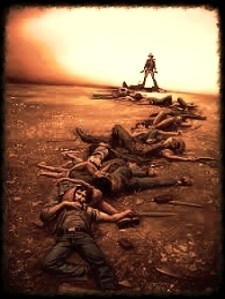 Well, it’s kind of a busy year. Adler’s coming out as we speak. By Force Alone is coming out here and in the US soon and then I actually have another novel out this year from Tachyon. It’s a book called The Escapement which will be out in November I think. And that’s very weird (laughs) No one wants me to describe my books because inevitably it turns people off when I describe them my way. They’re going with The Gunslinger meets The Phantom Tollbooth
It’s a fantasy novel. I’m really happy with it. It’s a shorter book. I call it a clown western. I think that sums it up but no one likes clowns so….
Speaking of Gary Larson cartoons there’s this famous cartoon about these scientists staring at these idiots and saying ‘We know they’re idiots but what type of idiots are they?’. Part of the problem I had with Escapement was the publishers really wanted the world building. They’re like ‘But you don’t explain the rules of the world building. Why are they clowns? What types of clowns are they?’
So, just as revenge, I ended up writing an autopsy scene (laughs) where you have this guy basically cutting up a clown and going ‘Why aren’t they funny? I cut and I cut but I can’t find the answer.’
You mean they didn’t find the funny bone?
I should have used that!
It’s basically a surrealist fantasy novel about a father searching for a cure for his ailing son across a very odd fantasy landscape. I’m really happy with it. Again, these two books are kind of different approaches from the earlier sort of noir alternative history things that I was doing for a while. And then there’s already supposed to be a couple of other books next year so I’m being kept busy.
I stupidly suggested the idea that the Arthur book could be the first in a quartet of books and Head of Zeus said that sounds great so (laughs) I might actually have to write four books at some point.
I was going to ask you if there was a possibility of more because I can see that approach for the Wars of the Roses Or even earlier, the civil war between Stephen and Matilda.
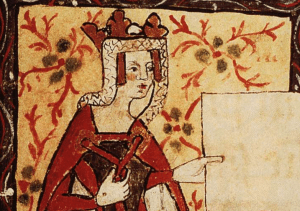 It’s funny you should mention that, The Anarchy does start the next book. I’m writing the second one at the moment. They’re not tied in any way. They share a common universe I guess but you’re not going to see Merlin pop up again.
The Anarchy is one of those interesting periods; the problem is once you move past Arthur you get into a lot more actual history and that makes everything more difficult.
The nice thing with Arthur was I could go very historical and then I could say, “Well, past this point there’s mists and there’s gonna be a dragon”. And I can chuck all that careful research to the winds and just make stuff up but as you get into more historical stuff, you have to calibrate it more carefully… but I can do historical stuff.
I’m about a third of the way through the new one but it’s a very weird book. I’m not really sure where I’m going with it. There’s a lot of fungus involved for some reason. It’s a very trippy, gothic-y sort of book, which was not at all what I expected. I was really struggling with but then at some point I just went, fine, if this book wants to be a gothic mushroom trip, I’ll just go with it. I’ll just give in.
I don’t know where it’s going. It’s a different book to By Force Alone but it shares the same DNA. That should be out hopefully next year from Head of Zeus. I need to start on the next section today as it happens.
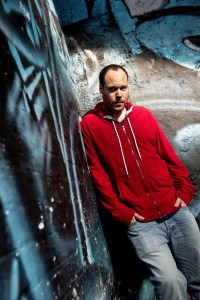
Photo by Kevin Nixon © 2013 Future Publishing. Used by permission.
By Force Alone is out now from Head of Zeus in the UK, and coming in June in the US from Tor Books. Click here to order from Amazon.co.uk
Adler issue 1 is out now from Titan Comics
Thanks to Jade Gwilliam for help in arranging this interview
 Doctor Who News Star Trek News
 Sci-Fi Bulletin: Exploring the Universes of SF, Fantasy, Horror and Spy-fi!