Interview: Kristen Ciccarelli
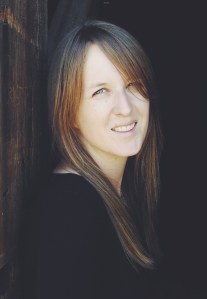
Kristen Ciccarelli’s The Sky Weaver is out now from Gollancz, completing the Iskari sequence she began with The Last Namsara. To mark the occasion, she answered some questions from Paul […]



Kristen Ciccarelli’s The Sky Weaver is out now from Gollancz, completing the Iskari sequence she began with The Last Namsara. To mark the occasion, she answered some questions from Paul […]
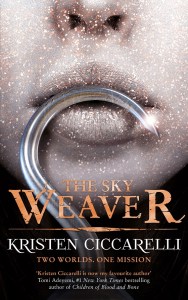 Kristen Ciccarelli’s The Sky Weaver is out now from Gollancz, completing the Iskari sequence she began with The Last Namsara. To mark the occasion, she answered some questions from Paul Simpson…
What was the genesis of The Sky Weaver – was it something you had in mind for some time?
I had The Sky Weaver in mind since before the first book (The Last Namsara) ever sold. So yes: it’s been rattling around in my head for quite some time!
Was there a particular image, scene, or character that you had in mind that you knew could only work in this tale?
Without being too spoilery, yes: Skyweaver, a god who spins souls into stars and weaves them into the sky, is definitely a character (and concept) that could only really play the huge part that she does in this book. But the story also wouldn’t exist without Eris and Safire, one of whom has a very significant connection to Skyweaver.
 How much knowledge do readers need of the world – is it pretty much standalone, but those who’ve read the earlier books will get a bit more from it?
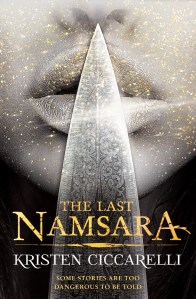
I intentionally wrote this series the way I did, as three standalone novels that intertwine with each other, so readers could enter at any time, with any book. So you can definitely read it as a standalone without reading the first two.
With that said, if you’ve read the first two, you’ll get to see more of the characters at the forefront of those books only as supporting characters now. For example, Asha, Torwin, Kozu, Roa, and Dax all show up in this book, but they aren’t the protagonists.
What’s the attraction for you of writing in this world?
Most of The Sky Weaver is set in port cities, on the sea, and on islands. I wrote these settings in particular because I live in Newfoundland (a rock in the middle of the North Atlantic) where I split my time between the colourful port city of St. John’s and a wild, rugged cove in the north. So I got to layer my world into this one, which was really fun.
 You’ve said before that you take inspiration from many sources – are there inspirations in this that weren’t present in the first two books?
Definitely! The place where I live (mentioned above) was a huge inspiration. I spend so much time near the sea (or on the sea) now, and that definitely crept into the book almost without my realizing it. I’ve also never needed to pay much attention to the wind before living where I do now. (There is a lot of wind in Newfoundland.) But now I know the difference between a north wind and a south wind, not just by the direction, but by feel. Things like that were inspirations that slipped into the book.
How much – if at all – has reader feedback to the first two books affected how you’ve written this – both in a technical sense of the creation of the book, and in a creative sense, in terms of the world-building?
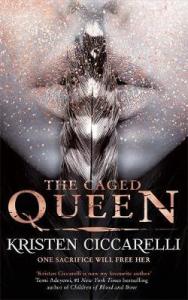
I think reader feedback actually gave me the freedom I needed to write this book. I was so terrified while writing the second one (The Caged Queen) for all sorts of reasons (book one hadn’t come out yet and I kept thinking: what if everyone hated it, what if it didn’t sell, what if my publisher dropped me, etc) and man is it hard to write a book when you’re terrified! But after The Last Namsara (book one) came out, and I was flooded with love and support from so many readers all over the world, it just … set me free in a way I didn’t even realize I needed. In that way, The Sky Weaver is the most me of all three books, because there was nothing standing between me and the page. Readers gave me that gift.
 Have you found that you’ve written yourself into a corner with the earlier books that affected the storytelling this time around or are those just challenges to be overcome?
I think I dodged that challenge by writing three standalones whose stories are distinct from each other (stories I knew the shape of long before I ever started writing them). There are some things that would have been easier if I could have gone back and tweaked the earlier books, but overall, it wasn’t really an issue.
What’s been the most challenging thing about writing The Sky Weaver?
Probably saying goodbye? When you’re in the midst of writing a series, you don’t really think about it ending (at least, I didn’t) and then suddenly you’re at the end and that’s that. I think that was probably the hardest for me. Realizing that after this, I wasn’t going to play in this world anymore or hang out with these characters. Their stories are all fixed and done now.
And what did you find the most rewarding?
Probably, again, my readers’ responses. When the book came out, there was such a positive response, more so than the second book I think, and there’s so much satisfaction in that. I want my readers to be happy, so it’s really rewarding when I deliver a story they love.
 If someone is coming to these completely fresh, how would you describe the world you’ve created?
I would tell someone that the world of The Sky Weaver is wild and rugged and it bends towards goodness, even when the road is hard. (With a dash of dragons, pirates, meddling gods, and an enemies-to-lovers f/f romance.)
Many thanks
Thank you for having me!
The Sky Weaver is out now from Gollancz.
Thanks to Kate Moreton for help in arranging this interview
 Doctor Who News Star Trek News
 Sci-Fi Bulletin: Exploring the Universes of SF, Fantasy, Horror and Spy-fi!