Interview: Jen Williams
Jen Williams lives in London with her partner and their cat. A fan of pirates and dragons from an early age, these days she writes character-driven sword and sorcery novels […]



Jen Williams lives in London with her partner and their cat. A fan of pirates and dragons from an early age, these days she writes character-driven sword and sorcery novels […]
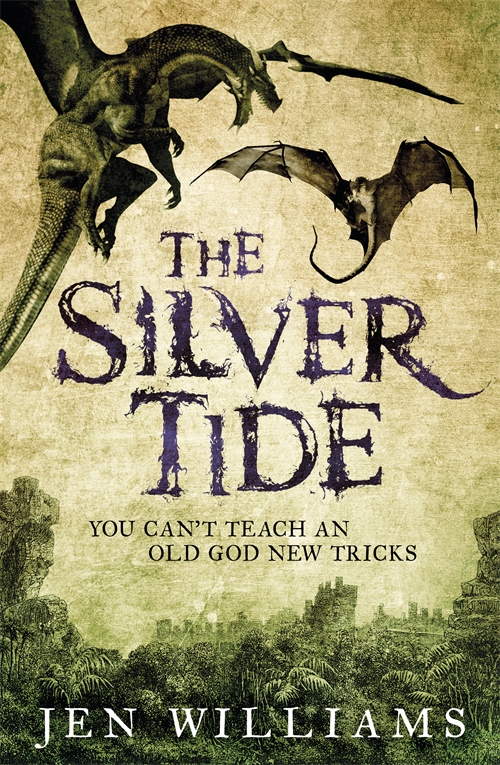
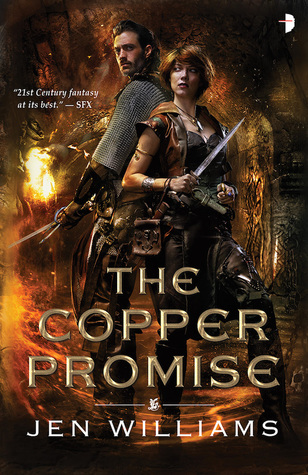
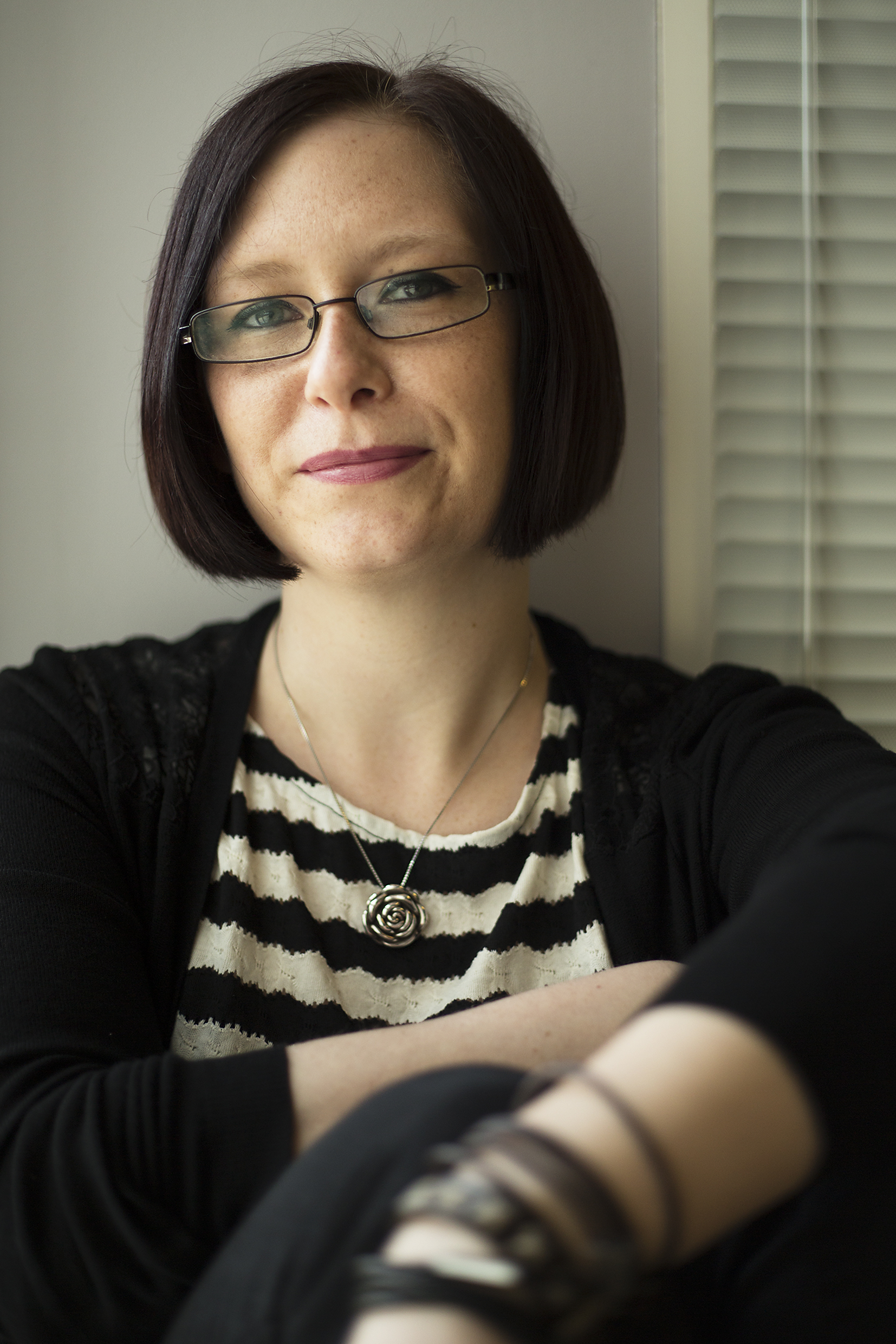 Jen Williams lives in London with her partner and their cat. A fan of pirates and dragons from an early age, these days she writes character-driven sword and sorcery novels with plenty of banter and magic, and in 2015 she was nominated for Best Newcomer in the British Fantasy Awards. The Copper Cat trilogy consists of The Copper Promise, The Iron Ghost and The Silver Tide – all published by Headline in the UK – and the first two books in the trilogy are now available in the US and Canada, published by Angry Robot. Both The Iron Ghost and The Silver Tide have since been nominated for Best Fantasy Novel in the British Fantasy Awards. Williams is also partly responsible for founding the Super Relaxed Fantasy Club. The Ninth Rain, the first book in the Winnowing Flame trilogy, was published by Headline in February 2017, and she recently answered questions regarding it from Greg D. Smith…
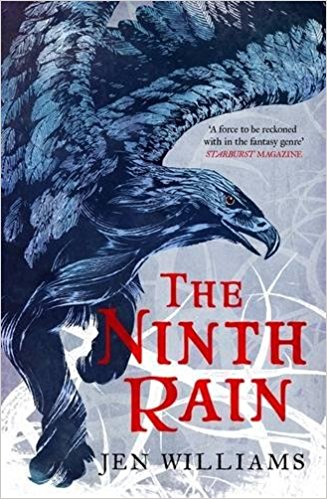 What can fans expect from The Ninth Rain?
My first series, the Copper Cat trilogy, was a knock-about sword and sorcery adventure – it’s very much a deliberate love letter to a certain tradition of fantasy, and I had a lot of fun playing with familiar tropes. The Ninth Rain still contains a lot of the things I enjoy writing best, such as snarky dialogue and characters you want to go for a pint with, but it’s very much in the epic spectrum of fantasy. I’m not playing with tropes anymore, and this is a new and quite distinct world. It’s fairly weird, is what I’m saying.
As someone who hasn’t read much in the wider fantasy genre, (and indeed had not yet read any of your work) I was pleasantly surprised by how accessible The Ninth Rain was – was it a conscious decision for you to write in a more accessible way, or is it just a happy by product?
I am very much a believer in accessible writing. Who wants to be inaccessible? And it’s certainly something I think about while I’m putting a book together.
With epic fantasy in particular, you have an awful lot of information you need to convey to the reader: not just who the characters are and what they want, but what the world is like, how it works, if magic is present, what the history is, and so on. If you plonk all of that at the beginning of the story, the book basically starts with a giant wall the reader has to climb over to get to the good bits. My approach is to stir the world-building through the plot, reveal bits and pieces as you go along – preferably via the character’s own experiences and backgrounds. I write very character-driven books, and I want you to learn about the world through them. I also approach writing with the idea that each scene should end with a new question being asked. Not literally, of course, but with each piece of the story we should want to know more – why is Noon cagey about her past? What do the worm people want? Will Tormalin reconcile with his sister? Is everyone going to die? The questions pull the reader through the book.
 You mix in a certain amount of what I would call science fantasy or possibly even Steampunk with the usual fantasy stuff in The Ninth Rain – what were your influences when writing this world?
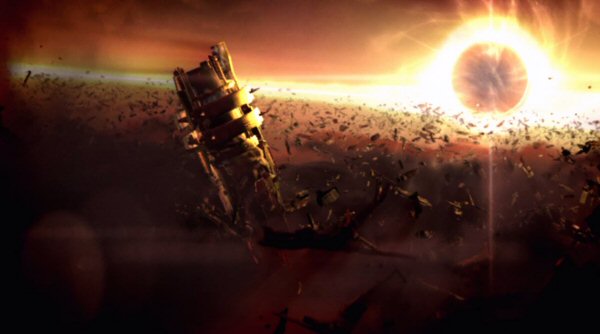
I’m a huge and possibly even slightly obsessive fan of the video game Mass Effect (my partner had to gently pry the controller from my mitts towards the end of the last game and push me towards the shower – I’d barely moved from the sofa in a week). In the second part of the trilogy, Commander Shepard explores something called the Collector base, the home of some very frightening aliens who have been abducting people across the galaxy. It’s a very tense scene, and that feeling of deep strangeness, of an enemy you couldn’t possibly understand, was something I thought about a lot when I was writing the Jure’lia – a monstrous enemy that appear out of nowhere every few generations, wreaking havoc and then vanishing again. I think I wanted to create a truly strange world, and in doing so I’ve wandered into the science fiction playground a little, which is lots of fun. The other big influence on The Ninth Rain is Princess Mononoke – forest spirits, fierce women, a deep mythology. I love that film.
 I loved that there were gay characters in the world of The Ninth Rain and there was no huge deal made out of it – again, was it a conscious decision of yours to get some proper representation in there, and did you face any pushback from the publisher on any of the choices?
I believe firmly that representation matters in fiction. When I was reading fantasy books as a younger person wondering where all the women are (I still do that sometimes, but I waste less time and just put the book down), obviously there will have been young LGTBQ people wondering where they were too. I know that it means a lot to me to read about interesting women, and in my opinion stories are almost always more interesting when the cast isn’t one giant parade of straight white men.
The creation of characters is a strange and mysterious process, very difficult to pin down and explain in any useful way. I can’t tell you a point where I ‘decided’ that certain characters were gay – I just gradually realised that they were. There are gay characters in the Copper Cat trilogy too, and my publishers have been nothing but endlessly supportive, and amazingly I’ve never had any readers complain about it (that I have seen, anyway). What I have received, are emails from people explaining how much reading about gay characters – or even characters that challenge gender roles – has meant to them.
 We’ve seen Elves be a dying race with waning influence in many fantasy universes before, but how did you manage to make yours quite distinct?
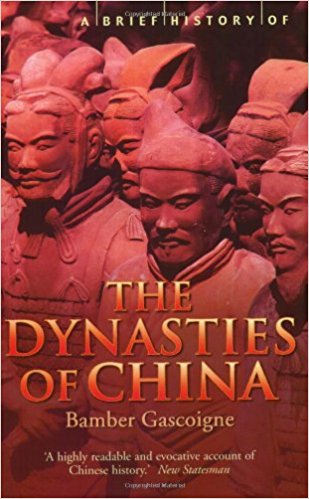
I was reading Bamber Gascoigne’s The Dynasties of China, and he mentioned an abandoned city – once the greatest city in the world, now given over to wolves, with weeds growing up through the roads. That image was really the genesis of the whole series. I started to wonder who had lived in this, now fictional, city, why they had vanished, and if there was anyone hiding in the ruins… That eventually led to the Eborans, a race of long-lived people who generally think themselves a bit superior. After a while, I realised I was writing about Elves in a sense, and in a more complicated way, the British Empire.
Vintage is possibly one of my favourite characters I’ve read in recent years – where did the inspiration for her come from? She feels like quite a personal character the way you write her?
I honestly think that really great characters – and by that I mean characters who are huge fun to write – come out of nowhere. Just like Wydrin Threefellows in the Copper Cat trilogy, Lady Vincenza ‘Vintage’ de Grazon really appeared in my head fully formed, and I rarely ever have to ponder what she would say in any given situation; her voice is just too loud. Originally I knew I wanted a scholar to be one of my main protagonists, someone who was interested in solving the mysteries of this broken world and BAM! There was Vintage.
 You’ve got several characters in the novel who are older than the usual protagonists/antagonists we might expect to see in this sort of story, and all portrayed as refreshingly more capable thanks to age rather than less – was that a deliberate choice to try to address the balance of the genre, or just the way that they came out?
I will admit this was a little deliberate. Older women are vanishingly rare in fantasy books, unless they are hanging about to get killed off somehow, and they are rarely protagonists. In the last book of the Copper Cat trilogy, I introduced Wydrin’s mother, Devinia the Red, and she was enormous fun to write – she was tough, abrasive, angry, and more than willing to horribly embarrass Wydrin at a moment’s notice. It made sense to me that a scholar would be an older person, someone who has spent decades of their life learning about their chosen subject, and I couldn’t see any reason why she couldn’t also be totally capable of handling herself. Vintage has also spent much of her life looking after an enormous rural estate that contains a lot of very ‘lively’ wildlife – so she’s not afraid to get her hands dirty.
Without going into spoilers, there is a sexual scene in the book, which is so well done. Was that difficult to do in a genre book? Is it something that you wanted in there from the start or did you just find the characters leading you in that direction as you wrote?
Sex in fantasy books can be a bit of a thorny issue. I know that there are people who will avoid a book entirely if it has even a hint of romance, or if the characters start getting hot and bothered, but personally I believe that as sex and love are a part of life (a big part of it) then of course they should be integral to works of fiction. How you go about handling it is even trickier, of course, because it’s easy to swerve into accidental comedy with various appendages waving about, while continually fading to black can annoy readers too. In The Ninth Rain, the sex is important to the emotional journeys of two key characters, and therefore important to the story, so I was happy to include it.
 The novel covers some very pertinent real-world themes for all that it’s a fantasy – the subjugation of women, the terror of old age, fear of mortality. Is it easier or more difficult to write about these things in a fantasy setting?
I knew I wanted to write about the oppression of women in these books, and about the fear of women’s sexuality. Being able to create your own world gives you an interesting opportunity to talk about these subjects in unusual ways, and it’s possible, I hope, to get people to think about things from a new angle. In the world of The Ninth Rain, some women are born with the ability to produce fire by taking the life energy of other living beings – they are feared, and locked away for their ‘own safety’. They are also told that they are inherently evil, and dirty, even if they haven’t done anything wrong. Unfortunately it’s not hard to draw parallels with our own world.
The Ninth Rain is the first in a trilogy – when can we expect to see Book 2, and do you have any plans for this world beyond the end of this trilogy?
All being well, the second book, The Bitter Twins, should be out early next year. As yet the story ends with the third book, but there are plenty of stories that could still be told in this world.
The Ninth Rain is out now from Headline
 Doctor Who News Star Trek News
 Sci-Fi Bulletin: Exploring the Universes of SF, Fantasy, Horror and Spy-fi!