Feature: Return to Camelot
Giles Kristian’s new novel, Camelot, is published this week by Bantam, and is a sequel to his successful Lancelot. Another blend of high fantasy and historical fiction, Camelot follows the […]



Giles Kristian’s new novel, Camelot, is published this week by Bantam, and is a sequel to his successful Lancelot. Another blend of high fantasy and historical fiction, Camelot follows the […]
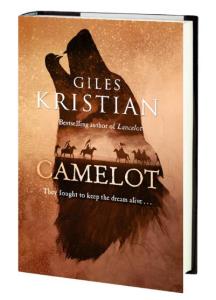 Giles Kristian’s new novel, Camelot, is published this week by Bantam, and is a sequel to his successful Lancelot. Another blend of high fantasy and historical fiction, Camelot follows the life of Galahad – last seen abandoned on a hill as a child. Here, Kristian discusses the opportunities a return to Arthurian legend provided…
I upset people I love with the ending of Lancelot. ‘How could you leave a little boy alone on a hill like that?’ they asked. ‘What kind of father would do that?’ They mean Lancelot there, not me. Well, maybe a bit me. It was my decision after all.
No, I’m not one of these writers who says that the book wrote itself. I mean, that sounds good, and I really wish it were true, but we all know it doesn’t really happen that way, because writing is bloody hard work. We sit in our comfy chairs and play God. We make the tough calls and revel in the destruction we leave in our wake. Or else why would we do it?
Still, we’re not complete sociopaths, and when a family member looks at you like you’ve all the compassion of Genghis Khan for ending a book in such fashion, well, you think about it at night as you lie in the bed of your own making. You hear things in your head. The voices of your ill-used characters (and maybe the voice of your agent saying your last book did well so you should probably think about following it up). But mainly the characters.
And so, I decided to go back and find that boy on the hill. His name is Galahad and he is Lancelot’s son. Having been abandoned like that, he deserved his own tale. Even better, as a character he would already be brimming with motivation, inner conflict, flaws, hopes… father issues, if you will. Here, then, would be a very different man to Lancelot, who went through life with a singular (somewhat violent) purpose and never doubted his own abilities.
With Galahad I got to explore what it means to be your father’s son. To wonder how free an individual might be to make their own choice, to take their own path, and how much is almost pre-ordained because of who they are and the long shadow in which they walk. It’s about legacy. But also, Camelot is about a fading dream. A vision of what could be again, even though in truth it perhaps never was. I guess it’s a story about hope.
Camelot is set ten years after Lancelot. Britain is enduring a time of savagery, heartbreak and strife. The old heroes of Arthur’s time are all but gone or scattered far and wide. The Saxons are strong again, their war bands roaming like wolves, killing, burning. The kings of Britain look only to their own palisades, and there is no one to unite them, no one to stand against the darkness. And yet, there are still those who remember better days, and perhaps even those who dare to imagine a Britain delivered of her enemies and returned to the old gods.
A novice of an island monastery in the Avalon marshes, Galahad is a young man burdened by his father’s legacy and embittered by his abandonment. But in the company of Arthur’s last remaining horse lords, Galahad learns what it means to be a part of a different kind of brotherhood, one forged in the fires of battle and quenched in the bitter drafts of tales of the past. And in the wild and sometimes vicious Iselle, Galahad finds a young woman who ignites something inside him from which it will be impossible to hide.
And that, perhaps, is what lies at the heart of this story. After all, we are what we are.
Camelot is out now from Bantam; click here to order from Amazon.co.uk
 Doctor Who News Star Trek News
 Sci-Fi Bulletin: Exploring the Universes of SF, Fantasy, Horror and Spy-fi!