Feature: Planet History
Paullina Simons was born in the Soviet Union, raised in the United States, and grew up wanting to be a writer. After graduating from the University of Kansas, she wrote […]



Paullina Simons was born in the Soviet Union, raised in the United States, and grew up wanting to be a writer. After graduating from the University of Kansas, she wrote […]
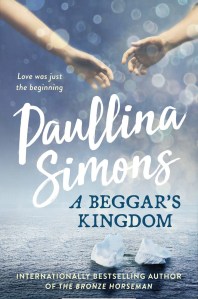 Paullina Simons was born in the Soviet Union, raised in the United States, and grew up wanting to be a writer. After graduating from the University of Kansas, she wrote her first novel, Tully, at the age of twenty-nine. Based in New York, Paullina previously lived in London, Rome and Kansas, and has authored thirteen novels and two children’s books. The second of her time travelling series End of Forever was released in July, and here she talks of the challenges presented when writing about history in a fantasy setting…
There are basically three different worlds in which you can set a story. The first is your own world, or the time and place in which you live. This has its challenges because you have to be accurate, and the world has to be recognizable. Yet the sum total of the details that make up your world needs to make sense and be compelling.
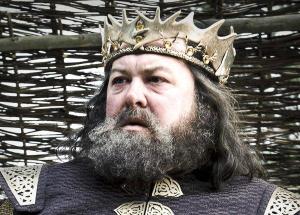
The second type is an imaginary world, either a fantasy or a science fiction world, which includes anything from Wizard of Oz to the world of Game of Thrones. Here the author has control over the parameters of the world. Even in a universe like Game of Thrones (which borrows elements from history and the “real” world), the author can pick and choose the details that make up this imaginary world to serve their story.
 In Oz you can have people made of china. And in Game of Thrones you can have dragons that breathe fire, or creatures that rise from the dead.
The challenge here is to create a world that readers understand, with “rules” that make sense. Bram Stoker gave his Dracula the strength of twenty men but made him vulnerable to wooden stakes. The parameters of the world are under the author’s control and though tricky to manage, ultimately must serve the story.
The third type is a world that is part of the author’s universe but foreign to the author and his or her experience. That could be a different country and/or culture, or a different time, or all three.
For me, this third option is the most difficult setting for a story.
It’s a bit like trying to communicate fluently in a language that isn’t the one you grew up speaking (something I know a bit about).
You can’t build your story world from the one around you. And you can’t make it up or simply mold it from your imagination.
 You have to learn about it from research, which can be anything from actual study, to other novels, to movies, to TV, or what you picked up in school, or some combination of all of the above.
You have all the requirements for accuracy, but you don’t have a lifetime of experience to guide you. And believe me, there are plenty of people who are happy to tell you when you get something wrong.
I’ve gotten letters from people who told me that they couldn’t enjoy The Bronze Horseman because I had officers and enlisted men fraternizing, or a furlough that was way too long, or that I wrote about tomatoes when every true Russian knows there were never any tomatoes in Russian villages.
Putting aside that Russians can be very critical about that sort of detail, there is a real danger of simply getting things so wrong that the setting, instead of serving the story, becomes a distraction or (at worst) makes the story impossible or silly.
 The key is to research like crazy and then to throw away 90% of what you’ve learned to tell your story effectively, to make the “universe” of the story seem like a real place—not a black and white photograph or a painting of a real place.
I have a friend who works in Hollywood who described the world of the 1960s that Mad Men shows us as an “alien planet”—one that’s familiar but strange. And it’s a place that must seem real to people who are seeing it for the first time as well as people who remember that planet because they’ve been there.
I think that the inhabited world of any good story is like that. It’s a collection of details that make up a brand new universe. You can make it up whole cloth, or from the world around you, or from history.
Each type has its own challenges. History just has more of them.
A Beggar’s Kingdom is out now from HarperCollins
 Doctor Who News Star Trek News
 Sci-Fi Bulletin: Exploring the Universes of SF, Fantasy, Horror and Spy-fi!