Feature: Centering the Female Experience in Fantasy Fiction
Claire Legrand is a librarian and the author of several novels for children and teens, including the Edgar Award–nominated Some Kind of Happiness and The Cavendish Home for Boys and […]



Claire Legrand is a librarian and the author of several novels for children and teens, including the Edgar Award–nominated Some Kind of Happiness and The Cavendish Home for Boys and […]
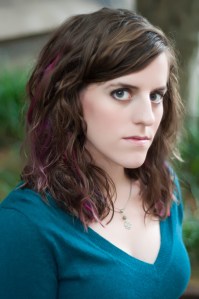
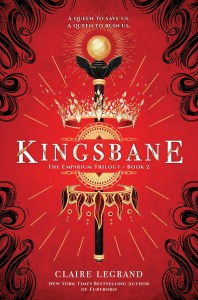 Claire Legrand is a librarian and the author of several novels for children and teens, including the Edgar Award–nominated Some Kind of Happiness and The Cavendish Home for Boys and Girls. The second novel in her Empirium Trilogy is released on May 21 and here she challenges one of the regular tropes in fantasy fiction…
All my life, I’ve watched films and television shows in which a female character is abused, tortured, raped, or killed in order to motivate a male protagonist or enhance his character development. Her pain is merely a device, and if she’s angry about what’s happened to her, we don’t necessarily get to see that—or if we do, it’s not given as much prominence as that of the man who loves her.
Though even from an early age, I felt a sick twinge in my gut watching these scenarios unfold, for a long time I didn’t consciously see anything wrong with this narrative construct. This was the kind of story I grew up consuming, after all, and in my particular corner of the world, no one I knew was calling it out as lazy or toxic.
Now, do I think there’s something fundamentally wrong, no matter the execution, with a story about a male protagonist that includes a woman close to him getting hurt? No, I don’t. However, the frequency with which this device is employed frustrates me, to put it mildly. I’m tired of storytellers exploiting and sensationalizing female pain in order to serve a narrative. Any number of plot elements could spur a male protagonist to action; why do storytellers so often jump right to “Rape his wife,” “Abduct and traumatize his daughter,” “Abuse his girlfriend”? I’m sure that at least sometimes it’s because storytellers know that the fear of something horrible like that happening to a loved one is primal and fundamental. They rightly suspect that most people experiencing their story will therefore be able to instantly relate to and sympathize with their protagonist. Fine. That’s fair.
 But does it have to happen so damn often? And shouldn’t we, as storytellers, be mindful of the collective trauma that a lifetime of media depicting violence against women does to not only the girls and women living in the world, but also to literally everyone? If we constantly jump to “violence against women” as a storytelling device, to the point where it becomes expected, to the point where audiences become numb to it, aren’t we part of the larger problem of actual violence against women, domestic abuse, and rape culture?
I had such thoughts and questions in mind while developing the Empirium Trilogy over the past fifteen years—increasingly so as both my storytelling abilities and understanding of the world around me matured and expanded.
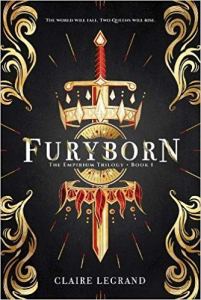
The Empirium trilogy is the story of two young women—Rielle and Eliana—who live one thousand years apart in the world of Avitas. They each discover that they possess a tremendous power foretold in an ancient prophecy. Said prophecy declares that “Two queens will rise. One of blood, and one of light. One with the power to save the world, one with the power to destroy it.”
Pretty quickly, these two girls must consider tough questions: “Am I truly one of these two prophesied queens? If so, am I the good queen or the bad queen? Do I have a choice in the matter? Can I still become one or the other? Or has my fate been decided for me? And if that’s the case, how do I grapple with that cosmic injustice?”
Meanwhile, the people around Rielle and Eliana have their own ideas about what being a “good” or “bad” queen means—and many of them think the girl in question had better figure out how to demonstrate she’s the good queen. She’d better be subservient and willing to bear the suffering and sacrifice she has coming to her without complaint or defiance. Otherwise, there will be serious trouble.
 Thus begins Rielle and Eliana’s journey, which centers around the following conundrums: How do they carve out a place for themselves in this world that thinks it knows what’s best for them, a world that thinks it knows what kind of person they should become? How do they find the courage to stand up and advocate for their own agency, express their anger, and demand that the people around them recognize their very real, very traumatizing pain?
These are questions the girls and women in our own world must ask ourselves. In a world that often reduces us to stock narrative devices, interchangeable and disposable, our pain sexualized and our greatest fears glamorized, violence against us splashed across television screens again and again and again… In such a world, how do women learn how to articulate our anger? Where do we find stories that center our experience, our pain, our desires? Where are the stories that trumpet the power of female rage? The stories that unflinchingly explore the tragedy inherent in forcing women to play nice and conform to other people’s expectations? The stories that reject the idea that women must again and again see the people representing them onscreen be raped and abused?
For a long time, the genre of epic fantasy was dominated by male authors, and it still seems to be heavily populated by male authors and their stories. But the world of young adult fantasy, in contrast, is full of female authors writing stories about female characters and the female experience. I’m convinced that’s one of the primary reasons why this age category and genre have been flourishing so spectacularly in recent years. Why not only teen girls read these books, but also adult women. Rape culture is endemic, toxic masculinity leads to frequent acts of horrific violence that affect us all, and politicians eager to strip away women’s rights are gaining power. In such an era, women are hungrier than ever for stories in which our experiences, our fears, our desires, and our anger are not simply window dressing, nor tools to further a male character’s development.
In the Empirium Trilogy, Rielle and Eliana struggle to reclaim their agency from the forces determined to silence and control them. Their pain, their sexual appetites, their anger—this is the heart of the series. Whether or not they will triumph remains to be seen; book 3 will release in 2020, and book 2, Kingsbane, hits shelves on May 21.
But one thing is certain: the pain they experience, the anger they feel, the traumas they endure, remain the heart of the story. They are reclaiming the freedom stripped from them by people who want to dictate how they must use their power, and through telling their story, I am contributing to a genre and age category that boldly centers the female experience in huge, epic, brimming-with-swords-and-magic fashion. The Empirium trilogy is Rielle and Eliana’s story, and theirs alone. And it’s one I am proud to have written.
Kingsbane is out from Source Books on 21 May, rrp £13.99; click here to pre-order from Amazon
To find out more, click here for Claire Legrand’s website
 Doctor Who News Star Trek News
 Sci-Fi Bulletin: Exploring the Universes of SF, Fantasy, Horror and Spy-fi!