Who is Aldrich Kemp?: Interview: Julian Simpson
Julian Simpson’s latest audio series is Who is Aldrich Kemp? which has run in BBC Radio 4’s Limelight slot and is now available on BBC Sounds. Phoebe Fox stars as […]



Julian Simpson’s latest audio series is Who is Aldrich Kemp? which has run in BBC Radio 4’s Limelight slot and is now available on BBC Sounds. Phoebe Fox stars as […]
 Julian Simpson’s latest audio series is Who is Aldrich Kemp? which has run in BBC Radio 4’s Limelight slot and is now available on BBC Sounds. Phoebe Fox stars as Clara Page, in what’s described as “a heightened and fun journey, which takes us to glamourous and sometimes improbable locations”, in which we encounter Euro-villains and murderous housekeepers. The show’s creator briefed Paul Simpson over Zoom…
Spoilers in the last question and answer
I absolutely loved Aldrich Kemp.
 I thought you might. I wasn’t sure because it’s not so obviously sci-fi. I hoped you’d get The Avengers and The Prisoner references. Someone on Twitter even got the Department S references which was nice. They’re not overtly there, it’s just that, it’s all part of that world.
And The Black Windmill…
No one has got that yet…
The Michael Caine movie which features the windmill that I can see out of my window! As soon as I saw episode 3 was called The Black Windmill I wondered if we’d get a Drabble reference – or you might drop the phrase Seven Days to a Killing in there – to tie in with the original book.
Ah, no I didn’t do that. Someone else said that the music was reminiscent of The Quiller Memorandum which wasn’t conscious.
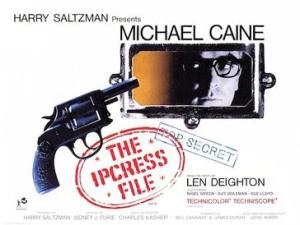 It’s the last chord, it’s Quiller and it’s also Ipcress File.
The Ipcress File was a massive reference, yes. The movie may have nothing to do with the book but the movie’s just utterly iconic.
Where did the idea for this come from? We’ve had three Lovecraft Investigations, with Matthew still vanished at the end of the most recent. Why the sharp right turn into this?
It’s not as sharp a right turn as you think. The Pleasant Green universe built out on all my notes and overlapped into a TV pilot that I wrote back in 2016/2017 that got me all my American work even though it never got made. That was called Kaleidoscope and was about the kaleidoscope machine that we referenced briefly in Aldrich. That world expanded out and a couple of characters in other things that I’ve been toying with overlapped between Lovecraft and the Kaleidoscope world, so that Pleasant Green universe kind of got bigger.
 The Lovecraft Investigations was not intended to be anything more, originally, than a contemporary adaptation of The Case of Charles Dexter Ward and then it spiralled out and became something bigger. And the minute that Parker came into it and the Department of Works came into it, it fully overlapped into that Pleasant Green universe and into the Kaleidoscope universe.
At the end of The Shadow Over Innsmouth there was a bonus episode where Kennedy was reading the Somerton Man mystery and at the beginning, introducing that she said, ‘I’m in Amsterdam at the moment, looking for a man named Aldrich Kemp.’ That was just a name that I pulled out of my head. Then I was up in Suffolk on a family break, sat down with my notebook and just idly wrote ‘Who is Aldrich Kemp?’ on the page and started figuring that out.
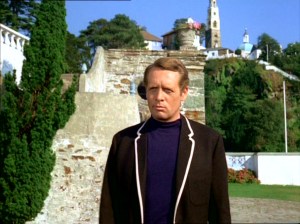 I love spy-fi and I’d always wanted to do something that recalled The Avengers and The Prisoner and The Ipcress File and Quiller and all of those things so it didn’t seem as sharp a left turn as it may seem from the outside.
This was written in a hurry. It was originally going to be four episodes then it became five episodes. I think I started writing it two months before we recorded it so there was no lead up to it really, it was just write it.
So I was making it up as I go along, as I always do and when [Phoebe Fox’s] Clara [Page] went into the DeJong house in Amsterdam at the end of episode 2, I was like ‘Traditionally there would be someone hiding in a cupboard here. Someone should already be here.’ And that person came out and I was like, ‘Oh, it’s Kennedy, OK. So now we’ll do a Kennedy Fisher episode and tie it in. Why is she looking for Aldrich? Well, it’s got to be to do with looking for Matthew.’
So that blended slightly and hopefully will lead into Lovecraft season four but we don’t have a commission for that at the moment. One person on Twitter has spotted that Kennedy at the end of episode 3 says ‘‘I’m looking for Edwin Lillibridge, who is a character in The Haunter of the Dark, the Lovecraft story, so if we do a season four it will be Haunter of the Dark.
 I noticed on the BBC website for Aldrich that episode 5 says it’s ‘the end of series one.’
This thing can run and run as far as I’m concerned because I love Clara as a character and I love Aldrich and his gang. The comp[arison] for me, strangely, isn’t actually anything in television really, the comp for me is the Modesty Blaise novels. I love those books so much. I’d be happy to do a similar thing and keep running with those characters.
When you were writing Aldrich and his gang, did you work out who the characters were beforehand or did you just write them and let them be on the page?
I kind of knew who I was writing for with a lot of them so I wrote them and let them be. At one point Sebastian and Nakesha were married but they’re not anymore.
I knew what I had got from those original notes when I was in Suffolk. Figuring out who Aldrich Kemp was, I’d got the backstory of the plane crash in Sudan and how they’d got together – which is strange because it basically means that Nakesha’s storyline tracks quite well with Modesty Blaise’s origin – but no, I left them to talk to each other and figure out who they were.
 As long as the house was not on the map and was in the middle of nowhere, there was a weird village that felt like The Avengers and we could meet them having a twee breakfast in the garden, then I knew we’d be alright.
I don’t know if it comes through on the audio that well but there was a reference there in my head, a kind of Orson Welles feel to Aldrich. Not so much The Third Man, more of an F for Fake thing: when we see him on the beach and on the ski slope, he’s just everywhere, talking over everybody and is this big gregarious character.
But yes, the character just evolved on the page.
There’s a Peter Lorre feel to Conrad Spijker. I mean it even sounds like a Peter Lorre character name. In fact, it’s not even Peter Lorre himself, it’s either the Tom and Jerry or Looney Tunes version of Lorre.
 It’s kind of that, it’s also kind of The Maltese Falcon Peter Lorre. He was referenced when Aunt Lily gets drugged in the old people’s home in Eastbourne. The guy who drugs her was also kind of doing a Peter Lorre impression as well. Also Lorre in Secret Agent which I’ve always loved, the Gielgud film.
Peter Lorre got mentioned a lot when we were recording this, it’s the perfect villain voice for radio.
You’ve got your rep company of actors for this – Nicola [Walker] and Phoebe have both done genre work, but did the others have enough of a background in this material to understand where you were coming from or as director were you having to explain what this lunatic writer was going on about?
Actually, weirdly we didn’t have many conversations like that. I think Susan Jameson knew intrinsically what it was because she was working as an actor at the time that we’re talking about. So I think she just knew exactly where we were without having to be told.
 Karla Crome who plays Nakesha won’t be aware of this stuff, it’s not in her wheelhouse of references, but it didn’t need to be really. She got that this person was well bred and she got the backstory. You don’t want them to play arch, you don’t want them to play stereotypes.
Kyle [Soller] just gets character stuff, he loves doing clowney character stuff and isn’t asked to do it for television because he’s too pretty to do that. And what I think Phoebe was welcoming was the chance, with me at least, to play someone warmer. We always get her to play arch and in some way villainous or suspicious and cold. I think she was just relishing the chance to play someone a lot closer to who Phoebe actually is. Even the smaller parts, I didn’t show anybody anything.
When I called [Ferdinand Kingsley – Aldrich] up and said ‘Do you think you can manage this?’ we had an Orson Welles conversation and Ferdi was across that because he’d just come off of doing Mank for David Fincher, so he was completely steeped in playing Irving Thalberg and understanding that world.
Were there specific challenges on this one as director? Covid presumably must have had some impact.
 Covid wasn’t as bad.
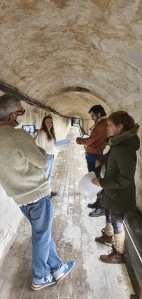
We had big Covid problems on Shadow but we did not have them that badly on this. It was a much smaller cast, everyone tested so that we knew everyone was clear and everyone I think was jabbed. So it was actually a bit more like the old days. Me and Phoebe and Karla and Ferdi stayed in a house down in Hove and then recorded in another house in Hove. We recorded a bit in London, we recorded a bit at the Pavilion in Brighton and the tunnel underneath and in Essex.
So, no actually, it was much much easier. It was much less masky and socially distanced than it would have been pre vaccines and pre testing. On Shadow we had to do a couple of actors completely remotely because they had a temperature and couldn’t come in that day. We didn’t have anything like that on this.
I can’t remember actually sensing anything on Shadow so [sound designer] David [Thomas] did a terrific job.
He did an amazing job on Shadow. There were whole characters on Shadow that couldn’t be there. This one was super easy, it was just having the old gang back together and everyone just enjoying themselves.
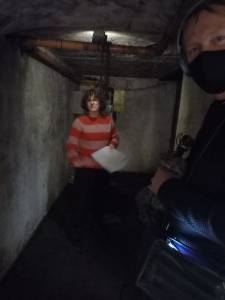 It’s funny, I find when I’m directing this stuff that the minute I start to hear it back, the minute I start to hear David’s assemblies, and especially once he starts putting backgrounds and sound effects on, I lose any memory of where we recorded things and I just have the images I’m meant to have in my head. I’m aware, consciously, that the DeJong house where Phoebe finds DeJong’s body and meets Kennedy is in the kitchen of this house in Hove, which was the same kitchen where Phoebe encounters the Underwood Sisters in her apartment for the first time, and it’s also the same kitchen, literally three feet from where she finds DeJong’s body is the kitchen table where we recorded the café scene that’s most of episode 3 between her and Kennedy. The minute you listen to the audio it all separates out, so Jana [Carpenter] was in for one day doing the Underwood Sisters and Kennedy, the whole lot in one day, in one place.
It did seem slightly more linear than some of the previous stories.
It was much easier to know where you were in the story, because we’re not jumping back and forth. The only tricky bit was when you’ve got the stuff with Tim McInnerny’s Bartholomew talking to Phoebe while she’s in her apartment and you’re kind of going ‘Which voice do I need? Is she in the office? Is she here? Where are we recording this?’
But, apart from that, it was actually remarkably self contained. Each scene just happened and then moved on.
 David did an amazing job: the gun effects on this, the gunfire is great. For episode 1 in the underground car park in Estonia that was interesting because we recorded a car park in Brighton with Phoebe running around and there was just a general sense of ‘there will be cars and there will be someone chasing her and we don’t quite know what we’re doing to do yet’. Then David and I sat down on Zoom with the audio files and I was like ‘What if it’s not a car, it’s a motorbike? What if there’s a machine gun?’ And literally we just assembled it from sound effects using the reverb in the place which was really nice.
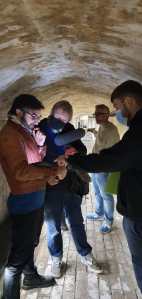
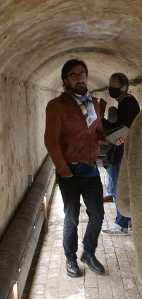
There was a tunnel built between the Brighton Pavilion and what was The Stables, supposedly for the Prince Regent who was colossally overweight so he wasn’t seen by anybody. I don’t think it’s open to the public but that’s where we did all of the Albanian dungeon stuff and a lot of the running around. But it was grim. Those guys were super Covid cautious which is perfectly sensible but you’re in a dark sweaty tunnel with masks on, it was all quite unpleasant.
Why reveal Tim being the bad guy so early? That surprised me. I thought he was going to be but the fact that we got this so early, at the end of episode 3, completely changes how you listen to the rest of the story.
I think it’s partly a function of making it up as you go along. When I started writing it, I was like ‘Great, for the first time I get to have Tim not being a baddie.’ And then he turned out to be the baddie. Where it happened was just the right place.
What I actually really like about working this quickly is that you write an episode, send it into Karen [the producer], start the next one, although it’s not that you’ve completely locked it because I do go back and fill it in a little bit.
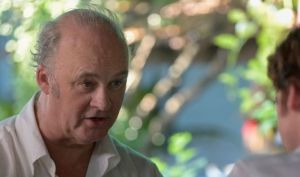 The end of episode 3: the windmill’s blown up, we know full well that Clara’s not dead because that would be ridiculous. We’ve got two more episodes to go. So, it needed some ending and suddenly Conrad’s talking to Bartholomew, and I was like ‘We’re wondering if he’s the bad guy.’ And then we can then play with stuff when she’s talking to Bartholomew. We think that she’s still onboard with this the whole time she’s on the train to Vienna and then we discover that she’s actually not on the train to Vienna, that’s a sound effect and she’s known for a while that it’s him, since then.
He’s only a traitor, really. Conrad Spijker is still the bad guy, he’s still the guy we have to defeat, so Bartholomew is just an afterthought for the end of the series.
Who is Aldrich Kemp is available now – click here for the first episode
 Doctor Who News Star Trek News
 Sci-Fi Bulletin: Exploring the Universes of SF, Fantasy, Horror and Spy-fi!