The Witch Farm: Interview: Danny Robins
Danny Robins’ latest case moves attention from South London to the Brecon Beacons, as he and his team – once again including parapsychologists Evelyn Hollow and Ciaran O’Keeffe – investigate […]



Danny Robins’ latest case moves attention from South London to the Brecon Beacons, as he and his team – once again including parapsychologists Evelyn Hollow and Ciaran O’Keeffe – investigate […]
 Danny Robins’ latest case moves attention from South London to the Brecon Beacons, as he and his team – once again including parapsychologists Evelyn Hollow and Ciaran O’Keeffe – investigate The Witch Farm. Paul Simpson caught up with the creator and presenter of The Battersea Poltergeist and Uncanny to find out what set this mystery apart…
The Battersea Poltergeist covered just one topic but then there were multiple cases in Uncanny. Now you’ve gone back to focusing on just the one for The Witch Farm. Why this case, and why focus solely on one case?
That’s a very good question. I think, this was always the intention after Battersea Poltergeist. We felt that that format, that way of telling a story, was something we really enjoyed. I loved the fact that using the drama was a way of almost creating your own archive material for a case where you didn’t have that, where you’ve had this incredibly interesting case full of amazing events and amazing characters but it hadn’t been preserved. In The Battersea Poltergeist, it’s because it was the 1950s and you didn’t have TV crews turning up on your doorstep then. People didn’t own cassette recorders, certainly not smartphones.
This new case is set in the late 80s/early 90s, so it’s the same really. We didn’t have smartphones, didn’t even have people recording stuff then. It was in the middle of nowhere, in the wilds of Wales, so again, a TV crew weren’t suddenly turning up on your doorstep – although there is a bit of TV footage later in the case, as it became better known. It was just a way of telling stories that I really enjoyed and I want to do it again.
 Why this case? It’s really I guess because, as I said at the beginning of the first episode, Battersea Poltergeist took me so close to this point of shifting my world view and actually believing in ghosts. I found myself in this tantalising no man’s land of being caught between scepticism and belief and not quite having the rocket fuel to quite push me over the edge, yet at the same time, having so many unanswered questions. So many parts of the Battersea case just feel genuinely inexplicable and terrifying and I don’t have any answers.
I wanted to push myself further really and prod that hornet’s nest even more, if you like. Someone suggested this case. I went and spoke to Liz, the woman at the heart of it, and I had that same feeling that I got when I spoke to Shirley [Hitchings]. It’s not even what they say, it’s how they say it. It’s that little frisson of fear that you feel in their voice, and if somebody is still scared about something, thirty years after it happened, then I want to know about that. That’s profound, that’s life changing.
And the stuff that was described, the events that happened, ranged from apparitions to poltergeist activity to alleged possession. People were being physically injured. There was so much; it felt certainly as rich as Battersea and with a greater array of phenomena
I instantly felt that this was something I could tell in this way, across eight episodes. Uncanny is something that I love – and there will be, I hope, many series of Uncanny, it’s a way of storytelling I love – but it was fun to be able to dive deeper into a case.
I thought the Uncanny community would really respond to that as well. People are often saying, ‘Can we have more information? Why can’t episodes be longer?’ So, here is a whole case across eight episodes.
Was there nothing then in the poltergeist elements of Uncanny that started shifting you?
 I think it definitely carried on shifting me. I think it’s been a cumulative journey and if I think if I look back to where I was before Battersea Poltergeist I was in a fairly resolute sceptical position.
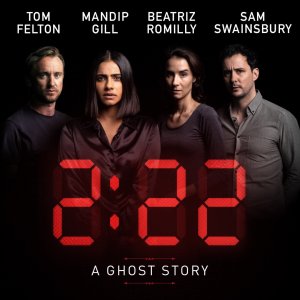
I’ve always been fascinated, obsessed with ghosts. Always loved the idea, enjoyed the fiction around ghost stories. I had a moment where someone very close to me said, ‘I’ve seen a ghost’ and told me this ghost story which made me yell out ‘Wow, OK. This sounds really plausible and really real and this is very strange’. That’s the thing that inspired [the play] 2:22, and as I asked for more ghost stories, many other people came forward too. I was like, ‘Hold on a minute, you don’t seem like the sort of person who would have seen a ghost.’ I started realising there wasn’t a “sort of person” who’d seen a ghost, it could happen to anyone. I got all these ghost stories coming to me for the play and I made Haunted out of that first lot.
I started going, ‘God, these are really odd. Something is happening here.’ If you were asking lots of people to describe a rainstorm and they were describing it in similar terms, you would go, ‘OK, there’s a similarity of experiences here.’ There are things happening to people that make me think that there are patterns here, that maybe this is something that merits more investigation.
Battersea was clearly not a single episode, that was clearly a bigger story, and the more I dived into that, the more I became obsessed, the more I would find myself lying awake at night thinking about the truth behind this. And then, absolutely Uncanny kept me going down that road.
I don’t know. Sometimes believers say to me, ‘How can you not believe yet?’ and sceptics go ‘How can you believe at all?’ Everyone’s got their corner to fight.
It would be really convenient if I manufactured this position because it fits in perfectly with the BBC’s impartiality, doesn’t it, where you don’t pick a side. Here I am straddling both sides. But it’s an entirely genuine position for me: I am genuinely torn on a daily basis about this. I just find myself constantly uncertain and I think maybe that’s a good place to be because it keeps me open-minded and I haven’t closed myself off to any avenues.
But I’m utterly compelled by all the people I talk to and I’m totally convinced that they saw something or experienced something. Their fear is genuine, all of their feelings are genuine. I’m trying to get to the bottom of what is the thing that they experienced. Is it a dead person coming back to life or is it something to do with environments and psychology and that massively mysterious labyrinthian thing, the human brain?
One of the reasons why I followed Battersea Poltergeist was because you were so clear that you wanted to know. You weren’t backing up your own theories, you weren’t coming in with preconceptions. And you’ve got Ciaran and Evelyn, the angel and the devil on your shoulders (and I’m not saying which is which before either of them says anything). It’s the Kirk, Spock, McCoy triangle from Star Trek: emotion versus logic with the Captain in the middle.
Yes.
You‘ve always said you were coming into this to get an answer. Would you tell us if you did get the answer? Because would that not change you?
It would change me fundamentally on every level if I stepped across and started to believe in ghosts.
 I’ve talked about this before on the programme, about being brought up an atheist but also always being fascinated by religion and the idea there’s something out there. I spent various periods of my life where I felt hungry and desperate to step across that threshold. I would love to suddenly see a door open up, metaphorically, and have magic pouring in… but then I speak to people and I think ‘Be careful what you wish for’. A lot of the experiences of people in Uncanny have been terrifying and there’s a fear that remains with them. And even if they’re not terrifying in that way, there’s often something deeply troubling about these experiences. I spoke to Barry Dodds who does ParaPod, who’s a ghost hunter and comedian and he talked about the same sort of thing: he’d always wanted to believe in ghosts, then he had a ghost experience and it was so frightening and he was insensible and had to be kind of carried out and was in a complete state.
Essentially I am a coward as well so there’s part of me that’s terrified at the possibility of proving it true. So for me – and this speaks to the little kid inside me – I really enjoy the sense that we are on an adventure together. It’s a journey: we’re all looking into this deep well that may contain answers for us, and all of us will see different things in it, if you like. Using that analogy of the well, you will see yourself reflected back in different ways. The sceptic will see their beliefs reflected back in it and the believer will see theirs, and just possibly, somewhere under that dark water, there is the truth. Going on that adventure together and experiencing it in our own unique ways is the pleasure to me.
I don’t set finding definitive answers as being the be-all and end-all because I think that that’s probably a fool’s game. I don’t think we will find utterly definitive answers on whether ghosts exist and find out exactly what happened in these cases but we’ll find a whole range of answers, a spectrum of answers that are all fascinating and then it becomes a bit like a Choose Your Own Adventure. You can decide which answers work best for you.
Was there one particular element about The Witch Farm, when you did your preliminary investigation, that made you go, ‘This is the one that I want to look into more.’ Or was it the fact that there are of a lot of different elements coming in. Was it that magnitude that made you latch onto it more?
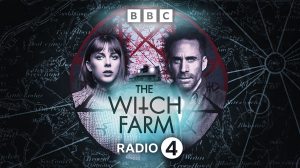 I think there’s something about the sense of scale of the case.
When I’m looking for Uncanny cases, I’m intrigued by the ones that cover a chunk of time, where there’s a real evolution of phenomena.
I’m obviously always looking for stories, I’m looking for where the narrative is. My writer’s brain thinks in terms of three-act structures. I want to see beginnings, middles and ends. I want to see something that goes beyond ‘This happened to me’ to ‘This happened and continued to happen, it changed my life.’ So yes, the spread of this was incredible. It went across seven years and it had this real build of phenomena.
We talked about the stages of poltergeists on the Battersea Poltergeist case and anyone who’s watched The Exorcist will know how it builds from little noises – is it mice in the attic? – to incredibly extreme things. I saw that build from small to extreme in The Witch Farm, I also saw things like apparitions which we didn’t really have in the Battersea case, that sense of alleged possession, which is a hugely evocative and controversial subject. There’s so much to talk about with these things.
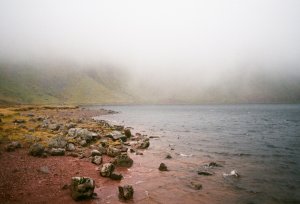 And then also, the backdrop of history. This is an incredibly historic and ancient place, the Brecon Beacon mountains, this place with links to Celtic history and witchcraft and there are amazing things that will emerge throughout the series about some of the more recent history on the site.
It’s really dense with stuff to talk about but fundamentally, all that aside, it always comes down to the characters involved. Liz Rich is such a compelling witness, such a believable witness. You could have all of the phenomena in the world but if you don’t have a witness to back it up, the witness that you feel is credible and plausible and likeable… You’re going to spend a lot of time with this person, you want to feel that you connect with them.
I felt that this case had all of that really and it just felt so rich. We’ve looked at quite a few cases and thought, ‘Could this cope with the Battersea Poltergeist treatment? Would you still be interested in this after eight episodes?’ And often it’s like no, I can see that at four, you might get to six but with The Witch Farm, I’m thinking, ‘How do I get this into eight episodes? We need ten, we need fifteen!’
Well, presumably you can go down the same route as Battersea Poltergeist with extra little bits.
 Yes, there will be case updates with this and I’m sure it’ll have a life around it, definitely. I love that ability to interact and be responsive. I love the fact that already we’re getting lots of emails, we’ve already had a couple of really interesting leads come in and yes, we’ll be finding as many ways as possible to both respond to that and also encourage it.
I love that these shows are always a conversation. I think it’s very much a two-way thing: it only exists in that form. I create a beginning, I give people the information, the raw materials to go off and do their own investigation.
That really came to fruition in Uncanny. It was there absolutely in Battersea, but it really grew in Uncanny and I think, hopefully, on this even more, that sense that people will enjoy spending the week between each episode doing some digging into the events and coming up with theories.
Obviously, this isn’t being created in a vacuum, it is being created in the wake of Battersea Poltergeist and Uncanny, so do you think the witnesses might read more in to what they remember because of that?
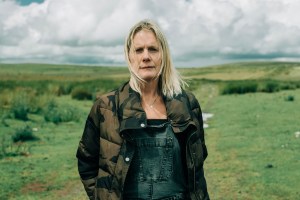 The actual witness themselves? I don’t think so. Certainly with Liz, she hadn’t heard Battersea or anything before. Understandably, she has no desire to watch or listen to ghost stories after her experiences. So I don’t think there’s any [such] factor with her at all.
I’m sure there are some people now who email me, because they want to get on Uncanny as opposed to wanting to tell their ghost story but I do feel like the vast majority of people telling me their stories are doing it in in a very therapeutic way. It’s a cathartic thing for them. This thing has happened to them and they need to get it off their chest and the reason they come to me is because they feel that I will help them do that in a way that’s kind and respectful.
You’re a conduit for it.
Yes. What I feel we’re created is something that feels like the confessional booth. I think people feel safe. It’s a safe space where they can come in and tell their story.
I think most of the people who send me stories would probably not send their stories to other paranormal shows. I feel like those shows are interested in places all too often and I think I’m interested in people. I’ve got somebody with an interesting thing that’s happened to them and I just want to help them tell that story.
I do still feel like the stories that are coming in are all very genuinely driven by a need to tell and a desire for answers and I don’t think that people are chasing attention or publicity. There’s a degree of anonymity to Uncanny, we often just give the first name and you’re not seeing people on the podcast.
I wasn’t necessarily thinking along the angle of fame, I was thinking more of the Heisenberg Principle, that you’re affected by the environment around you. So Battersea Poltergeist was new – it created a format that Witch Farm is following. Evelyn and Ciaran are inevitably affected by previous cases they’ve had and will be affected by Battersea Poltergeist…
 Yes, it’s interesting. I think, as human beings of course all of us are very much a product of our experiences. There’s that great line from Tennyson’s Ulysses: ‘I am part of all that I have met’, that idea that everything feeds into you.
I think when we construct narratives as human beings, a ghost story is basically about somebody trying to convey to other people the fear they felt in that moment. The fear was so extreme and so life-changing that they cannot keep it to themselves. They’ve got to tell other people, and the only way for people to understand that fear is to make that story as scary as it was in the moment. So inevitably, as human beings you construct the narrative that helps you convey that fear so the way you tell it, the way you formulate your ideas, is geared towards conveying that fear.
I think that’s present in all stories: whenever we’re telling anybody anything, we need to convey that moment and we find the best way to do it. For all of us, that’s a challenge. When you’ve done lots of stuff before it is a challenge to stay fresh and to stay unaffected by other stuff and to not bring your preconceptions.
Ciaran would talk about cognitive bias, that you’re looking for the things that confirm your theories. I went to a paranormal conference the other day and some bloke put his hand and said, ‘Why don’t you question the sceptics more? Why don’t you give them a harder time? They’re talking such rubbish.’ And I was like, ‘For every email asking that, I get one from a sceptic saying “Why don’t you question the believers more? How do you let them get away with it?”’
We are all going to have our positions, we’re all going to feel that there’s a certain take on the case. It’s impossible not to bring this baggage with you but hopefully, there are moments within these cases where you are forced to think again. I think there are moments that catch you unawares, where you put your preconceptions to one side and I hope that that’s something that Uncanny and Witch Farm and Battersea pull off. Those moments that force you to think again.
Part of the show’s appeal is you all treat both sides with respect. You’re not trying to trick people. And it has another particular appeal – listening to the first episode of Witch Farm with you narrating, ‘We’re off on an adventure again. Simon’s trying to drive me into a ditch. Get the sheep out of the way!’ it has that ‘I want to know’ factor to take people along.
I think fundamentally it has to be fun. We live in times where we’ve been through a lot of darkness together and we need to be entertained. To make conveying knowledge fun, I think is really important.
 I used to make documentaries. I felt like you pick a subject and you start telling people about it because you’ve learned a bit more about it than them. But actually that release of grabbing a story that was so exciting and so interesting and obsessed you personally, then sharing that with people in a personal way rather than didactically telling them information, going on this journey together and “let’s all look at this, let’s have that adventure that we’re talking about”… I loved that [in Battersea] and I felt released by that. I felt like, for the first time in my career, I was speaking as myself, using my own voice rather than something imposed by a desire or a need to fit some certain mould or tick some certain box for radio or TV. ‘This is right for the 6 o’clock slot on Radio 4 or Saturday night on BBC One.’ I was just telling a story that I wanted to tell in the way that I would want to hear it and thankfully people responded to that.
I think that’s what continues here: it’s got to be fun. It’s a serious subject. It doesn’t get bigger than this: this is basically the biggest event in the history of the universe, it’s what all religion is based on – what happens to us after we die. It’s a question that nobody doesn’t have an opinion on. This is a conversation-starter in any place in the world. Everybody’s got skin in the game. Everybody cares about this so we’re all invested.
I think that’s why it feels so compelling as well because it’s not about some kind of academically interesting point, it’s not some subject that’s kind of ‘Oh yeah, that’s quite interesting, bit curious, I’d read an article about that in the paper.’ It’s about something that has vital total importance to all of us.
Also, it feels like you’ve struck very lucky with working with Bafflegab, with Simon Barnard and team on this.
 Yes, our relationship has just been great and we complement each other very well, I think. We have certain skill sets that really work well together. Simon’s built an incredible oeuvre of spooky audio. He’s established a real niche with that.
We have a great little crack team around us – a very small team because the budgets in audio are so small. We don’t have the huge teams of a TV programme. People like Charlie Brandon-King who worked as our sound designer, she is absolutely fantastic, she is really gifted. We have a composer Evelyn Sykes writing our music who is also absolutely brilliant and wonderful and creates amazing music. The way that Charlie uses that music with the audio and the way that she uses the effects and builds the jump scares and all the moments…
Richard Fox is working with us again as well; he worked on Battersea Poltergeist. He’s very focused on the drama scenes, making it feel naturalistic and believable – the audio sound, the composition of that, the atmos and all that sort of thing.
I’ve got a researcher, Nancy Bottomley, who’s digging up amazing stuff, and the person who never gets mentioned is our transcriber Tam Shilham who has been through the ringer and who is transcribing all these terrifying transcripts for us that I know scare the hell out of her.
I’m just very lucky to be surrounded by a team of people I’ve worked with for a long time now, who are all invaluable bits of making this happen.
Just to whet the appetite, what moment in The Witch Farm shocked you most when you learned it?
 For me, the game-changing moment for me is apparitions, because that’s so rare in cases. We talk about ghost stories but actually in most real ghost stories, you don’t see a ghost. It’s something you see constantly in fiction but you don’t see so often in real life ghost stories. So often they’re about sensations, about almost all our other senses apart from sight: we feel stuff or we smell stuff or we, certainly often, hear stuff. It’s lots of less tangible things. For all of us it feels like seeing must be believing.
If you were to say to me, ‘What would be the moment that would convince you that ghosts exist?’ I think it would be to see a ghost in front of me. It feels as close to being incontrovertible as possible – and in this case, we have not only one apparition, we have multiple apparitions, seen by multiple people. That’s the bit that really gets my blood pumping and my hairs tingling, the hairs standing up on my neck, my spine tingling.
I think it would be the hardest thing to explain as well. I think it’ll be the greatest challenge for the sceptical listeners.
It’s also just seeing the whole thing in context and, as anybody who enjoys crime fiction will know, it’s about the building of a case. You build up the evidence, you find the clues, you reach the conclusion and with this case, you just keep building more and more evidence that suggests that there is something deeply, deeply odd going on.
New episodes of The Witch Farm arrive weekly on Mondays on BBC Sounds, with a BBC Radio 4 broadcast of the episode at 11 pm GMT on Monday.
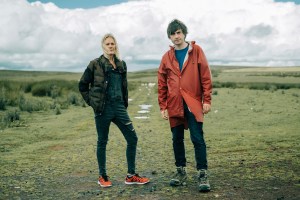
Pictures of Danny Robins and Liz Rich by Rob Shiret and used with permission
 Doctor Who News Star Trek News
 Sci-Fi Bulletin: Exploring the Universes of SF, Fantasy, Horror and Spy-fi!