The Human Frontier: Interview: Genevieve Gaunt
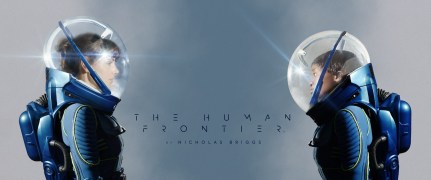
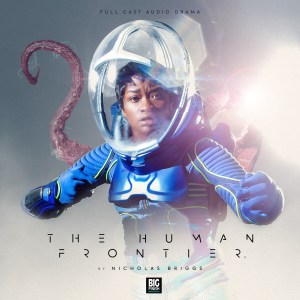
In Nicholas Briggs’ The Human Frontier, Daisy, the commanding officer of the titular ship, falls for Anna, an exographer in her crew. Across the four episodes, her story makes various […]



In Nicholas Briggs’ The Human Frontier, Daisy, the commanding officer of the titular ship, falls for Anna, an exographer in her crew. Across the four episodes, her story makes various […]
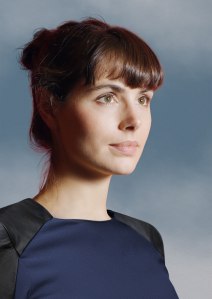 In Nicholas Briggs’ The Human Frontier, Daisy, the commanding officer of the titular ship, falls for Anna, an exographer in her crew. Across the four episodes, her story makes various twists, and shortly after the audio’s release, Genevieve Gaunt, who plays Daisy, chatted with Paul Simpson about the series and the questions it throws up… NB There are some spoilers for the series within
How did you get involved with The Human Frontier?
The very first job I did with Big Finish was Red Planets, which was a Doctor Who, in Autumn 2017.
With Jamie Anderson directing.
Yes, that was Jamie and I also did The Helliax Rift with him then I did The Prisoner [with Nick Briggs] and then The Human Frontier.
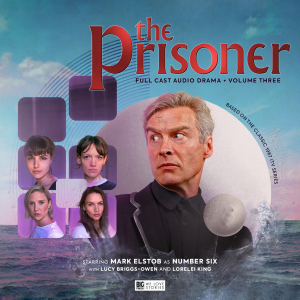 I was actually on set doing another job and I got an email from my agent saying, ‘Can you record a Russian accent?’ I was in-between scenes and so in my dressing room I just wrote this really mad script about (Russian accent) “being Soviet spy, speaking to my commander”.
Black Widow lives!
Exactly. So I sent it off and apparently they were like ‘Yeah, that’s our woman.’ And so I went into this to play a Russian Space Commander.
From day one I think we just hit it off, and I just love working with Nick and Jamie. I love jumping into all these different voices and characters. It’s such a fun collaborative experience, it’s wonderful the different worlds they create. It’s a fantastic place for an actor to just have fun and play. That’s why we all keep coming back – it’s magic.
Was it at The Moat Studio or…?
It’s always The Moat or The Soundhouse. Human Frontier, and The Prisoner I think too, they were all Soundhouse.
 What did you think of Daisy when you read the scripts through? Obviously you get Nick’s description at the top of the script of how he sees the character but how did you see her?
She’s very capable and smart, but she is also flawed, as every human being is. She falls in love with Anna and realises that sometimes life and love is about compromise: how do you square your values and your professional decisions with your romantic world?
It’s such a conflict of interest too because Anna works with her and technically is beneath her in rank, so there’s a real clash of moral values, of romance, of opening up emotionally whilst also being hurtled into the galaxy and finding new planets.
So in terms of a character, she’s wonderful because she’s got a lot of passion and drive. She has a big heart that she discovers in meeting Anna and also has this huge mission ahead of her. In terms of scope and passion and intensity she’s a fantastic, wonderful lady – she’s just quite epic really.
And then obviously during the serial, her role changes quite dramatically…
It certainly does.
 Did that come as much of a surprise to you as it did to me and the audience? Or did you have an idea that you were going to have a very different sort of controlling role in the latter half?
No, I didn’t see it coming but I really hope that we can delve in to more instalments of The Human Frontier because there’s a whole backstory and journey that deserves to be told. But no, I didn’t see it coming – it’s a great twist.
Did you approach this aspect of her differently or was it just a sharp left turn for the character?
What was so lovely about the writing is that characters change, because we’ve all got different sides to us, and because the atmosphere (ha-ha) and the context that Daisy is in and her role all change. It works a bit like a litmus test: she changes too because she discovered another side of her that she didn’t fully know existed. So although it’s quite a switch, it does seem quite natural that she should be able to rise to that occasion. And you never really quite know how much of a long game she’s playing.
As you say, there’s plenty more to be discovered; did Nick discuss any of that with you or were you basically working from what you had on the page?
You know what? When I read all the scripts I sent Nick an email just telling him my thoughts, and that I had questions. We actually had a little discussion before we started recording about all the things that are not on the page.
You don’t want to give it away to the audience but it’s really helpful as an actor to know the bits that are missing so you can make the right choices. So, I was privy to information.
That was where I was leading with that: was there stuff you wish you’d known before you went into it?
Well, we had that conversation so that was great.
 But if the actor doesn’t know something and the character also doesn’t know it, then you’re acting truthfully and honestly with the information that you’re given. And the example of that – which also kind of makes the actor on the side of the audience, because as they’re listening they don’t know exactly what’s going on either – is Nilly.
That was one of my favourite twists because there’s such a question mark over whether Nilly is a force for good or a force for evil, and how much control she has. I thought that was the most interesting ambiguity there, that major question.
It’s a question now, quite a serious question: if we develop A.I. in real life, how much will they be able to think for themselves? How dangerous will that be? Will all the things that we create actually turn against us?
Daisy didn’t necessarily, and Anna didn’t necessarily know exactly the influence of Nilly, at the time. That’s a really good example: maybe not being sure, being open for debate, means it’s quite good that it’s open ended, because that’s where the frightening ambiguity comes. Who can you trust basically?
Everybody’s trying to get some degree of control, to work out what the hell is going on. Nilly always sounds so helpful, even when she’s clearly not being.
(laughs) Yes.
Do you think that Daisy becomes more open to outside influence as a result of her falling for Anna? That she lets someone in, so then when she learns about the other plight, she’s more open to it?
I think this mission is a journey and on the journey Daisy definitely learns and discovers herself. I think that she’s very much in control and thinks she has everything sorted. And I think love and passion was unexpected, I think it does change her. I think she definitely grows as a person. So yes I think she does change.
Generally, what do you find is the biggest challenge of working on audio compared with stage or screen?
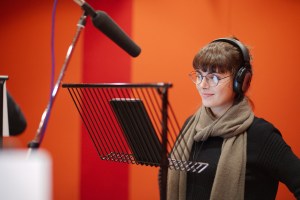 It’s actually very freeing. It’s a very physical experience too: we move our arms and our bodies and we just jump in there. Somehow even though you’re standing in one spot there’s a sense of acting things out. Yawning, getting up in bed you roll your shoulders, and when we sip things we have a glass of water; especially when we’re all in a room together we stand in a circle. So when you’re doing an intense scene you’ll often be looking across the room at the actor you’re working with.
In a funny way I would say it has fewer challenges than other forms because you can inhabit so many different worlds with your voice and sharing that energy in a room full of people, it’s very special.
I know some people have compared it with mask acting, that you’ve got that one layer missing, so you’re therefore to an extent using other faculties more…
Yes, I guess. I wouldn’t call it a challenge but I’d say that you definitely put more into your voice, to physicalise your voice, in a way. You don’t show with any visual or with your body that you’re in pain. You put your body language in your voice.
What attracts you to a project? Is it the writing? Is it who you’re working with?
 I think it’s a combination of things. The role, the writing, the story and who’s directing it. When Nick or Jamie say they’re doing something I would probably do it blindfolded because I trust them.
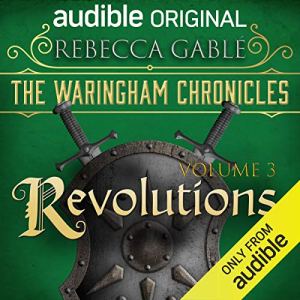
I love doing different voices. A project I’ve just done The Waringham Chronicles just came out and I was listening to it; my boyfriend came into the room and he listened to a bit with me. My character [Blanche], she meets the love of her life and they’re having a romantic chat in this inn – and then suddenly this gammy-legged wheezing landlady comes in, followed by a gaggle of ferrets. Coughing and sneezing and being all disgusting and all that sort of stuff, and it’s me going from ‘Oh, it is rather chilly in here isn’t it?’ to snorting and going ‘Come on, ferrets’. My boyfriend had no idea it was me!
That’s what I love about it, it’s such fun. Playing an old landlady or officers or Russian space commanders. In The Prisoner I was a Villanelle-type spy. For me, that’s one of the absolute joys of doing audio: you get to play a whole range of different parts and can just jump into those different shoes and worlds just with your voice.
Physicalities that you can’t inhabit.
Pretty much. There are always going to be things that you’re just not going to get cast for as an actor and there aren’t so many limitations when you’re doing audio.
Thanks to Steve Berry for assistance in organising this interview.
Read our review here
 Doctor Who News Star Trek News
 Sci-Fi Bulletin: Exploring the Universes of SF, Fantasy, Horror and Spy-fi!