The Battersea Poltergeist: Interview: Danny Robins
Danny Robins is the producer and host of The Battersea Poltergeist, Radio 4’s new podcast for BBC Sounds, which examines the strange case of the Hitchings family, who were plagued […]



Danny Robins is the producer and host of The Battersea Poltergeist, Radio 4’s new podcast for BBC Sounds, which examines the strange case of the Hitchings family, who were plagued […]
 Danny Robins is the producer and host of The Battersea Poltergeist, Radio 4’s new podcast for BBC Sounds, which examines the strange case of the Hitchings family, who were plagued by a poltergeist in 1956. The eight part series incorporates dramatized sections, featuring Toby Jones, Dafne Keen, Alice Lowe and Burn Gorman, as well as expert testimony – and the recollections of Shirley Hitchings, who was at the heart of the case. The day before the series began, Paul Simpson chatted with Robins about all things haunted…
 The first two episodes are available this week…
That’s right, yes. The first two drop Thursday and then it’s an episode a week after that, and I think we’ll also be dropping little case update episodes in between episodes as well.
We love the idea of this being an interactive investigation, in the manner of true crime podcasts, where the listeners can join us in trying to solve the case or to contribute their theories. We’re putting out an email address at the end of episodes and then I think in these little case update episodes between the main episodes, we can deal with emails, answer questions, discuss theories and go into things that have interested the listeners or our experts in more detail.
So are all eight episodes, the main episodes, recorded and done?
No, that’s the exciting thing, they’re not. We’re working this in real time. We’ve recorded all the drama for it and we’ve recorded quite a few of the interviews but no… We’re working on 5-8 at the moment and we definitely want it to be open so the listeners can contribute and shape the way in which the investigation goes.
That was always, for me from the beginning, my real desire, that this would be something that was interactive and build a community around it.
So where did all this start from?
 I made a podcast called Haunted almost three years ago now and that grew out of a lifelong fascination with ghosts. I touched on ghosts many times in things I made. I have a background in comedy so I’ve done comedic things about ghosts, and I’ve made documentary programmes about ghosts. It was something I kept coming back to.
I had this moment where I bumped into a friend of mine and she told me she’d seen a ghost. I realised that actually whilst I’d been fascinated about ghosts for a long time I didn’t know any people who’d claimed to have seen one. I found myself looking at her again with fresh eyes and thinking, ‘Wow, OK I didn’t expect you to be the sort of person who’d seen a ghost but…’
She told me her story and it was incredibly gripping. It really resonated and affected me on an emotional level that she’d had this experience that fundamentally changed the way she viewed the world.
I decided to seek out other people like this. I was writing a play at the time about a relationship between a couple where one person had seen a ghost and the other hadn’t and was a sceptic, and the impact that had on their relationship.
I just became fascinated with that idea and put out on social media asking if anyone had any ghost stories and I suddenly got loads of amazing stories back. Haunted grew out of that. I just felt I wanted to talk to these people so I recorded the interviews and ended up with really fascinating inexplicable stories of people’s experiences.
Towards the end of that process Alan Murdie from the Society of Psychical Research, who’d been one of my experts on the show, came to me and said, ‘I’ve got this case that I’ve been researching and I think you might be interested’ and he introduced me to Shirley Hitchings, the person who the Battersea Poltergeist revolves around. She was 15 at the time and is now 80.
She told me her story and then I read the memoir of the case that she’d written with a writer called James Clark – and I was just hooked. I was obsessed. I knew I had to tell this story and I knew it wouldn’t fit into a single episode, it had to be a whole series. Alan said it was the one case he’s come across which he just finds unfathomable and I like the idea of trying to fathom it.
How did Simon Barnard and Bafflegab become involved?
Simon was brought in to produce some episodes of Haunted and we just hit it off. Obviously he’s got a huge interest in the subject and has made a lot of really great creepy dramas. So when I was talking about the idea of doing something that was a documentary and a drama that blended the two, it was the perfect marriage really. We worked on it together and both became obsessed with the case.
Did Shirley see the scripts for the drama sections before they were recorded?
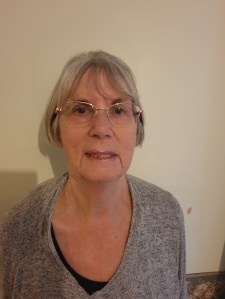 No. Shirley’s involvement is that we did lots of interviews with her very early on and that formed the basis of what I wrote.
When I wrote the dramas I was drawing on interviews with her and the material from Harold Chibbett’s investigation, and the newspaper articles from the time of course. Her interviews were incredibly useful but obviously she is a subjective opinion – these things happened to her – and it was important to get outside input on the case. So we drew on Chibbett’s notes and the newspaper articles and various other sources around at the time.
She’s been very brave, she’s put herself out there and she’s told her story again, a story which is incredibly personal and in some ways… I don’t know if traumatic is quite the right word. It was certainly traumatic at the time. It’s certainly a story that still has a deep affect on her even now and she’s very bravely offered herself up for that.
I made a promise to her that she would be happy with the series and that it would be a series that I felt would do her story justice and that gave a very honest account of her story.
Of course we explore things from every perspective – the perspective of paranormal belief and the sceptic perspective – but I feel that it’s a story that does her justice and the drama brings that world to life. I’m hoping when she listens for the first time on Thursday that it will have struck a chord with her and resonates
It’s going to be really weird for her I think to hear herself and her family brought to life.
 You’ve got a very strong cast there with Toby Jones, Burn Gorman and Dafne Keen particularly, there’s an awful lot on the three of them.
And Alice Lowe of course as well, she’s got a huge fan base in the horror world.
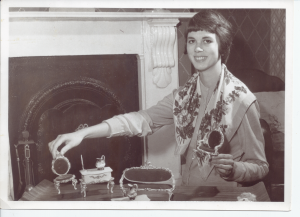
I think Shirley’s very excited about that. We didn’t really realise it when we cast her but actually Dafne Keen looks oddly like Shirley. When you look at the newspaper articles, Dafne bears a real resemblance to her.
if you were TV casting it, you’d go that route, let alone radio.
 Both of them have this very striking look – very dark eyes and dark hair – and the photographs you see of Shirley in the newspapers have a haunting quality to them. You are constantly reminded of this young girl – she was 15 but she was still a child – at the heart of this maelstrom, not only these things in the house that the family found incredibly terrifying, but also this huge press interest. We’re quite used to that idea of the normal person being a huge celebrity – we’re quite indoctrinated to that, it doesn’t faze us so much now – but back then that was pretty unusual: the idea of the girl at no. 63 suddenly becoming front page news.
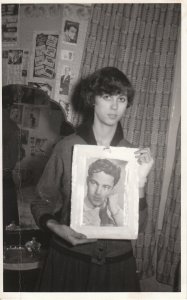 Elvis released Heartbreak Hotel the same month the poltergeist case started. That’s what we’re dealing with: the very dawn of popular culture and certainly it’s the decade where the modern teenager as a concept is invented really.
That’s another thing that fascinated me about the case. People who know about poltergeist cases will know that teenagers often feature at the heart of them and here we have this amazing story where the newspapers start painting it as an idea of a doomed love affair between a ghost and a teenage girl. It really chimes with that world of the death discs of the 1950s songs about doomed love and James Dean and the whole invention of the teenager.
There’s a bit in episode 3 where they ask Donald [the poltergeist] “Do you love her?” And that’s creepy, to put it mildly, particularly looking at it from a 2021 perspective. We have a perspective on that sort of relationship that they didn’t have as much then.
Yes, I think that’s fascinating and that’s something we do find ourselves discussing on a couple of occasions during the series. Why are we so obsessed with these ideas of haunted teenage girls and, like you say, why is there quite a creepy and salacious interest in this idea of the love affair between a girl and a ghost?
It was really interesting for me to read the way it was covered and looking at this case post #MeToo and post Harvey Weinstein where we totally reassessed the way that women are viewed and the negative parts of some aspects of the male gaze.
Ciaran O’Keeffe, one of our experts on the show, dug up this whole trove of articles from America. I hadn’t even realised the case had reached that far but these are articles from local newspapers in America that constantly recycle this story. They describe her as “pert bobby-soxer” and all sorts of vaguely sexualised teenaged terms and talking about this love affair. ‘Papa says no to spook lover’ I think was one of them – her Dad is stopping her from having this relationship with a ghost. You have to keep reminding yourself, this is a child they’re talking about and after a while it gets really quite sickening.
I think there is a bigger, wider discussion that maybe we’ll tackle it in more detail in one of our case updates about why we’re so obsessed with this idea of haunted teenagers, and is that a thing? Are poltergeists actually attracted to teenagers or are we somehow feeding this? Are we as a society generating this?
Am I not right in thinking that the teenager involvement goes back to Victorian times?
Yes, I think even further back, there’s the Cock Lane Ghost [from 1762]…
How much has investigating this in detail altered your own views?
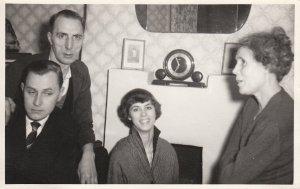 That’s an excellent question. What I found interesting about making Haunted was with that I always tried to have one foot in both camps. These were amazing stories that people shared with us and they were putting themselves out there by sharing them. I never wanted to be in the business of debunking them, I wanted to offer potential explanations, but always we left it open at the end that there were no definitive answers and the only person who could talk authoritatively about what they witnessed was the person who was there in that very moment.
The show was enjoyed equally by sceptics and believers, and I loved that, but I think inwardly I found myself veering towards sceptic explanations. I felt that most times, nine out of ten times maybe in the series, we offered adequate scientific explanations for what had happened, but coming across this case, I just suddenly found myself hurtling off in the chaos and the dark of uncertainty because it’s a case that is so complex and so bizarre and so consistently unsettling.
 It’s like a labyrinth: every time you’ve gone down one path and you think you can see the light, suddenly you veer off in another direction and you’re plunged back into darkness. Every time you think you’ve got a handle on it – possibly it could be human intervention – there could be a sceptic explanation, something else throws itself up that just seems unfathomable. So, this is the case that really finds me confronting those big ideas of whether ghosts exist, and what is out there.
I start the series by saying that it’s changed my opinion and I stand by that. The whole investigation has been a journey. It’s a journey that hasn’t finished yet and who knows what will come in terms of theories from listeners and theories from our experts by the end of the investigation.
Do you think you’ve solved it?
It isn’t solved yet. It’s an open investigation that we will be wanting our listeners to contribute to. We feel that we can offer compelling theories by the end of it but yes, it’s certainly one that I keep going back and forth. I keep going round and round in circles about what I feel about it. I’m genuinely conflicted. It genuinely has me lying awake at night thinking about it.
One could say you were haunted by it… but that might be too bad a pun.
 (Laughs) It does sound rather melodramatic but you do hear these stories of poltergeist cases following investigators home and certainly the thing that follows me home is just the unsettledness of it. A lot of my interest in ghosts I think stems from a fear of death.
When I was in my early twenties I had a moment where I thought I was dying. I had a panic attack, one of those things that you have when you’re younger in your life when you’re going through anxious times. But I thought I was dying. It was an incredibly profound experience where it generated a fear of death for quite a while after. It’s still in there, somewhere at the back of my brain, and I think ghosts, as much as they can be scary, also offer a sense of comfort, this idea of life after death and answers to the mysteries of our existence.
I think I’ve fallen into this interest in ghosts partly because of that. I guess also partly, growing up the child of an atheist who had been a Catholic and seeing the power of belief in my grandparents but it being totally absent in my own house, I was fascinated by the idea of belief. So it’s not just about the truths or the facts of this case; for me there’s a bigger thing to this – Do ghosts exist? How do we fit that into the universe? –without wanting to sound like I’m biting off more than I can chew.
This interesting thing for me from the clips with Shirley in the second episode was her clear fear that Donald would return by this being dug up again. I think that was the most genuinely scary moment in the first three because you couldn’t not believe that she believed, from that. There’s lots of other corroboration but that one moment, in those five seconds, you can feel that she doesn’t want him back.
I’m really glad you’ve said that because I think that’s absolutely true. I really hope that people will get a sense of that genuine fear because, for me, that is one of the most persuasive things about this case. Obviously any poltergeist case, you consider the idea that it was hoaxed and mocked up. But for a family to go through what they did for twelve years and to have the levels of fear, the levels of sleep deprivation, the impact on their bodies? Arguably you could say that this actually cost the life of Shirley’s grandmother, who died at the height of the case. It was incredibly damaging physically and mentally to the family and I find it very hard to imagine why people would have voluntarily gone through that or how people could have held onto a hoax for that long.
You can flip that one, though: that gets into a whole discussion of Munchausen Syndrome. People do come to believe it. Sometimes people dig so deep they’ve forgotten they’re in the hole and the hole becomes their life.
Yes, that’s true. That is an interesting theory and it’s certainly one that we’ll explore at points because I think in any poltergeist case you have to absolutely look at the focus and witnesses. The thing about this case is that it’s spread across so many people. You have so many people experiencing these things – for no one to ever break ranks over the years [and reveal it’s a hoax], I think that’s the interesting thing. Obviously multiple witnesses present their own set of problems for investigators in terms of how a story spreads. What did people actually see? Did everybody see the same thing? Did people see aspects of it and then form a picture afterwards?
Just going back to that tone of voice, about that little crucial moment. For me, above and beyond when she told me the story, it was literally the tone of her voice that convinced me that this case had a series in it. I felt there was something about her tone, the quality of her voice and the way she described her story that convinced me that she wasn’t lying, that she was telling the truth.
So from that point forward, we moved into very interesting territory. Either all these things genuinely happened in a paranormal way, or something else happened that was incredibly interesting that convinced this girl, this woman, that she’d experienced all these things and indeed convinced the whole family.
I feel the case is equally fascinating whether you’re a sceptic or a believer. If you’re a believer, it offers the closest possibility I’ve ever seen of proving these things exist. And if you’re a sceptic, it’s an absolutely fascinating psychodrama as you try to work out how these things happened, from a human perspective.
 What I was fascinated by with Haunted was the surprising number of people who had experiences. When I put out a shout out on social media for stories, I thought I wouldn’t get very many – and I got loads. Lots of people that I wouldn’t think are the sort of person who would have seen a ghost really surprised me with their stories coming out, people who I presumed would be very sceptically minded.
I think it remains one of the last taboos, in a strange way. I once did an after dinner speech at a conference of clergymen and lots of them came up to me afterwards and told me that God has spoken directly to them. I feel like, in a way, it’s more socially acceptable to say that God has spoken directly to you, that you’ve had messages from God or angels, than to say you’ve seen a ghost.
During the course of recording this series, we spoke to various people including a really serious venture capitalist businessman who had experienced some really weird things happening. I said ‘Has this cost you friends? Has it had an impact on you?’ and he said ‘Yes’. It’s a strange one because he’s operating in lots of places where saying ‘I have seen a ghost’ would be deemed embarrassing but he’s so convinced by what he saw that he says, ‘To hell with it. People can take me how I am, I’m not afraid to say it’.
I think a lot of people feel embarrassed about it and are incredibly glad to have the opportunity to talk about it. When you do probe, people tell you these stories and some of them are things that have had an impact on the rest of their life and how they view the world.
Was the drama recorded remotely?
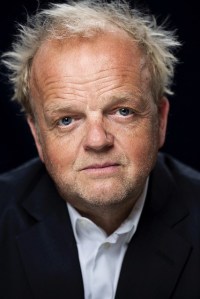 No, we’re lucky. We were able to record quite a bit of it in the studio. People were sitting in individual rooms in a studio in London but Dafne was remote; she’s based in Madrid. It was that brief glorious time when the world opened up slightly in the summer. I’ve been able to go on some location recording – later in the series I go and spend a bit of time in a house that reputedly has an active poltergeist.
We were able to get about a bit in the summer which was good but obviously COVID has had an impact on everybody’s recording and I’m just very grateful that in the audio world, you are still able to make programmes. You can survive with remote recording. Never has the world in general craved more entertainment and things to get us through these dark times. To be able to make a programme like this during lockdown is a blessing really.
I couldn’t help but see some parallels between the Hitchings family in 1956 and our experience now. You have this family effectively locked down, you have them surrounded by journalists, too scared and intimidated to leave the house. This incredible claustrophobia of what’s going on, this family stuck together in the house and going through this traumatic time together… it feels like it does resonate with our time at the moment, that sense of claustrophobia and that kind of deep relentless familiarity of your own house.
When you’re in your house non-stop, you get to know it inside out and either love it or hate it and I think the house is a character in this series. No 63 plays a big role in the series.
 Yes, it’s just a shame it’s no longer there.
I know, I know. Fitting in a way and Shirley says she’s glad it’s gone. There’s something fitting about a disappearing house in a ghost story. The bizarre thing is, as far as we can work out there is no 63 Wycliffe Road anymore. It’s almost as if the house has been erased.
What have you learned from this that you didn’t expect?
It keeps coming back to the power of a good story. I’ve spent my life devoted to storytelling in one form or another, as a writer, as a performer, as a comedian, writing drama, as a journalist, documentary maker.
When I started this series, I knew it was a good story but I don’t think I realised quite what a good story it was. Every day I’m working on this I feel very grateful for that incredible story, a story that feels like a horror movie come to life. It feels like this can’t be real, it must be a film. But it is real and there is no need to overdramatise or make things up because the story is so rich.
So I think that for me is the main thing coming out. Also, that sense of finding yourself genuinely questioning what you believe, I think that’s an unsettling yet rewarding process. To not have settled into some sort of complacency about how you view the world.
There’s a journalist called Will Storr who wrote a book (Will Storr Vs. The Supernatural) which begins by him saying he has had a supernatural experience and then he starts exploring the world again and looking at the world again having had that experience. It’s something very unsettling for him and I find, in my life, I’ve always been searching for that experience.
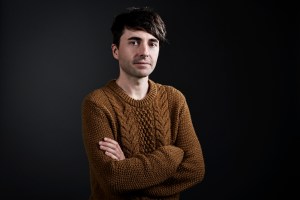 I’d love to have a paranormal experience, so I’m sort of vicariously living it out through Shirley. Just through the sheer strangeness of her own experience I find myself excitedly going ‘Could this be the proof we need?’ and viewing the world again.
But that always hovers for me, at the back of my head.
I would love to have that moment. There’s a desperation, almost willing it to happen: just show me something, come on, do it!
The Battersea Poltergeist is a Radio 4 podcast produced by Bafflegab Productions, available on BBC Sounds now
Sci-Fi Bulletin readers are invited to join in the discussion – if you have queries or theories, email Danny at batterseapoltergeist@bbc.co.uk
 Doctor Who News Star Trek News
 Sci-Fi Bulletin: Exploring the Universes of SF, Fantasy, Horror and Spy-fi!