 For those who’ve been listening to The Battersea Poltergeist on BBC Sounds over the past few weeks, parapsychology and forensic psychology specialist Ciaran O’Keeffe has been the voice of reason, finding logical explanations for the strange events at 63 Wycliffe Road. Paul Simpson chatted with him about his work in the field.
I’ve worked with Danny on a few other things beforehand so when he started to talk about covering the Battersea Poltergeist, he got in touch. All credit to him for taking the case further because it was one that was highlighted when we did the Haunted Podcast but he very much had that sense that it’s just too complex to be one episode, which was the style of that podcast.
Within the field, often when we’ve talked about the Battersea Poltergeist case we’re referring to the Harry Price case. Now, this has taken over and the Harry Price one will be forever “the Eland Road Poltergeist” and this will be “the Battersea Poltergeist”.
What did you know about the case before?
 I knew very little about it apart from very brief details. There’s a paragraph or two in John Spencer’s book, highlighting the unusual nature of the case because it starts with a key and it escalates very quickly. There isn’t the slow build that you sometimes get with poltergeist cases. That and the writing aspect made it particularly unusual.
I had a vague awareness of it but of course if you read Spencer’s book on poltergeists, William Roll’s stuff, Tony Carnell and Alan Gauld’s book, you’re talking about hundreds and hundreds of poltergeist cases.
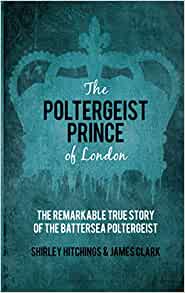
When we were chatting about it. Danny mentioned James Clark and I said ‘OK, yes. The Poltergeist Prince’. I had skim read the book but hadn’t gone into great depth. Starting to go into it I thought I’d honestly not given this case the time that it should have had, in terms of the amount of research I should have done on it in the past, because it is just fascinating.
What particularly fascinates you about this one as opposed to Eland Road or whatever else?
 First of all, the length. People often talk about the Enfield Poltergeist as being unusual in the sense that it went for a year or 13 months – depending on who you speak to – but it also involved a couple of other incidents beyond that. So the fact we’ve got a case that went on for twelve years really stuck out.
Also while you can get a lot of poltergeist cases where there’s a whole variety of phenomena, this was just huge in terms of the gamut. You’ve got the knocking, objects moving, levitating, bed sheets being pulled, you’ve got writing, scratching sounds, the letter and the writing – which you start to get a sense of with episode 6 – and it does progress and develop very quickly. The writing takes on its own second stage to the poltergeist activity in a huge way.
Then you’ve got the scrawlings on the walls, which you can see in some of the photographs, whispering voices, you’ve got Shirley herself levitating. There are some floating light forms as well that I don’t think we talk about within the podcast, so that’s an usual thing in terms of light anomaly. There’s touch – people being touched. There’s a huge variety of phenomena and generally with poltergeist cases you don’t get that huge variety and frequency and amount of phenomena. You’ll occasionally get ones like the Enfield case where there’s lots of stuff happening but that’s an exception, you’ll [usually just] get a few things happening.
So it’s duration, phenomena – and then also what we’ve got is a family. We’ve got multiple witnesses – and you’ll hear Evelyn and Danny talk about how they find it fascinating because the number of people witnessing the phenomena. That’s fascinating because of course you’ve got journalists, people within the house, visitors to the house.
I’m not so much emphasising that because for me, multiple witnesses are about the witnesses being together witnessing something, and whilst you’ve got lots of people involved and witnessing stuff, those people are maybe coming in and it’s just a fleeting moment. They’re just seeing one thing and not necessarily everybody else in the family witnesses it.
The fact that you’ve got a family who are, in the main, witnessing the bulk of the activity, is fascinating.
But yet, with the family, it does appear that all of them saw the same things at the same time.
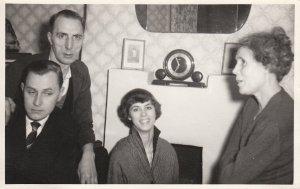 Yes, I agree and that’s what makes it fascinating. You’ve got a number of different sources of information: you’ve got Shirley talking about it now and looking back on it retrospectively; you’ve got Chib’s notes; you’ve got James Clark’s account which is a combination of Shirley’s recounting and also Chib’s notes; you’ve got the father’s notes as well, and you’ve got media reports. There’s multiple sources appearing to verify that the family is witnessing the same thing and reporting the same thing.
However, and this ties into my role and my expertise, you do have to think about the alternative explanations, and in psychology and with haunting cases, you think about contagion, which is a feature of eyewitness testimony. We always hold up multiple witnesses to be a holy grail of witnessing because they’re able to verify, but there is an essence of contagion that can happen. You’ve also got my particular favourite, the long-running theme, which is the ‘fear factor’ – how fear can have a huge influence – and also the sleep deprivation that they’re going through. They’re not getting a good night’s sleep.
With all of that, if somebody were to witness something, say an object appearing to fly off a table, and the others in the family hear it land and then one of the family members says ‘I’ve just seen that fly off the table’, for the others in the family who may not have seen it fly off the table but would have been in the same room and heard it land, the witness account from the primary witness would immediately influence their own memory of the event. We don’t necessarily explore it to that great depth within the podcast but it’s always going to be a consideration.
Whilst on the one hand I hold the case up to be an amazing case because of the multiple witnesses, there is always a slight caveat to go, “Well, we don’t 100% know the exchange that happened between the family.”
You’ve always got to be very careful. If somebody experiences something – either a haunting experience or poltergeist experience – it’s that instant moment when somebody experiences something where they’re saying ‘Did you just see that fly off the table?’ Now the other person may have seen the object fall off the table but even someone just saying ‘Did you see it fly off the table?’ can have an instant influence on that person’s memory of the event. But I find that equally fascinating.
The corollary of that is that consciously or unconsciously people are lying and you don’t want to be accusing people of that.
No.
Even though they are telling the truth within the best of their ability.
 Yes, absolutely. It’s interesting that you say “consciously or unconsciously lying”; conscious lying, that’s one thing, but the other part of it, unconscious lying? Maybe.
One other way of looking at it is, in terms of how memory is malleable and fallible as well, is that seeing those original events or original incidents happen, what is the interpretation of those events now? What is the interpretation of those events within an hour of it happening? What is the interpretation of those events within a day?
You’ve got all of these contributing factors – the fear, the sleep deprivation – and you’ve got the psychology as well. Beyond those two things you’ve got anxiety, and potential there in terms of stimulants. There’s no record of that but what I mean by that, is in terms of coffee or tea, even something as simple as that, which sounds incredibly minor.
This is a family that has come together to support each other in terms of all of this stuff that’s being thrown at them, excuse the pun, that they’re experiencing. They’re trying to also deal with rough nights in terms of sleep and sleep deprivation. Any of us will immediately turn to coffee or tea to keep us awake and we know from research on visual and auditory perception that even mild stimulants like that can influence our perception of events.
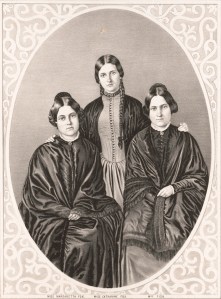 So, there is always with poltergeist cases the possibility that you’re dealing with fraud and fakery, and there are poltergeist cases that are peppered throughout history with instances of the focus being caught committing fakery. Enfield is a classic where Janet admitted to it but then said, ‘But I was only doing it because there was the pressure to perform’. There’s the Fox Sisters in America.
In those instances you think, ‘Does that tarnish all of the testimony?’ A cynic would say ‘If you’re caught faking, that immediately tarnishes all of the testimony’ but for me it doesn’t, because you’ve got to think about the pressure that somebody like Shirley, or in Enfield Janet, was under to perform. People are expecting the phenomena to happen and as a teenage girl, if people are there waiting for something to happen and it doesn’t happen, you can almost sense the psychological pressure to want to produce the phenomena yourself just so that people are happy and therefore think that the poltergeist exists. Even if Shirley genuinely believes that there’s a poltergeist, how is she going to convince people when nothing is happening?
I can understand there being a few incidents of saying ‘Actually I need to do something’ just a knock or whatever it is, just to let people know that yes there is such a thing as Donald.
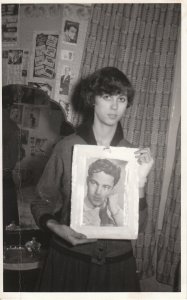 And yet the night that Shirley spent with the journalist (recounted in episode 6) where the writer insisted on knowing where Shirley’s arms and legs were at all times, things happened – that’s much harder presumably, to explain.
Yes and I think that’s the delight of the way this case is presented because you can see the progression and you can see the listening audience provide their theories about what’s happening. We’ve spent an extensive amount of time talking about this case – Evelyn, Danny and myself chatting about it and our various theories – and I have my theories. My main theory, which very much relates to your point, in an incident like that where it looks as though Shirley is in a situation of not being able to produce the phenomena, what is happening: is it an actual poltergeist or is there something else going on?
One thing that you raised in the episode 6 was about stigmata and other signs being produced, effectively psychosomatically, and that there’s a lot of evidence. What is the evidence on that? For reasons of time, it felt a little glossed over but where have those instances been?
There’s two things to consider. In terms of poltergeist activity producing marks, again you just need to look at Alan Gauld and Tony Cornell’s work and their review of over 260-something poltergeist cases through history and the instances of marks that occurred. It’s unusual, it’s a very small percentage – maybe less than 2% of cases involve those marks. In terms of research of looking at the psychosomatic aspects to those marks in poltergeist cases, that hasn’t been done.
My presenting this idea of psychosomatic illness or psychosomatic explanation does come from the stigmata field but the difficulty with that and the difficulty with psychosomatic research, which is an interesting discipline in itself, is: how do you prove something like that within a field that is presenting a possible paranormal explanation?
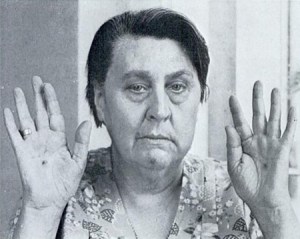 If you present stigma phenomena, the actual wounds that occur, there can be a number of possible explanations. It can be instances of fakery, people actually causing the injury themselves. If it’s not that, it’s then the paranormal explanation which is that they are suffering the wounds of Christ, and if it’s not that then it can be psychosomatic.
Within the medical literature there are instances of doctors talking about psychosomatic harm, where you can actually cause yourself harm through pure psychology effectively and belief in what’s happening. The difficulty is that in order for that to be true, within a medical domain, you would have to make sure that it’s not fakery and you would have to make sure somehow that there isn’t a paranormal explanation.
 And so, in the research in stigmata, what we have is a few instances where you’ve got some medical professionals involved, where they’re coming into it going, ‘Well, we know it wasn’t fakery because we were able to see that it wasn’t faked’ but they’re immediately discounting any paranormal explanation because it doesn’t fit with their worldview. So the only possible explanation is then the psychosomatic side of things.
Maybe there’s a similar way of thinking about it within a poltergeist case. There’s an accidental explanation – if you rub against something or you hit something and you’re not aware of it – but I wouldn’t push for that in any context within a poltergeist case. If you can discount the possibility that it’s faked, then at the other end, it can only be caused psychosomatically, with the middle one being it’s a poltergeist, there’s some sort of paranormal explanation for it.
I think the difficulty with an explanation like that is that it’s equally fascinating and amazing as a paranormal one because you’re implying that the mind is so powerful that it’s actually going to cause injuries to you. It is almost as though the replacement with those paranormal theories is what appears to be a natural theory that is equally fantastic.
Either way round, it’s something that’s outwith our normal experience.
Yes. There is a recognition within the medical profession. I say recognition – it’s almost a dismissive recognition: ‘Yes that stuff happens, You know why? Because we are aware of spontaneous healing. We’re aware of it.’ And you go, ‘Well, yeah but then that is fantastic.’
There is research looking at the power of the mind and being able to try and deal with things. There’s a whole stream of research looking at the role of placebos. If you give people medicine and they think it’s medicine that’s there to treat them when in fact it’s just a sugar pill and they’re cured of whatever the illness is, you’ve got scientific evidence showing the power of the mind.
The research on how crucifixion works suggests that the nails went through the wrist, whereas a lot of stigmata actually appear in the palm of the hand – if you look at any crucifix in a church, it’s very rare that it’s depicted properly.
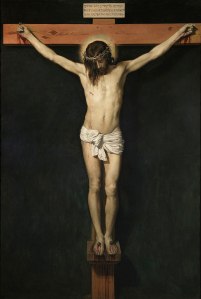 Absolutely. You’re talking about iconography that feeds a belief so from the word go, in terms of the belief and exposure to the wounds of Christ, absolutely. All of the symbolism and all of the icons and the statues etc will all show that.
We’ve come round now to thinking, “OK, well if that is the case that it’s about belief and actually the claim of stigmata is that you’re suffering the wounds of Christ almost as if there’s an external entity that’s causing it… well, if that external entity is knowledgeable about the wounds of Jesus Christ then it wouldn’t put them there.” So there is something in this. It’s a lovely roundabout argument and the discussions we had – Evelyn and myself and Danny; we’re talking about hours upon hours upon hours of talking about these things – but for the podcast, you need to have a 15-20 second comment about that.
I think that in itself is an episode and you’re going to hear lots of people putting forward theories around psychosomatic disorder and various other related phenomena, medical phenomena associated with this. I think it’s fascinating.
When you look back at stigmata there are other possible explanations that I don’t think really apply with this particular case. Diabetic ulcers is one particular explanation, purpura which is a complication from malaria, so there are other things, they just don’t apply here. Which is why putting me in a situation of saying ‘What’s the sceptical explanation?’ It feels like that’s the only one, other than fakery.
Do you believe in the paranormal?
 I’m open minded to the possibility, and by that I mean that people paint me as a sceptic but that means that I’m open minded and questioning.
I got into this from reading ghost stories: H.P. Lovecraft, M.R. James and even contemporary authors like Clive Barker and Stephen King as a very young boy, to the extent that my parents were genuinely concerned about my reading material. Also Arthur C Clarke’s Mysterious World was on television as I was growing up and I was 13 when the movie Ghostbusters came out.
I had all of those influences in terms of me growing up and my interest in the paranormal. I also had Roman Catholicism around me, hence the interest in religious parapsychology and stigmata and demonic possession and exorcism.
How high church? Full “smells and bells”, going every Saint’s Day?
Every Sunday but also Saint’s Days; not on my mother’s side which is maybe where the scepticism came from, on reflection. My father’s side was Irish Roman Catholic and my grandmother was very devout.
It was always there but I was changing my way of thinking as I ended up in university. I was very much ‘I want to be a Ghostbuster. This is it, I want to investigate ghosts.’ Went to university and you could almost say my psychology undergraduate degree, even though I love it, ruined that path and that vision and gave me a more sceptical perspective.
 That was also helped by the fact that I would do rune readings – not tarot readings. I was a fan of rune stones and rune readings. I gave a reading for a very good friend of mine one day and in my head, in my mind, I was giving them a reading thinking about them going on holiday to Europe. That’s what I had in my head as I was casting the stones and everything I was interpreting was making me think, “This all has to relate to that,” without actually saying it. At the end of the reading he said, ‘That is amazing, it’s 100% accurate, that is absolutely fantastic.’ Then gave me the explanation as to why. It had nothing to do with the holiday at all; he was having concerns and confusion about his identity.
It just made me realise the power of these readings and the psychology behind them. It was a turning point as well thinking about mediums and psychics and their involvement. I guess from then I was very much looking at the sceptical side of the paranormal.
But because of my initial socialisation to all of these fantastic sources, the stories, Arthur C Clarke, Ghostbusters, The Unexplained magazine, all of that, there is still a teenage boy in me that wants that phone call that goes, ‘We’ve got one!’
It’s a long convoluted answer to what should be a simple yes/no question: do I believe in the paranormal?
The Battersea Poltergeist is a Radio 4 podcast produced by Bafflegab Productions, available on BBC Sounds now
Click here to read our other interviews and coverage of the case




 Sci-Fi Bulletin: Exploring the Universes of SF, Fantasy, Horror and Spy-fi!