 Although creative genius Stan Lee died in November 2018, his legacy lives on. Lee continued creating new worlds and characters right to the end, with one of his last projects released on June 27 – Stan Lee’s Alliances: A Trick of Light, written by Lee and Kat Rosenfield, and created by Lee, Luke Lieberman and Ryan Silbert. A week or so before the launch of this Audible exclusive, Lee’s three co-storytellers chatted with Paul Simpson…
What was the genesis of the project – did it derive from Stan himself?
 Luke Lieberman: I’ve known Stan since 2000 when I was a film student at NYU and he invited me to come out and work with him at his company. When I first met Stan we had a conversation about the internet; he was full of enthusiasm and optimism and said, “You put an idea out there, people see it all around the world simultaneously, there’s never been anything like it.”
When we circled back a decade and a half later and we were having a similar conversation, he was more keenly aware of how the internet wasn’t fulfilling its promise. Instead of connecting us, it seemed to be dividing us and tribalizing us, and allowing us to create our own little pocket realities – and I think that troubled him.
Out of those discussions some characters and stories started to click, and that’s when we expanded the bullpen. We brought in Ryan then brought in Kat and created this collaboration – and the rest is history.
Kat Rosenfield: This is a whole new universe, whole new stories, a whole new superhero origin story.
Ryan Silbert: I think with Stan a lot of the story in this universe started with a question – which is in the introduction which we are really excited for listeners to get a chance to hear. Which is more real, the world we’re born into or one we create for ourselves? The nature of reality vs technology catalysed not only this story but the entire Alliances universe which is a set of new superheroes developed specifically for audio, to be experienced as an Audible original.
I notice there’s also a print version coming as well; what are the specific challenges of creating something like this for audio?
 RS: I think there’s a tremendous amount of opportunity in audio, and that’s what Stan was so keen on. Here’s somebody who’s a master of every artform, and frankly drew inspiration from every artform and media in creating his works over the years. It was near and dear to him, it’s something that harkens back to the 30s and 40s. audio was a big part of pop culture then with the radio serials, and those served as inspiration for the comic books. This was a way to come back to all of that and really explore what we all feel is a really immersive, personal and exciting new medium. That for us is why we started down this road of making it an Audible original.
KR: What was exciting and wonderful about this project was to do something new, but also to do something ancient – combining a very digital age story, with characters who live in a contemporary world, with this ancient form of storytelling. There’s nothing more elemental than sitting down and being a captive audience while somebody tells you a story.
LL: One of the things I know that Stan was excited about, apart from the fact that it was a bit of a new field for him – which at that point in his life was awesome, it wasn’t something he had done a million times – was he loved the idea that the audience was going to visualise the story. They were going to be a collaborator. The art wasn’t going to be done for them, it was going to be something they imagine for themselves. They had the opportunity to be a Ditko or a Kirby.
It’s the old line: “the pictures are better on radio”.
KR: I love that.
Although the audience does create the images, a lot of that comes from the input given to them by the words and the way the story is told – how did you choose your narrator?
 RS: The list was about one person long. We felt very fortunate to have got Yara Shahidi because she embodies what Stan was aiming for. Her thoughtful social engagement, and her familiarity and love of technology and the way that she uses it… She just has an organic social media presence that’s very real that creates that human connection and she is a wonderful unique performer. She does a great job. She was excited about the idea, we were excited.
One of the things that made us feel good – Yara was one of the first people who read the manuscript outside of our group so when she reacted to it the way that she did, it made us feel as if we had something special.
Was the manuscript tweaked when you knew she was going to be the narrator?
KR: Yara is such an icon and so tapped into youth culture and technology; she was such a perfect fit for this project, there was no tweaking required.
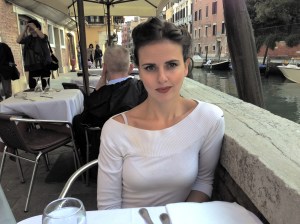 Kat, what was there when you came on board, in terms of storyline and characters?
KR: As Luke was saying, he and Stan had always wanted to work together; they had this long personal relationship, so there was certainly a premise in place and characters in place, but after I came on, we all worked together extensively to collaborate and tell this story. It was like storytelling as a team sport – with the greatest captain of all time heading us up.
It would be great to hear those sessions – they’d be fascinating to listen to…
LL: And full of spoilers!
There’s a large element in this first story that feels drawn from the headlines – in terms of what can be done with the internet that shouldn’t be. How much did the story and idea alter as a result of the changes that have come about in the zeitgeist in the US over the past two to three years?
 LL: Stan was kind of ahead of that. It was more it caught up to where our story was. Our larger concern was, uh-oh we’d better get this out because reality is catching up to where Stan saw it going!
RS: It does feel like an extension of what Stan was working on – look at the cosmic space race. We hadn’t got to the Moon at the point when the Fantastic 4 got hit by cosmic rays; we hadn’t even seen the Earth from the Moon. What Kirby and Stan were able to do by creating those characters was they were building a beautiful story out of family dynamic, and similarly, Stan is developing a story that is built round a really unique set of characters in A Trick of Light.
 The parallels with Stan’s career in the 70s seem relevant too – the way Marvel handled the drugs issues, going against the Comics Code, and how they reflected Watergate in the Marvel universe. Were there messages in A Trick of Light he wanted to get across about the nature of humanity?
RS: The idea of illusions and magic were something that were a part and parcel of the 70s too; all the ideas of what’s real and not have always been something he’s been exploring. Particularly with A Trick of Light, there was that question…
LL: While we were asking these questions, Stan was always very careful; he didn’t want to be preachy and its subtext is not the text. The story is a fun story about the characters and their relationships with each other.
One of the things that Stan always played with, and it was a fundamental part of the superhero issue, is the concept of identify and alter ego. Here while our characters aren’t dressing up in costumes, they have these virtual personas and the question is, what is the interplay between the persona you create for yourself and present to the world online and who you really are? I think that is a relevant question to everyone in this day and age. It harkens back to Peter Parker and Spider-Man and who does Peter Parker really want to be, and how does the Spider-Man persona impact his everyday life and vice versa.
How much were you looking ahead to future stories you could tell in the Alliances universe or were you focusing on this as a self contained entity?
LL: It was such an organic process from the beginning. At the beginning it was a raw world building exercise and then we zeroed in on a particular story. I think it naturally came out that we built up the character and world and storylines and they weren’t all going to fit in this book.
Do you know where the story goes next, or the next choices the characters are going to make?
KR: As Stan says in the intro, we are just entering a spectacular new universe, and obviously the possibilities are pretty infinite, so for the moment we’re just focused on the upcoming release of A Trick of Light. We’re so excited for the rest of the world to finally hear it.
What elements are you individually proudest of?
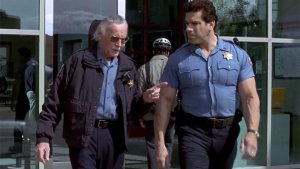 LL: Just speaking for myself personally, Stan was a friend and a mentor for a long time, so putting story aside, just having been able to work with Stan and create something with him and having had that experience with him, that’s what means the most to me personally.
RS: I will say as a comics fan, growing up, and I don’t want to date myself, you felt like you were alone and you were the only person who loved these stories. In a way Stan reached out through his Soapboxes and letters and made you feel like you weren’t. He provided a road map not just for someone who wanted to swing from a city building or wanted to feel that they were worthy; he created a road map for creators everywhere to create.
He really opened up an opportunity for the next generation to create and you see it now in multiple mediums drawing tremendous inspiration from Stan’s work. I’m excited to have A Trick of Light released globally with Audible to reach such a wide audience. He brought us to this point; he brought comic books up from the basement to a global audience. I’m excited A Trick of Light can be part of that.
KR: I think for me, I’m so excited that we’ve managed to create something immersive and innovative, working in a medium that Stan hadn’t created in before, but also to tell a story that taps into these really fundamental questions – who we are and how we connect to each other. Something that’s so universal.
What is each of your best memories of Stan?
LL: I’ve been to a lot of events with Stan over the years so I have lots of memories, but when Stan would be out there, at the eye of the storm and all of fandom is swirling about him, then he would step back and share an unguarded personal point of view on it all with me. Even someone like Stan needs people he can talk to in a more personal fashion when he’s going through something like that. Having someone at that level tell you what they’re feeling when they’re on stage at ComicCon or receiving a Lifetime Achievement Award – those are my favourite memories.
 KR: My favourite memory of Stan is something that occurred posthumously – it was the day that he passed and I was feeling incredibly sad. My husband said why don’t we watch a Marvel movie, that’ll cheer you up and honour Stan’s memory. We picked Guardians of the Galaxy Vol. 2 but I had forgotten the midcredits scene, one of Stan’s cameos, where he is sitting on a barren planet wearing a spacesuit and he’s being left behind – and he goes, “Guys, come back, I have so many more stories to tell.” I was not prepared emotionally for that. It brought it home for me what an honour and a privilege it was to be part of the creation of this story and what a responsibility it is to be part of the creative community that is carrying his legacy forward and making sure the stories go on.
 RS: I think my favourite memory with him is him starting to draw on all of this source material and some of it is my favourite too – you realise that whatever professional accomplishments you have, when you’re sitting across from Stan Lee you’re still a fan boy at heart. He was the ultimate fan – when he was talking about Sherlock Holmes or Errol Flynn. He loved culture and pop culture so much. He brought that to us and created characters we’ve become fans of because he was a fan of storytelling.
Stan Lee’s Alliances: A Trick of Light is available now from Audible.
Thanks to Ben McCluskey at Midas PR for assistance in arranging this interview




 Sci-Fi Bulletin: Exploring the Universes of SF, Fantasy, Horror and Spy-fi!