M R James: Interview: Matthew Holness
Garth Marenghi’s Darkplace and Possum creator Matthew Holness is the latest writer to pen a modernised audio adaptation of an M R James short story for Bafflegab. The Ash Tree […]



Garth Marenghi’s Darkplace and Possum creator Matthew Holness is the latest writer to pen a modernised audio adaptation of an M R James short story for Bafflegab. The Ash Tree […]
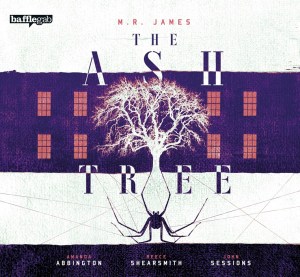 arth Marenghi’s Darkplace and Possum creator Matthew Holness is the latest writer to pen a modernised audio adaptation of an M R James short story for Bafflegab. The Ash Tree is out on December 6, and Holness answered some questions about the play from Paul Simpson.
How did you become involved with the project? Did you choose the story?
Alice Lowe, who’d appeared in Bafflegab’s audio production of Blood on Satan’s Claw, and whom I’d worked with on Garth Marenghi’s Darkplace, kindly recommended me to Simon Barnard, who was looking for writers to continue his series of modernised M R James audio adaptations. I’d previously worked with Simon, too, as a performer on his most recent audio episode of The Scarifyers. Simon allowed me the freedom to choose which M R James story I’d like to adapt, so I decided on ‘The Ash Tree’, which is perhaps my favourite as it combines both supernatural horror with a dark, psychological study of human cruelty.
When did you first read (or encounter, if it was on TV) an M R James story? What effect did it have on you, both at the time, and subsequently in your writing?
 The first M R James story I read was ‘The Treasure of Abbot Thomas’, which contains perhaps the most powerful and disturbing line James ever wrote (I won’t reveal it here…). It was so effective that years later I gave the story to my somewhat cynical partner who was looking for something ‘really’ scary to read, and about three quarters of the way in, she encountered that particular line and genuinely had to put the book down. James remains a huge influence because he’s simply the greatest ghost story writer of them all. His innate mastery of the form remains unsurpassed.
What were the particular challenges with bringing it into the 21st century? I’m particularly thinking of the very different social and societal set up that existed when the stories were written.
 What I admire James most for is a refusal to sweeten his pill. James’ ghosts are powerful, vindictive and cannot be explained in any rational way. His victims are simply cursed, often without reason. Of course, the issue of witchcraft remains both relevant and highly sensitive today; the real horror lying in its cause: mass hysteria and religious persecution. Yet James himself acknowledges this, I think, by creating such a powerful and distinctly vengeful ghost. His story is really about the fear of witchcraft, and the much darker reality of destructive human forces. ‘The Ash Tree’ is in some respects an historical blood-feud. Therefore nothing in my adaptation, despite the modern setting, will save Rachel, no matter what her own feelings might be towards the persecution of innocent women. The cycle of atrocity and revenge is a horrifying pattern destined to repeat itself through time.
What was your process – did you work out the beats from the original and then allow imagination to flourish, or did you want to use as much of James’ structure as possible?
From the beginning, I was intent on preserving the integrity of James’ style and sense of narrative pace, so I allowed myself no wild departures from the story’s main structure. Nevertheless, adding several hundred years to the events of the original tale did create certain problems, not least needing to rethink how such a curse might play out through the intervening centuries, and more importantly upon those with a more rational 21st century mindset. I was partly inspired by rural supernatural TV dramas like Robin Redbreast and Nigel Kneale’s Baby. I felt that this type of narrative framework could work well in isolating modern characters from their 21st century reality, transporting them back to a more primitive environment, both physically and psychologically.
Did you find the original story limiting in any way, i.e. the fact that this was an adaptation rather than riffing off the same themes that James used meant it needed to be recognisable?
 James was a master craftsman with an inherent sense of ‘performance’, so in many ways the required elements for an effective audio version are already there in the original story. His tales, originally read aloud to his attentive audiences at Cambridge, are perfectly paced for reading aloud, designed at some level with a ‘listener’ in mind. Therefore, I felt it would only dilute the effect of the story to attempt anything radically different with it. It’s also impossible to improve upon James’ technique, and essential, I feel, to preserve those qualities of reticence and understatement that he perfected. The skill of his prose lies in its careful pacing, quiet restraint and rejection of the overtly dramatic. The essential structure of his tales; the slow, persistent build of atmosphere through accumulation of frightening detail, provide all the drama required to maximize the effect of terror.
What was the biggest challenge overall of the project for you?
Really it was the sense of responsibility in adapting the greatest ghost story writer of all time! I felt I had a duty to do justice to his original, to convey in characteristically ‘Jamesian’ style, the deeply frightening quality of his story. I hope I’ve managed to succeed in that.
And finally, do you have another James story you’d like to tackle?
I would love to adapt ‘The Residence at Whitminster’.
Click here to read our review of The Ash Tree, and here to order it from Bafflegab.
 Doctor Who News Star Trek News
 Sci-Fi Bulletin: Exploring the Universes of SF, Fantasy, Horror and Spy-fi!