Lusus: Interview: Samantha Newton and Rachel C. Zisser
BBC Radio 4 and BBC Sounds’ new podcast Lusus is a very contemporary take on some very familiar fears. Created by Samantha Newton and Rachel C. Zisser, its short episodes […]



BBC Radio 4 and BBC Sounds’ new podcast Lusus is a very contemporary take on some very familiar fears. Created by Samantha Newton and Rachel C. Zisser, its short episodes […]
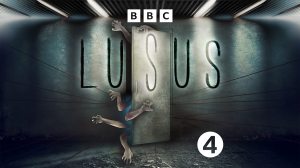 BBC Radio 4 and BBC Sounds’ new podcast Lusus is a very contemporary take on some very familiar fears. Created by Samantha Newton and Rachel C. Zisser, its short episodes are interlinked not just by the presence of a mysterious door with a chain reaction of consequences through the series.
Where did the idea of doing a drama in this way come from?
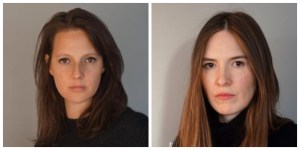 Sam: Rachel had a bunch of ideas for short horror films that she wanted to make.
Rachel: My father passed away and suddenly I had an idea for a horror show.
Before that we were writing dramas. It was the first prominent death in my life and suddenly I had an idea for horror. And coming from the world of drama, I thought to myself, ‘I will make short dramas that will have horror elements.’ And Sam said no one’s going to watch that because they were scary and sad.
Then, from both of us I would say Sam has more of the branding and marketing head and she said ‘Why don’t we make our own TV series with this idea?’
She took it one step further and said, ‘Why don’t we make those fears that you have into monsters?’ Coming from the world of thriller and drama, saying monster was a little too fantastical but as time went by and I was dealing with a lot of obsessive thoughts and all of that kind of stuff, I literally felt haunted by monsters. The idea that an obsessive thought and anxiety is like a monster to someone who experiences it became very true to me. So I said yes, let’s make them monsters, you’re right, and at that moment, more ideas came pouring in because it was clearer how the mechanism works.
One of the things it reminds me of a lot is Buffy, giving a fear not just voice but giving it body. It’s that potential danger that is literally ‘What’s that door behind you?’ What was the trigger for making it a door in the way that you have? And why a dentist?
 Sam: This is actually weirdly a true story. Right after Rachel’s father passed away, her mother, she runs a bone marrow bank in Israel and she does fundraisers for it. We went to New York to do a fundraiser and we were helping her mum to write this speech, in English because she speaks Hebrew, and it was a really tough week because it was just so heavily emotional. And randomly we were walking around Fifth Avenue, Park Lane, somewhere in the Upper West Side, and I was feeling really sad but I saw this door in a building and it looked ridiculously funny to me. I found it hysterically funny. It became this theme of the whole trip, we were in tears laughing at this stupid door, right?
Rachel: Sam laughed and it made me scared. She couldn’t stop laughing.
Sam: It looked a little bit odd.
Rachel: Funnily enough the composer of the piece, my sister, was there too and I think something about her being present at that moment made it very easy for her when she actually had to write the theme for behind the door.
Sam: Afterwards, we were like ‘Why was this funny?’ I don’t know why, it was just a funnily proportioned door and it had this little red carpet outside the front of it – which is not how I see the door in the series – but the whole thing seemed a little bit funny to me. When I Googled it when I got home, it was a dentist’s office!
A red carpet to hide the blood?
Sam: (laughs) Exactly. I don’t know, this place was so peculiar to me. I try and find it now and I can’t actually find it on the street but yes, that’s what sparked it off.
If you find it was never there then we really have entered the Twilight Zone.
 Rachel: I’d say there was a moment of The Twilight Zone!
We wanted to do an anthology because we had so many ideas. People’s anxiety fits different characters. You couldn’t just take FOMO and hypochondria and fear of poisoning your baby and give it to the same character so it was clear it would have to be an anthology but I hate stories that start with a new character every time and you don’t have anything to linger on. When I’m listening I like to come back to a world that’s a little bit familiar within the unfamiliar.
So then the idea of the door and the idea that something is connecting all these people, this uncanny feeling that starts showing up in people’s dreams… that connection, once we started writing, naturally started bringing characters back and building a rhythm.
Sam: I think around the same time I heard about this strange kind of internet myth where people were seeing the same man.
Rachel: It’s a really cool urban myth and I think several people tried to make films about it. Sam Raimi did one about a man that different people describe in their dreams. They made sketches and the sketches were identical, and we were obsessed with that idea at the time too.
What you’re tapping into with FOMO or whatever might be the way that we express these fears in 2022 but they are far more primal.
Rachel: I understand.
The two that really stood out for me is the doctor panicking about his OCD and the ritual not being there. That’s an idea that’s been around for so long, but you’re just expressing it in a way that speaks to a 2022 audience.
 Rachel: That’s very accurate.
Sam: Yes, that was definitely what we were trying to do.
Rachel: When we started writing it we wanted to ground ourselves like you do with horror. I come from a religious house, Jewish and religious so the Bible was always an inspiration. When I write, even conflict between couples, I try to connect it with something more mythical so with horror we went with mythical horror stories and it was so easy to find those 2022 fears and to see the origin. Like you say, with rituals you’re talking about witches and wizards and you’re talking about succubae or someone who sucks the energy out of you. Very quickly we found the origins of all of them.
I think what we found exciting to do was to translate them to see how they relate because there is something interesting with the city today. With all the neon lights we’re not afraid of the dark anymore. We were interested in the idea of some kind of facade in the city where there’s light and there’s food and there’s no danger and your doors are locked but it’s not really safe.
Sam: Yes, we really did buy into that myth thing. We always had this image of how we wanted it to feel – that feeling of when you’re on a drive at night, you’re on a motorway and you see lights in the distance, and you think ‘Oh safety ahead’ so you drive towards it and when you get there, it’s some kind of power station or something else where there’s no people. You feel like you’ll be safe if you can just get to that place but it’s not.
It’s an illusion. Civilization is a veneer and I think that one of the things you’re doing with this is you’re just scraping at that veneer and taking the edge off it a little bit.
You come from a film background – what were the challenges in switching to audio for this?
 Sam: It was strange for me because there’s a lot of things in sound that you would never do in film. You would never explain to someone how you’re feeling; it just would never happen. We met at film school and that was always about show don’t tell so it was a total twist but we really leaned into it.
I was thinking, OK, most people for a podcast, they listen in the car or on headphones. It’s a much more intimate setting so we become a more intimate audience. It was funny because the parts that I was the most nervous about are actually the parts I like the most now. When I was writing them it went against every part of myself as a film writer, to write so explicitly.
Rachel: Even the one with the surgeon, the one with the rituals in the episode, if you were to do it as a TV show it would be very difficult to have an episode that has a voiceover. It would end up being the voiceover and him riding on his bike. Obviously there would be a creative solution for it but I think people are more open to hearing someone’s inner thoughts when they’re listening on headphones and when they’re listening to content than they would be on screen. It’s a different, more intimate, listening in a strange way.
With a podcast, with audio you can put your characters instantly into a situation without the visual shorthands that you need for the brain to accept them.
Rachel: That’s very true. To be fair once we decided to go for the podcast, which was a no brainer because we both started liking podcasts more and more as content, it’s almost like a video but less aggressive with your attention. It is giving you a little bit of a way to imagine for yourself but it’s still giving you enough. I would say that when it comes to the writing, we got so much better with the podcast.
We had a cast who could only commit to one or two days to do twenty minute episodes and also the fact that you don’t have to move the camera every half and hour is a joy. The cast actually went beginning to end, no one stopped them, no one made them say the line in the wrong direction because the light was not right there.
Don’t get me wrong, I still want to make movies and TV shows, but I have to be honest, there was something about the sound that in terms of creativity was very releasing as a director.
You’re focusing purely on the story, aren’t you? In film, you’ve got to get the reverses, you’ve got to get the coverage. With this, you’ve got a microphone, coverage is there.
Rachel: Yes, in a way it’s harder because we had to build the world behind the characters from scratch. When you shoot, you have a location and you try to make as much as you can on location so you have less to do in post, but here we were sitting in a studio. If I need them to be running in the sewers I needed them to just run in place and breathe but I found these efforts to making this work made us more accurate.
One of the most important moments of horror is the exact moment where the fear hits, and I feel like sometimes when you’re in a location, the location is giving you a lot of it, you forget a little bit where the centre of the story is. Writing for audio helped us to really understand the horror in these stories.
What else has it taught you that you didn’t expect?
 Rachel: For me, bringing back the passion of cinema, I didn’t have it for years to be honest. Slowly the process wore you down and down; you got to set and these are all these breaks and you start losing sight of what’s important and what drew you to tell the story. Then suddenly we had this script that we wrote – we sent it out, we got huge replies from really such a cast you couldn’t imagine for a podcast. We got twenty odd actors, all of them are amazing, and we got a cast that was unproportional to the size of the project. And we used our friends and family. When they came in we actually worked close like a mix of how you would work in a theatre where you go through the scenes, you talk about the content. It was fun, it was exciting.
I’m such a stickler, the ritual one is about me for sure because I’m such a ritualistic person. I couldn’t imagine that for side characters we would use family. We use my nephew and my niece as actors for one of the episode and I was dreading it because it has to be the right person. But I think it’s like when you see how people make films on YouTube: they take a camera and a light and shoot everything so fast and both of us, we were able to do lots of parts like that and it was a little like guerrilla filmmaking.
Where did the name Lusus come from?
Sam: The way me and Rach work is that before we come up with anything good, we relentlessly argue and tell each other how crazy of an idea the other has. It’s like aggressive brainstorming. It’s kind of therapeutic venting, and the consequence of being married to the person you work with!
The name Lusus came in one such moment, mid argument. Rach was trying to convince me that the idea would be better without the monsters I proposed. I know that sounds strange now as the monsters are such a key part of the series but we are talking very, very early stages. Then she sarcastically told me, ‘And then what? We call it Monsters or Freaks or something, Lusus?…’ and we were both like ‘yes, that is the series title’. All our friends told us it was silly to use a relatively unused word but we always feel like once you have a name you have the project, and you know what it is. Lusus Naturae meaning deviation from the norm, we couldn’t have planned a better title to describe those haunting, lonely thoughts that happen at night turning into monsters.
What was the biggest challenge that you felt you’ve overcome in making this?
 Sam: Usually the way that I write, I’m too much of a perfectionist and the kind of freedom that I got from writing this… it was a new way to think about how to connect with an audience. Really I feel like it opened up how I’m writing and approaching material.
It was so much more immediate than I usually am. I’m heavily researching everything and spending so much time. I think that I’ll definitely be using this doing forward in how I run projects. I feel like it gives a life to a project when it’s written like this. I noticed that freedom to do something that was a little bit different and gave me something that feels a bit more alive.
Rachel: When we said we’re going to make anxiety into monsters, it was always a catchy sentence and it was always very good for pitching but I was terrified because though we always had fantastic elements in whatever we worked on, they were not so dependant on it. I know this is a horror show so if the fantastical side of the horror show doesn’t work, it’s going to be detrimental. It’s not like it’s a drama: if the fantastical element doesn’t work it’s OK because it’s still drama. With horror it has to work.
I was so into the idea of, how do you get away from thoughts that are chasing you? This started me thinking about someone chasing you, someone you can’t get rid of. Physically escaping something that’s psychological, for me was the biggest thing I learned how to do. I needed to do a leap of faith there. I didn’t believe it would get there in the beginning but we did.
Lusus is available on BBC Sounds and airs weekly on BBC Radio 4 on Fridays at 2.15 pm
Thanks to Sean Harwood and Sara Johnson for their help in arranging this interview.
 Doctor Who News Star Trek News
 Sci-Fi Bulletin: Exploring the Universes of SF, Fantasy, Horror and Spy-fi!