Lonely No More: Interview: Sebastian Baczkiewicz
Sebastian Baczkiewicz has two new projects available to listen to at the moment – the latest instalment of Pilgrim, Belle Meadow Fayre, and the Audiama drama, Lonely No More. Paul […]



Sebastian Baczkiewicz has two new projects available to listen to at the moment – the latest instalment of Pilgrim, Belle Meadow Fayre, and the Audiama drama, Lonely No More. Paul […]
It’s just a message, right?
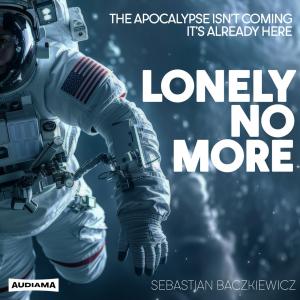
Daubed on walls, trending on socials, appearing in every language in every country all over the world and always reading the same. Nobody knows where it originated, only that it can’t be ignored. And then – in the blink of an eye – everything changes. Activated alien DNA, long buried within each and every one of us, transforms the majority of the human race. Cities are abandoned. Civilisation discarded. Suddenly, we’re not humans anymore, we’re… Lonely No More.
Or most of us are…
For those still unactivated and “lonely” it’s now about learning to survive in the ruins of an unwanted and terrifying world.
See, the apocalypse isn’t coming, it’s already here.
 It’s a year since you recorded Lonely No More, but how long have you been working on this?
Lonely No More had a long germination. I had the idea a few years ago but I couldn’t quite work out how to properly realise it.
I’d never done anything overtly science fiction -y before, so I was just intrigued by the idea rather than the genre. I thought, ‘Let’s bring the story right down to a young couple’ and then as it developed it turned out that he (Nikesh) was in advertising and she (Nina) was a doctor. I wanted a lot of different countries [represented] so Nina’s Croatian, Nikesh is from Mumbai. Throughout the whole thing, many other characters come from other places such as Japan, the US, which hopefully gives Lonely No More a kind of global vibe.
What was that initial image that you had? Was it the Nephilim connection?
Oh, the Nephilim, I’ve thought about the Nephilim for years. I did A Level religious studies, a million years ago. My interest in studying RS coincided with me losing my Catholic faith and I became very very interested in theology, which is shown in lots of other work I’ve done. I’ve never really stopped being fascinated by this vast theological thing I don’t really believe in (laughs)…
 Anyway, this line from Genesis (“There were giants in the earth in those days; and also after that, when the sons of God came in unto the daughters of men, and they bore children to them, the same became mighty men which were of old, men of renown”) has always haunted me. What on earth does that all mean? They were angelic giants and they mated with humans and they… I don’t know, went off to Club Nephilim or something? I’ve always been a bit haunted and terrified by the thought of the Nephilim – these other worldly men of renown. What does it mean and what does it imply?
I thought ‘How would the Nephilim manifest themselves? – this mating passed down through humankind for thousands of years – and then I had the idea of this little Nephilim code that was buried in our collective DNA somewhere and was suddenly activated, what would happen? And what would it be if there were some who had not been suddenly activated? For whom the wait for transformation was prolonged? Would these be then the “lonely”?
Their eyes changing is an interesting thing to do for audio.
I’m always doing “interesting” things with audio. There’s a sort of audio drama where you can hear the whistle of the kettle and everyone sitting down to tea and every listener knows exactly which world they are being invited to visit. I wanted to go to the opposite extreme, go where nobody knows .
 Yet this one is in a much more recognisable world.
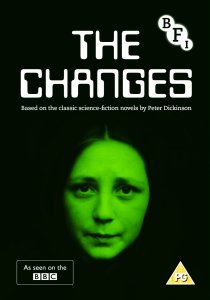
I wanted that too. Its influences are, I guess, again from when I was a kid, watching [Peter Dickinson’s] The Changes. I was just in my early teens [when it was on television], and it really hit me. It was so freaky and that world he created was so… well, I’ve never forgotten it. I’ve never seen it since either, so it’s obviously stayed with me. That’s what came back to me most vividly when I was thinking about Lonely No More. What I liked about it was that it was set in ‘our’ world only everything that made it our world was under threat or had disappeared. There was a sense that the chaos was played out in an environment that was both totally familiar and totally alien at the same time which only made it more terrifying. I did want to do something a bit scary too, so I wanted the listener to feel like ‘I know where that is’.
Did you dictate the episode length of it, as in eight episodes of half an hour, or was that what you were asked for?
It’s a podcast form, which we went for, eight episodes. Jessica Dromgoole and I developed an eight part structure which the producers at Audiama approved and then I just wrote it. I knew what was going to happen in the big beats, which is how I like to write. I don’t like to hammer it all down. I like there to be freedom to play, in the midst of making. Jesssica is also a fantastic director and we work very well together.
 The first four episodes, I wanted to give this sense that there’s this message no one comprehends: Lonely No More. What does it mean? Why is everyone picking up on it? I wanted to give the sense that there was a new global consciousness coming into play which affected everyone from kids with spray paints to astronauts in space.
I tend to think in images rather than in sounds – the sounds follow the vision, rather than the other way round – and I was very influenced by those beautiful deserted Japanese Manga cityscapes. They were very much in the forefront of my mind as I was working on Lonely No More and how I wanted the world to feel sound-wise too.
Why set it in Brighton? Was it just it’s due south from London?
I know Brighton very well. I have very close friends and colleagues who live there, it’s great. I also like the fact that you can walk there, over three or four days, from London.
 And obviously, you’ve got Gatwick sort of halfway.
Oh yes, I love airports! I grew up in Brentford, down the road from Heathrow. I’ve written about Heathrow before. I always thought of it not only as a kind of fortress but also that it’s a disorienting and liminal world where a person is forever between two places.
Was this affected by how society reacted to Covid?
I didn’t consciously write about the pandemic. A lot of people I speak to now seem to have only the haziest of memories of that deeply unsettling time. I’m not saying I was writing directly about it but there’s no way that it didn’t affect me. Certainly I had lots of time to think.
And also, the scepticism and everything that is still there about it.
Oh, yes. One of the big themes, and this is a bit of a crossover with Pilgrim, is the power of the irrational to guide the actions of the human characters. An irrationality which was much closer to the surface than most of us would have liked to admit in the first fifteen years of this century. When I commenced writing Pilgrim [the first series was broadcast in 2008], the world pretty much had a geopolitical landscape a person in the West could still recognise. Back then a lot of people didn’t publicly believe that Presidents of the United States could control tidal waves and hurricanes.
Now the world’s like, ‘you say it, I’ll believe it. Anything you like, mate.’ The power of the irrational is always present in the ancient Greek plays which hugely influenced me, as well as in the theatre of cruelty and the absurd – not that I like non sequitur plays– but the idea that there was this irratinal tidal wave in the souls of men that could wash rationality away has always, as I say, felt much closer to our perception of our world than perhaps people would like to believe.
You’re trying to try to follow a rational path through that irrationality.
Absolutely and I think it makes you mad, doing that. There’s an episode of Pilgrim where a croupier digs up some ancient armour, which he wants to flog for money but instead the armour gives him the power to become very charismatic and the whole town starts to obey him and enact his every, sometimes murderous, command. There’s a scene where he’s standing in a farmyard throwing a rope lasso around a puddle and he says to Pilgrim, ‘I’ve got the moon in there.’ And when Pilgrim doubts that that is actually so the croupier retorts, ‘If I say, I’ve got the moon contained in a puddle, then I’ve got the moon contained in a puddle.’ And it’s that, just that belligerent belief in nonsense which informs the downfall of so many characters in Pilgrim – or as my friend Simone calls it, militant stupidity
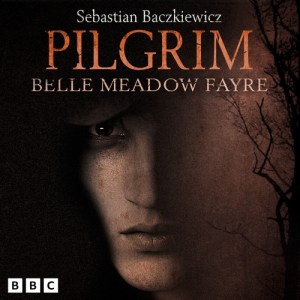 Sticking with Pilgrim for the moment, listening to the most recent one, particularly towards the end of it there’s a hint that the King could turn him mortal…
Yes, well… why not? I’m playing with the idea of it. That’s what Vass says to him: ‘Get rid of them, get rid of all of it. Turn it all upside down. Don’t do the right thing, do what works for you. And who knows what could happen?’
Pilgrim does seem to be being changed now by what’s going on. Is it that the world is changing in a way that he doesn’t recognise now?
Yes. I think he’s less tolerant and I like that. I always liked that he was compassionate but somewhat impatient too. But now he’s tired but still he’s addicted to this, this weird stuff that happens, and in this particular episode, I really wanted to hold him accountable.
He arrives and does his Pilgrim thing and then he goes – but what about the people who’ve got to live with that crazy experience? Without wanting to overegg it, definitely there are themes of abuse, of recklessness, of the irrational again, people just doing what they like and never mind the effect that it has on, particularly, children, which I feel very strongly about. There’s a sense that there’s a lot of unresolved mess, in the hinterlands of Pilgrim. There are people who have suffered and weren’t just like ‘Oh, thanks Pilgrim, I feel good now.’
There’s an air of consequences.
Yes.
He’s got this history going back to the 12th century and now stuff is coming back to bite him in the arse.
Yes, stuff that was like, a few years ago, which to him is five minutes, is now coming back to haunt him.
When I started listening, I thought ‘Is this a sequel to an episode I’ve heard?’ And then I realised the time frame.
That was the risk I took.
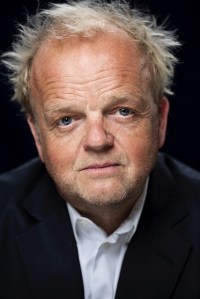 But soon it was clear that Toby Jones was playing the same character: it was clearly established that he’s in his sixties, and he was a kid then. It was nice hearing him in it.
There are times when I’m sitting in recording studios with two brilliant actors, who just do their thing. You hear your work and – with barely a word – off they go… it’s a real privilege to be a part of.
I’ve worked with Toby a couple of times before and obviously Paul [Hilton] over the last sixteen years and it’s always delightful and a privilege to be in their august company.
Especially as Paul’s absolutely the captain of the show and its centre of gravity when it comes to recording. He’s always fantastic and brings a very real emotional and physical gravitas to every scene he plays.
I was very surprised to hear so much of Silly Love Songs turn up in Pilgrim.
It’s the song of [Vass’s] youth. Silly Love Songs is such an iconic record of the mid seventies and it’s so sweet at its heart. It made Kara’s seduction of Vass so much crueller, because when he first encounters her he’s just a lonely teenage boy sitting on a wall with his adolescent daydreams and that week’s copy of Whizzer & Chips.
Also I noted that it didn’t go into the chorus, it never goes into the ‘I love you’ bit, it is purely the verse.
Oh yes, that’s true. It’s ‘Here I go again.’ That’s the thing, we’re off again.
Also it’s quite a thing to ask. “Would you mind just singing the middle eight of Silly Love Songs, perfectly, please?” I wanted both performers to be able to sing the song. Sometimes actors do a rough approximation of a song but both Toby and Holli [Dempsey] were fantastic and really sang the song correctly because they clearly meant it. Also, thank you Paul McCartney for being a genius.
 There’s obviously more stories to be told, we’ve got them being set up at the end of this two-parter, but is there actually another one on the way?
No. The world of Radio 4 commissioning is changing and I’ve no idea where my place, if any, is in it but we are developing ideas for TV. I am talking to Sky, and we are working on a project but I can’t really talk too much about it here.
And do you see there being a sequel to Lonely No More, or with the society you created?
We left it open but that’s up to whether or not there’s a demand for it. It would be fun to investigate it but those decisions are out of my hands.
Lonely No More is available on Audible, Spotify, Apple Books, Google Play and audiobooks.co.uk and others.
 Doctor Who News Star Trek News
 Sci-Fi Bulletin: Exploring the Universes of SF, Fantasy, Horror and Spy-fi!