Jekyll & Hyde (Big Finish): Interview: John Heffernan & Nicholas Briggs
Nicholas Briggs’ adaptation of Robert Louis Stevenson’s Strange Case of Dr Jekyll and Mr Hyde joins the ranks of the Big Finish Classics this week and to mark the occasion, […]



Nicholas Briggs’ adaptation of Robert Louis Stevenson’s Strange Case of Dr Jekyll and Mr Hyde joins the ranks of the Big Finish Classics this week and to mark the occasion, […]
 Nicholas Briggs’ adaptation of Robert Louis Stevenson’s Strange Case of Dr Jekyll and Mr Hyde joins the ranks of the Big Finish Classics this week and to mark the occasion, Sci-Fi Bulletin was part of the press conference interviewing star John Heffernan and Briggs to discuss the challenges of the production…
What made you say yes to embodying both Jekyll and Hyde? What’s in those characters that makes you go ‘Oh, that’s for me’?
 John: Well, it’s an actor’s dream. You want complexity and extremes and you’re always looking for something which is going to challenge you. There’s probably nothing more challenging than two people at either ends of the spectrum and trying to find the meeting point between them. In the most essential sense, it’s a battle between good and evil going on in his head the entire time.
Nick and I were talking a lot about what you’re able to do with an audio drama with this material in a way that you maybe would struggle to do as successfully on stage or on film or through any other medium. That allowed us to go to some quite fun places and Nick was great at encouraging me to go further and further and embrace the dark side.
When people usually think of Jekyll and Hyde, it’s usually that whole grand cinematic or theatrical spectacle of one becoming the other so it’s interesting to see how that translates into the audio version.
John: I think what’s wonderful about audio is that it can work on your imagination, so if it’s all happening in a listener’s head, it can be incredibly effective. It’s a bit like the shark in Jaws: you don’t want to see it particularly and it’s a little bit of a disappointment when it turns up! So, to be able to work on the listener’s imagination is a very potent thing.
There are degrees to which Jekyll and Hyde is an obvious choice for Big Finish Classics but what made you jump on it and go ‘Oh, I know what we can do with that and I know how’?
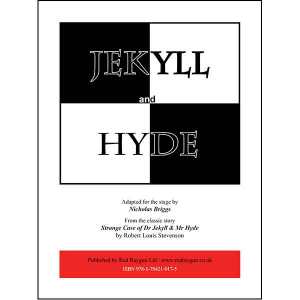
 Nick: It was a very practical thing. I was actually asked to adapt it as a stage play to start with, for the Theatre Royal Nottingham years and years ago, maybe 2016. They just said, ‘We’d like to do that as part of our thriller season.’ So I did leap on it because I thought, ‘Oh this is interesting.’
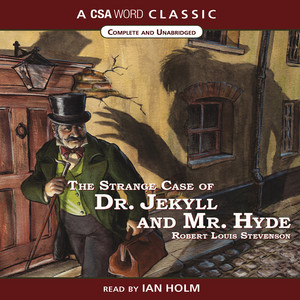
I wasn’t familiar with the novella except in the way that we all are, that we’ve all heard of it. I immediately read it and I listened to the audiobook with Ian Holm, who reads it so perfectly. Anything that I was having a moment of stupidity about not quite following, just hearing Ian Holm reading it made me go, ‘Oh I see, that’s what that means. Now I get it.’ He was my guide really.
I just found it a fascinating story. What fascinated me is that it is not the story that everyone thinks it is. I really wanted to tell it more how it was in the novella, to just give it a chance, because hardly anyone ever tells it that way. Hardly anyone makes it Gabriel Utterson’s story. He’s the lawyer whose friend is Doctor Jekyll – he hears about Mr Hyde and wonders what on earth is going on and why his lovely friend Jekyll associates with this abominable person.
We know what the reveal is, that’s inherent in the title: you say Jekyll and Hyde to anyone about anything and it means anyone with two sides of a personality. The voyage of discovery through Utterson is the emotional centre of it and in the book, it’s from his point of view and you hear all his inner thoughts.
 I brought in the character of Inspector Newcomen, who is in the book but only has one scene. I had him interrogating and urging Utterson on and that’s why we get to hear all of Utterson’s fears and how he started to find out all about this. So it’s an emotional and disturbing journey, the end of which Utterson dares not even think about and that’s why it becomes a powerful story.
As I always maintain – and people are probably sick of me saying this – I think it doesn’t matter if you know the ending of something. I think what we really love about stories is the journey, which is why you can watch your favourite film over and over again and think, ‘Oh God, I know what happens. I know they all get killed’ but it doesn’t matter because it’s the telling that makes it good.
This is almost a Mrs Merton question: What was it about the way that John had played a Time Lord with multiple personalities (the Nine) for Big Finish that made you think that he’d be right for Jekyll and Hyde?
 Nick: Do you know, I can honestly say that I hadn’t even thought of that because my involvement with the Nine stories in Doctor Who had been minimal. I would have just read the storylines. I didn’t direct them so I didn’t oversee the post production.
I had completely forgotten that he had done that but when I said to [former senior producer] David Richardson, ‘I’m going to get John Heffernan,’ he said, ‘Oh yes, because he did the Nine.’ And I thought, ‘Oh yes, people are going to think that’s why I’ve done it.’ I don’t mind if people think that, it’s just not [what happened].
I actually thought – saving John’s blushes –‘Who have I worked with who is a brilliant actor who I really like working with and who I think might just put up with me and come and play this?’ I was having a conversation with Barnaby Edwards, who I often consult about casting, and we were suggesting all sorts of people. When I said, ‘How about John Heffernan?’ he just said, ‘That’s it, we needn’t talk anymore, that is a brilliant idea.’ So I contacted John’s agent and it was all about John’s availability really because he’s a very busy successful actor.
John: And Covid.
Nick: Yes and Covid! I tested positive for Covid on the day of directing and had to revert to doing it remotely. That is truly what happened, it wasn’t the Nine at all.
Flipping that one to you, John, obviously you have been playing a character for Big Finish who you’ve had to give these very quick, different versions to. We have to know which one of the Nine they are from their particular qualities, within a second of the line starting. Was that irrelevant to playing this, where there’s much more of Jekyll than Hyde?
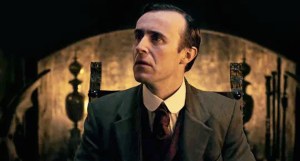 John: Yes, they bleed into each other here. With the Nine, it all comes so thick and fast. Those personalities, they’re like rats in a sack and you’ve just got to get on that runaway ghost train and ride it. They’re wonderful, those scenes, to play.
What was great about recording this is that we did the two characters separately so we were able to get a real handle on who both of them were. They weren’t competing with each other in quite the same crazy, kleptomaniac way that the Nine does. So we were able to go a lot deeper and work out the connections because they feed off each other’s personalities at the same time and it gets more and more extreme as the story goes.
The novella is one of those from that period where there’s lots of incidents but not actually a through plot and Nick, you’ve had to create much more of a thread to it. How much of a challenge was that, to keep the central themes there whilst still imposing that structure? And John, did that feel like the attention was moving away from Jekyll and Hyde because of the need for the structure?
 Nick: Interesting. I’m a storyteller so I look for the story and you’re right about the novella. Yes, I suppose it is “this thing happened, this thing happened”, and we have to put it together in our minds, but in a drama you need there to be more of a structure.
The structure was the procedural aspect of it with the police interrogation which pulls it together, which then jumps into life because the policeman basically says, ‘OK, I’ve heard the story, let’s go and do something about it now.’ And then it takes on a whole new phase.
I think that if you do Jekyll & Hyde, you don’t want Jekyll and Hyde in it all the time. I think it works well if Hyde particularly is this kind of shadowy haunting figure, that people hardly dare mention his name without feeling physically sick because there’s something about him… Even having just heard about him and not seen or experienced him, they start to feel wrong and ill inside, there’s something very peculiar.
It feels much more straight down the line of the novella than a lot of screen adaptations. Is there more pressure in doing it that way especially when everybody thinks they know the story and it isn’t that way?
Nick: I suppose there’s always pressure when you write something, and that’s what excited me about it. I wanted to surprise people. I wanted people to start listening to it and think, ‘Hold on, where’s the laboratory and the bubbling potions? What’s going on here?’
I suppose I wasn’t thinking about that pressure although I have added in post production a lot more background stuff and that sort of lingering dripping of the blood.
I just wondered if there was a sense of ‘Oh, I’m adapting a timeless classic.’
Nick: Well, Ian Holm really helped me. I always feel pretty stupid when I read older novels because I have a bit of a phobia of not being quite clever enough to understand them.
I did the same thing when I adapted The War of the Worlds: I listened to a really good audiobook of it as well and you appreciate a story in a different way when you hear it. You notice things that you didn’t notice when you read it. That’s my advice to everyone.
 John: Seeing the story through Utterson’s eyes is so important, I think, because it really roots you and grounds you in that reality – he becomes the listener’s eyes and ears. I’ve experienced playing Jonathan Harker in Dracula, the TV version, and he performs a similar function. If you focus too much on Jekyll, it warps the whole story, whereas if you see it through someone like Utterson, then you realise it becomes even more abominable, because you’re seeing this terrible thing happen to their friend and it becomes much more real.
Nick: One of the traditional ways of adapting it is to show Jekyll first and then proceed to the monster, but we actually show Hyde first and then find out what a nice harmless bloke Jekyll appears to be. So the reveal is almost the shock of the niceness, really.
Particularly for a Big Finish audience, we know about the idea of a baseline personality that can be split into various personalities. Is a single split, that late 19th / early 20th century dichotomy of good and evil, still as scary to a modern audience?
 Nick: There’s no limit to how scary human beings can be. We’ve seen in recent years how we can be surprised by people behaving in more and more appalling ways. We’ve got a war raging in Europe, we’ve got populist leaders who invoke the very worst basest feelings in human beings which are quite enticing – because giving people the permission to just be horrible is a very intoxicating thing – but ultimately people have to think about how that’s going to affect them. Do unto others as you would have done unto you, paraphrasing from the Bible.
I think it is scary and we should always be scared of the bad things that human beings are capable of. And here, I did amplify it by having it be haunting.
When I did it on stage, when the maid was giving her interview about seeing Hyde, she gets so scared she falls off her chair and starts hiding behind it and they have to physically pull her away from it. And when Mrs Poole talks to Utterson about what she glimpsed through the laboratory door, as she’s relating it, her legs are taken from under her because the shock of the memory completely floors her.
Even though we weren’t able to do those things physically for this, I spoke to Clare Corbett who played all the women in this (there are virtually no women at all in the original story so I invented a few), and said ‘She falls off her chair’ or ‘She collapses here.’ And even though we didn’t manifest that with sound effects because it would have been too distracting, it’s there in her performance, that sense of shock. And of course it’s also there with Lanyon, who when he sees the transformation, it kills him. He dies shortly afterwards from the shock of it.
John, you mentioned earlier on playing Jonathan Harker. When you’re playing a character that’s well known to the audience, do you find it more of a challenge to find something new in it? Or do you simply look at what the script is giving you, what you feel yourself and present that? And it doesn’t really matter what somebody else has done because that’s irrelevant to what you’re doing in July 2022?
 John: That’s a really good question. I think, in essence, those parts that have been played many times over are because they’re sufficiently interesting to multiple interpretations, and what you come up with is going to be unique just by virtue of your personality and your thoughts.
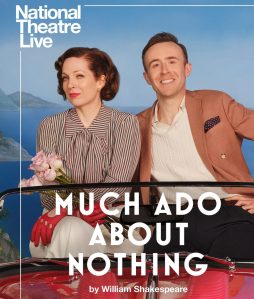
I’m doing a play, Much Ado About Nothing, which has been done countless times but having said that, although I have tried to reassure myself that it’s fine, I’m just going to bring my own interpretation to it, there are definite pressures. You’re aware of people on your shoulder with certain roles; that’s certainly been the case with this play.
I was quite lucky with Jekyll & Hyde in that I’ve not seen any previous versions and I’m quite glad, although I really want to listen to the Ian Holm audiobook after hearing Nick talk about it because that sounds brilliant.
Obviously an audio and a stage drama have very different requirements for the benefit of the person who’s experiencing it. How much were you re-writing what you’ve done before and how much were you “re-envisioning” it, as an audio?
Nick: Not as much as I expected. There were relatively minimal rewrites, just finding ways of making stuff work on audio that was more visual, and deciding what you could and couldn’t do.
 I think I put in a few more bits from the book – there’s a point where Newcomen and Utterson are approaching Hyde’s Soho residence, going through that area. Of course, that just happened in the play but here I had them inside the carriage commenting, with Newcomen saying to Utterson ‘This is the kind of place we’re going to’ and the descriptions he gives are the ones from the book.
I was able to do better effects for the transformation – or rather have Benji Clifford, who’s the sound designer, do better effects – because on stage, they were not vast budget productions and we did not devise anything particularly startling visually for the transformation. When Lanyon is struggling with Hyde, he just went off stage for a moment but Lanyon still apparently has hold of his hand and then he pulls him and when he pulls him, it’s a different actor [as Jekyll]. And of course everyone notices immediately how you’ve done it!
John, how did you imagine those transformation scenes? Did you go back to what Stevenson wrote? Nick’s script is obviously clear as to what’s happening but not necessarily the emotional side of it. And that last section of the novella is Jekyll’s account of it.
 John: I used Nick’s script, which was so brilliant. Obviously he was guiding me through it. You just want to grade the stages that it goes through, and by the end scene I think I was just very keen for it to be as painful as possible.
It’s horrific to an outsider but I was approaching it as a story about addiction to a large extent so it’s quite pitiable, what happens to him, and it ends in the worst possible way. So it was just trying to be as honest to that as I could possibly be, I suppose.
Nick: And the honesty is the key thing. That’s another reason why I wanted John to do it. He’s just a very truthful actor; you could not make John do anything cod, you couldn’t push him for a cheap laugh.
John: I don’t know about that…
Nick: He’s got far too much integrity and he’s a far too noble human being and… seriously, I know this sounds like ridiculous praise but it’s the truth and that’s why I wanted him to do it. He is very honest. I knew I’d written a lot of pain in the scene where Jekyll is giving his final testimony and I thought, ‘I know this is going to be appalling to listen to because John will be honest with it. There won’t be any melodramatic screaming, there will be real human suffering and pain.’ I felt terrible putting him through it but you took all your cues from the script brilliantly.
So it is an uncomfortable listen at that point but I think it is to do with addiction and it is to do with resisting and falling foul of our worst instincts.
Jekyll and Hyde is available now from Big Finish
 Doctor Who News Star Trek News
 Sci-Fi Bulletin: Exploring the Universes of SF, Fantasy, Horror and Spy-fi!