Jayne Lake: Interview: Matthew Graham
Perhaps best known for co-creating Life on Mars and Ashes to Ashes, Matthew Graham is now based in Los Angeles, working on various TV projects. However that doesn’t mean he’s […]



Perhaps best known for co-creating Life on Mars and Ashes to Ashes, Matthew Graham is now based in Los Angeles, working on various TV projects. However that doesn’t mean he’s […]
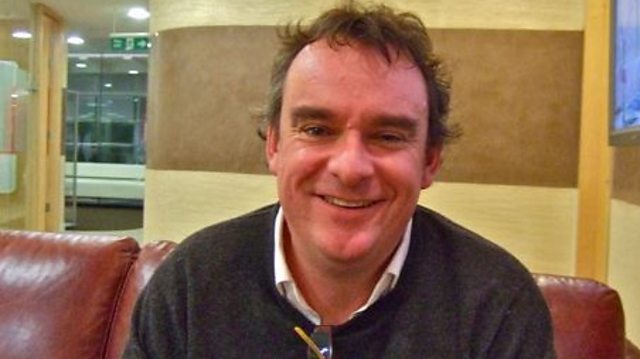 Perhaps best known for co-creating Life on Mars and Ashes to Ashes, Matthew Graham is now based in Los Angeles, working on various TV projects. However that doesn’t mean he’s abandoned his roots in the UK, and his latest piece for Radio 4, Jayne Lake, aired on November 4. It’s the story of a group of friends at a reunion, one of whom was blinded a few years earlier. There are multiple twists and turns in the play which can still be heard on iPlayer. A couple of days before transmission, Graham chatted with Paul Simpson…
There were a number of occasions during Jayne Lake where I was thrown – which makes it really difficult to review as you don’t want to give anything away…
(Laughs) Yes, it’s a bit nuts, and there’s tongue slightly in cheek with it. It’s certainly not trying to take itself too seriously.
T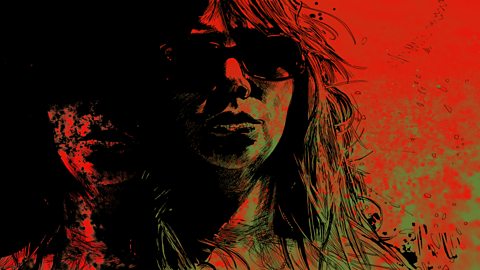 he ending did feel like a bit of a homage to the Scream franchise – “we need to have something happen here… BOOM!”
I know! It’s quite funny because in the end I was getting exasperated with myself about how to end it. I didn’t want to end it on a pretentious note, on anything that was too introspective. Then I thought, “Actually I’ve got this character, the device of the audio book lady [who is reading a book that seems to be based on the events, and constantly stops recording because she is having problems with the text].” I was wrestling with whether this is too melodramatic, or a bit too silly, or a bit too nasty, then I thought I’d give her all of those concerns. “This is overblown, nonsensical… I don’t know how it’s going to end…” and then I thought, yes, I’ll have her say, “I don’t know how you’re going to bloody end it.” And then I just ended it.
With the audiobook narrator I did wonder if it was that old idea of putting criticisms of the script within the script itself so it can’t be criticised for that, because the author’s already said it first…
(laughs) To be honest, it was slightly more to do with the fact that I knew what the intention of it was, and I wanted it to be playful. It’s a semi-slasher movie for the radio, which I thought was fun, and obviously there’s a drama in there as well, but I didn’t want people to think I was taking it incredibly seriously and that this was a deep dark exploration of the psyche of the character. Yes, it was partly that but it was also a homage, or a satirical take on those kinds of overwrought thrillers. It was a question of finding a device that informed the characters in some way and at the same way gave the audience licence to relax and enjoy it.
I wasn’t sure whether the dramatic parts were a dramatization of what the audiobook narrator was reading, or this had been written down later… you’re playing with the nature of reality again!
It is a bit of both. Early thoughts from the producers were could I nail the logic of this world a little bit more clearly. I said, “Actually it’s quite fun not to.” The great thing about writing for radio, and I why come back to it is you can experiment with form in a way that you can’t even do on television. Movie writers often envy TV writers, because TV writers can often do things in long form that movie writers can’t do. With radio you can be incredibly elliptical in ways you probably can’t even be in television. You’re allowed all these wonderful ambiguities and this wonderful ethereal ideas where people think, “Does it mean that, or does it mean that?” In radio, you’re allowed to do it – they’re not dictatorial creatively at all. They leave you to hang yourself with your own rope!
 What was your initial pitch for this?
I had done The Stone Tape a couple of years earlier and really enjoyed the process. I got a lot out of it, but I kind of wished there were things I’d done differently on The Stone Tape. I wanted to have another go at radio and this time write it just myself, not with the director, and really get everything I wanted to get out.
I suppose because I love what Peter [Strickland] did with sound in The Stone Tape, I wanted to do something that exploited radio again in that way. It wasn’t just something that “happens to be on the radio”, it was that radio was essential. That led me to thinking that if the main character is blind and we’re basically with the main character listening to it, we are listening as she is listening. That’s basically what I pitched to the BBC: I said I wanted to do a thriller about a blind person and we the audience are hopefully in her shoes trying to make sense of the chaos that goes on around her. One by one her friends at a reunion seem to be being killed, and then we begin to suspect that they’re not being killed and it’s some sort of hideous game.
That was it, and they said, “sounds fun, go with it”.
 How did you research the sensory input that a blind person has and get Meggie’s voice?
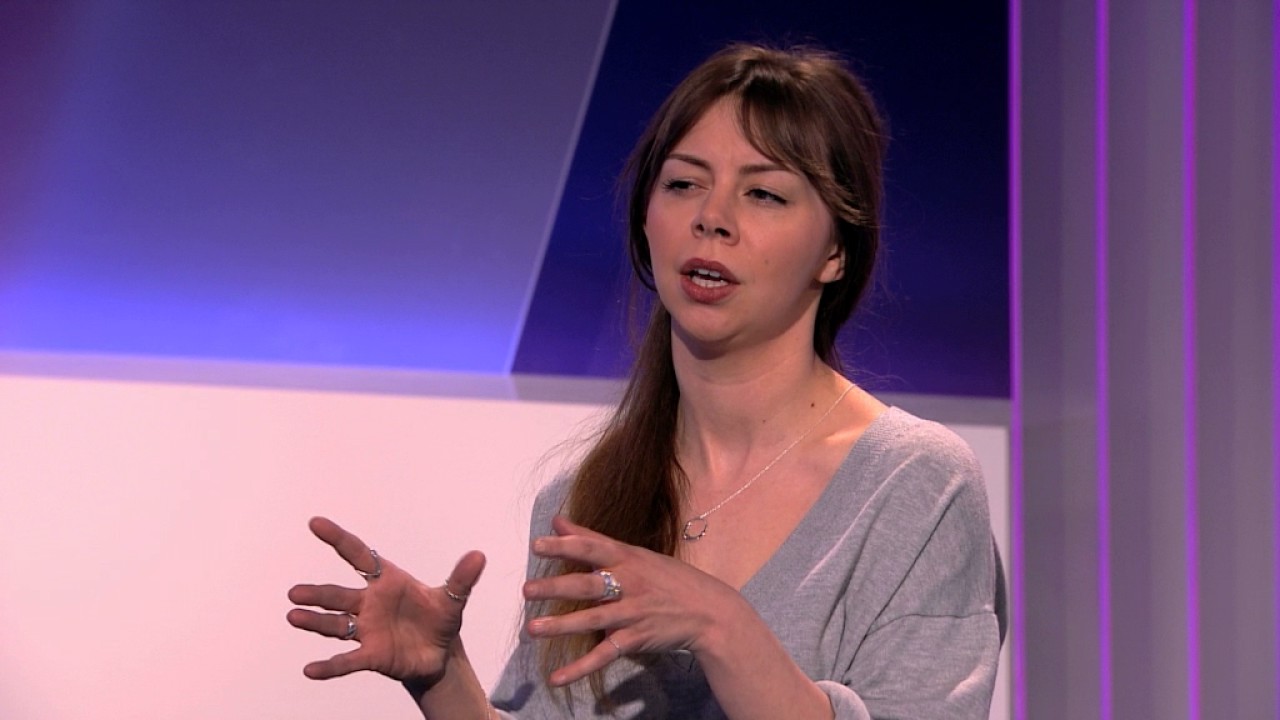
I sat down with a comedian called Georgie Morrell, who ended up playing the character of Meggie in the drama. At that time, we hadn’t even thought about casting; I simply found her. She’s a woman who had gone blind at the age of 21 rather than was born blind, had some sight restored, and was writing articles and stand up about it. I met with her, and I talked through what I wanted Meggie to do – I said I didn’t want her to be particularly likeable. I didn’t want a sympathetic blind person because I didn’t see why blind people automatically had to be nice people. Georgie was really funny and honest and said, “Oh I can be a complete bitch. I can’t stand being patronised, I can’t stand it when people talk around me, and they think I can just jump into conversations. You get sensory overload when there are too many conversations happening.”
Here was somebody who was absolutely endorsing the idea that you do not need to have a sympathetic portrayal of a blind person, and she gave me ideas. She said multiple conversations at parties are a nightmare, you stop being able to tune in. Your spatial awareness does improve enormously, your sense of a room, your sense of where things are.
The biggest revelation for me was the idea was that being blind isn’t necessarily seeing black. It’s more absolute than that. Being blind is not having any sight – it’s a bit like me saying to you, “Don’t you have the sense of oompah?” And you’d be like, What’s oompah?” And I wouldn’t be able to describe it, “but we’ve all got it and you haven’t”. You can’t even begin to work out what that sense of oompah is.
Georgie said what you have when you’ve had sight and completely lost it is memory. You have internal sight – you can remember faces – but gradually those things start to fade away, and eventually it’s almost theoretical. I’m sure it’s different for different types of blindness, but what she was describing and what I started to read about is if you’ve got no optic nerve at all, then your optic nerve isn’t telling your brain it’s black, there just is no information.
That was a very interesting philosophical idea and that was something I wanted to put into the play, the idea that people become theory. That, I was trying to imply, was one of the reasons why Meggie was so unsympathetic towards other people and towards Jayne herself because in a way people and everything were becoming theoretical.
 She certainly comes across as disconnected – until that final almost desperation of “someone talk to me” – and the bitch from hell.
I think she’s got a defensiveness that Georgie has and that Georgie was very happy, when we cast her, to bring out: the idea that on one hand you’re determined to come across as independent but on the other hand, you’re basically intolerant and angry about people who’ve got what you haven’t got. Especially when you are a woman and you’re a person who’s regarded yourself as attractive and confident and the person who makes the rules, and everyone follows along and wants to be in your gang, then suddenly you are the pariah. I thought Georgie channelled that very well, particularly given she’s not acted in a straight role before.
That’s very impressive – I wouldn’t have guessed that from the performance.
She’s done stand up which is performance but never done a straight role professionally that I’m aware of. She may have done dramatics at university.
Were you there for the recording?
I was there the whole time, and so was my son who managed to play the role of the creepy footsteps coming down the cellar stairs. I also make a brief, memorable, dare I say “award bait” cameo as the announcer on the train.
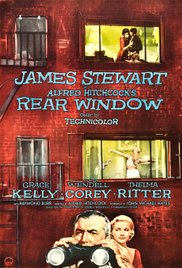 There’s a Hitchcock feel to the whole thing – Rear Window particularly, and that whole idea of the observer not affecting what they’re experiencing, and feeling impotent and not able to deal it…. Am I reading too much into it?
No, that’s absolutely correct. I’m not sure Rear Window was in my mind when I was writing it, but I certainly had the notion that the main character was utterly impotent and yet the main character’s actions ten years earlier had been the trigger for everything that was happening. The person who was behind the entire thing and was the very opposite of impotent was Jayne Lake who you never see.
So do you have another radio drama on the way?
Yes, which I’m going to co-write with my son. He’s passionate about drama and theatre, and he had this great idea which we pitched to the BBC and they really like it. It’ll be a more serious piece – it involves the psychic.
Jayne Lake is currently available on iPlayer; read our review here
Thanks to Isobel Pyrke for her help in arranging this interview
 Doctor Who News Star Trek News
 Sci-Fi Bulletin: Exploring the Universes of SF, Fantasy, Horror and Spy-fi!