Harland: Interview: Lucy Catherine
Lucy Catherine’s new serial Harland – part of the Limelight strand – is set in a few years’ time in an interconnected new town that’s built on the site of […]



Lucy Catherine’s new serial Harland – part of the Limelight strand – is set in a few years’ time in an interconnected new town that’s built on the site of […]
 Lucy Catherine’s new serial Harland – part of the Limelight strand – is set in a few years’ time in an interconnected new town that’s built on the site of a much older settlement. It follows DI Sarah Ward’s investigation into a missing teenager – which turns into something far more sinister. Catherine chatted with Paul Simpson about the creation and challenges of the project…
Where did the idea for Harland come from? Was it something that you pitched or did they come to you and say, ‘We want something on a spooky theme’?
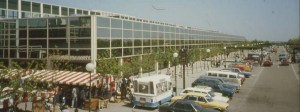 No, I pitched it. It’s an idea I’ve had for a while that I’d been wondering how to do. Really the original idea that I started with was some kind of supernatural story set in a new town. I lived in Milton Keynes as a teenager in the 80s. I spent quite a few years of my childhood on the west coast of Scotland in absolute wilderness and the move from there, aged sixteen, to Milton Keynes in the middle of the Thatcherite consumerist 1980s when it was boom town in Milton Keynes… That juxtaposition of wilds of nature and then concrete and glass and history being concreted over just made me think.
I love Milton Keynes in a weird way and I wanted to find a way to write a story about a new town, somewhere in England, that is built on the site of an old ancient village which is just full of history and folklore and stories and belief systems and all the wonderful gothic British myths that we have. I thought the juxtaposition would be really interesting.
You then put it X number of years in the future. There are references to climate change – ‘It doesn’t matter what we do we’re all going to drown anyway’ and news stories of people being displaced from the Humber. Was there any link to COP26? Certainly where I’ve got to in the story the two elements don’t seem connected and obviously there may be something that connects them later.
Yes, there will be! I didn’t know COP26 was happening this autumn, I had no idea about the timings.
 I think I wanted it to not be totally familiar. I think somewhere like Milton Keynes, one of those new towns, we know them really well now. We know they were built as these post-war utopian places with that philosophy behind them and that’s kind of died a bit. We’re not living in the same world anymore.
So I wanted to think about what a new town would be like now in the digital world. If a new town had been built in the year 2000 by a Steve Jobs type character, what would it be like now or in fifty years from 2000? Would it be living up to its utopian ideals? I didn’t want it to be a real place; if it was set now we’d think it was Milton Keynes and I wanted it to be unfamiliar and strange.
I think that climate change element really came from trying to find a way of exploring themes of nature and progress and what are we doing to the planet? I was just trying to find a way of exploring those things together in a more extreme way, and once you’ve set it in the future you can do that.
The best science fiction extrapolates from now.
Yes, very true.
Where did the idea for the end of episode 1 come from – suddenly a sinkhole appears in the middle of this town. That seems a very striking visual image for an audio play.
My whole theory about drama is that the best audio work is really visual. I think audio is much closer to cinema than television, for example. You’re painting pictures in people’s heads and you can do anything, obviously, in radio, anything at all. There’s no budgetary restrictions.
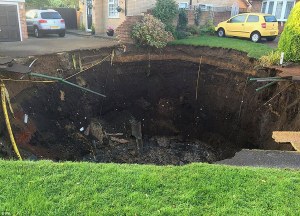 The idea was that the town is as big a character as any of the humans in it, so there’s a collection of weird uncanny things happening and how they’re connected is something we discover bit by bit, hopefully into the next series as well. Certainly we get quite a way in this series.
I saw a photograph online, an amazing photograph of a little suburban cul de sac with an enormous sinkhole in the middle. It’s just the weirdest thing and it was that, that whole idea of this safe, mundane world that we’ve built thinking ‘we’re all safe’ but actually it’s just a thin surface. There’s this dark earth and mud and unknown scary stuff. I thought, ‘That’s just such a lovely image to talk about these metaphors’ so that’s why. They’re such weird things and I like weird, uncanny things.
Once you’d actually got the idea for Harland, you have a lead character with a number of issues of her own. Once you’d put her into the situation, how much did it alter the story?
Oh that’s a good question. I think what I was trying to do was trying to tell the story of the town through her. Her mental state is mirroring the town so that helped because there’s lots of seemingly disparate things happening but actually they’re all connected through her, which is what we discover after a while.
I think towns can have energies. They can be depressed, they can be anxious, they can not know who they are in much the same way that human characters can so I was wanting her to be almost the soul of the town.
The dream sequences at the start, did you go back and write those scenes once you knew where the episodes and the story were going or did events flow from those dreams?
 It was a bit of both. I think the first draft started with the more soulful, abstract, dreamlike stuff and then I thought, ‘Oh, that’s interesting I’d quite like to go off in that direction’. Then in subsequent drafts I went back and thought, ‘OK, plot wise how’s this working? What’s the jigsaw? What’s the connection between these dreams?’
I rewrote and built that in so that there is a logic, even though it’s a dream logic in places. Hopefully there’s a kind of thriller plot that drives it rather than it just being whimsical, which I didn’t want to do. I wanted to keep the genre element very strong.
With the disappearances, there’s almost a Don’t Look Now feel to the story.
Yes, yes definitely. I’m a massive supernatural horror fan and the stuff I really love is the psychological, emotional genres, stuff like Don’t Look Now, obviously a masterpiece. It’s almost like what you were saying about sci-fi, it’s finding a genre way to talk about our deepest fears and you can do that through genre. You can go further in genre, in touching on that stuff than you can I think in straight drama or serious drama. In a way I think people allow themselves to connect with the material if you come at it at an angle, so yes that’s really what I was trying to do.
 There’s a reason why people have told ghost stories forever. Sitting around campfires in the stone age they were probably telling ghost stories.
There’s entertainment value which is really important. But I just think there are ways where the best genre has just as much depth as any other non genre piece, for want of a better phrase.
What was the biggest challenge for you in writing this compared with say the Body Horror trilogy?
Because this is returning hopefully, crossed fingers, finding a way where you come to a natural ending for the series but actually what you’re doing is opening a door to something further….That took a lot of working out – how to make it satisfying as a complete series on its own merit but it to be a big enough territory for it to continue. Which hopefully we can. I think the town really being the main character is how we do that, I think. I know what’s happening in series two. I have figured out what we’re doing and it is very different but it’s still unfolding a lot of the same stories.
Are there elements that you originally thought would be in these five episodes that you’ve moved forward into series 2 because they’re going to feel better thematically or whatever than here?
There are some things that I moved. There’s this whole balance when you’re writing drama, to give enough information to keep the audience/listeners hooked and wanting to know more. If you give too much or too little it can become quite dull and boring so I think there are places that I thought, ‘OK, this doesn’t need to all be here, I can shift some of this to the next series.’ And there are other things that I thought, ‘No, actually I need to bring a bit more in because there’s not enough for people to hold onto.’
That is always a really difficult balance. You don’t really know until you have feedback because you’re so close to it. You don’t know what people aren’t picking up on and what people are picking up on.
And it’s going to be completely different once the public hear it.
Yes, wildly different responses.
How much of the backstory have you worked out and how much of it is a black morass waiting for you to delve into it when you need it?
I’ve worked it all out, so I have a whole document with the backstory. I didn’t have that until after the first draft and I thought ‘I need this’ because when you’re building something where you’re only giving little bits of information, you really have to know what the significance of those little bits of information are and not then go back and create a backstory out of something you just came up with randomly!
So yes, it’s all there and there’s a lot of it that isn’t in this series which will hopefully be material for further series.
 What got you into writing in the first place?
I’ve always written. I was an avid reader as a kid. I didn’t go to school as a child so I was brought up in radical communes in the 70s and 80s and was ‘de-schooled’ – home-schooled, as it’s called now. I was quite isolated in lots of ways and just spent my time reading and what I read were things like Narnia, Susan Cooper, Alan Garner. All those kind of stories about portals to other worlds I was kind of obsessed by, partly because I was living in quite an isolated community. It just morphed into me writing stories – it’s the only thing I’ve ever wanted to do.
The storyteller, the jester, going back to what we were saying about campfires… that is a function of society and God help us if we lose that.
Yes you’re absolutely right, I so agree with you on that. Especially in the world we live in now – the online, Twitter universe where everything is literal and everything is right or wrong, black or white – what I think is beautiful about stories, and especially those old stories about transformation which folklore is full of, is that there are no right or wrong answers in them. They’re actually about metaphor and asking questions which is something in the literal world that we live in now, I think we’ve lost.
If I’m not writing sometimes I’ll get sucked into Twitter and I think ‘God, this is just so awful’ and that I’ll start writing and think ‘This is what feeds the soul actually – not knowing.’ That’s one of the things I love about the horror, supernatural genre, it’s about not knowing.
I think that’s a very healthy space for human souls, to not know…
Harland – the latest title in Radio 4’s new drama strand, Limelight – airs Fridays 14:15, and is available as a box set in full on BBC Sounds
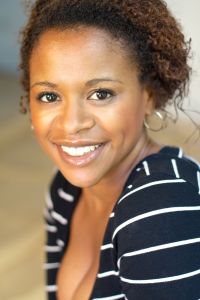
Author photo by Russell Isaac.
 Doctor Who News Star Trek News
 Sci-Fi Bulletin: Exploring the Universes of SF, Fantasy, Horror and Spy-fi!