H.G.Wells: Review: BBC Radio: The War of the Worlds part 1
Dramatized by Melissa Murray BBC Radio 4, March 4, 2017 (and on iPlayer) The Martian invasion seen from an unusual perspective… If you’re looking for a faithful rendition of H.G. […]



Dramatized by Melissa Murray BBC Radio 4, March 4, 2017 (and on iPlayer) The Martian invasion seen from an unusual perspective… If you’re looking for a faithful rendition of H.G. […]
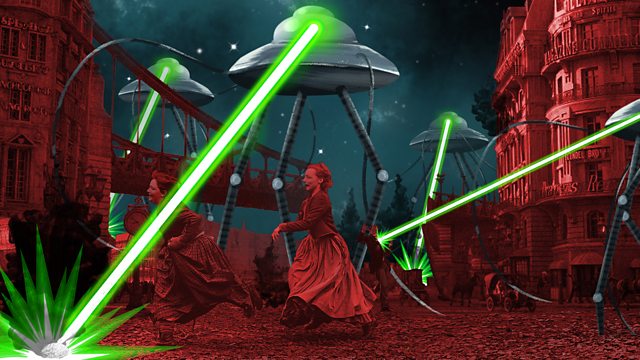 Dramatized by Melissa Murray
BBC Radio 4, March 4, 2017 (and on iPlayer)
The Martian invasion seen from an unusual perspective…
If you’re looking for a faithful rendition of H.G. Wells’ classic novel about the Martians, then you need to look elsewhere. There are at least two other audio versions coming this year to mark the 150th anniversary of the author’s birth, one of which is bound to hue more closely to the text. There’s none of the “No one would have believed…” or “the chances of anything…” here. (We do get a brief “bows and arrows” reference, to be fair.) If, however, you’re looking for a piece of drama about late Victorian society that uses the Martians’ arrival as its backdrop, then this will very much work for you.
The BBC blurb about this version emphasises the elements which come to the fore:
At the time of the novel’s writing (first published in 1898), Britain had never been stronger, but a sense of moral queasiness at the methods used in Empire building was growing. This dramatisation highlights the questions Wells poses: What if we were the colonised? How would we fare if a vastly superior technological invader attacked us? How would we behave? This dramatisation also reflects Wells’ depiction of late Victorian suburban life and culture, making its domestic heart a poignant and terrifying starting point for an invasion by Martians with their own imperialist agenda, and reflecting the common fear which had emerged in the years approaching the turn of the century – that the apocalypse would come on the last day of 1899.
Melissa Murray has taken the core plot from the book and reworked it in what might well seem like a more realistic way, often using passing sentences in Wells’ text as the basis for whole scenes (for example the party bearing a white flag that approach the Thing on Horsell Common warrants a scene that explains how they come together and decide on what they’re doing). The meeting between the narrator – here a writer named Robert Fenton – and the artilleryman (who finally does get given a name) is very different from the original, as is the encounter with a clergyman driven mad by events. In many ways, if you came into this partway through, you could be excused for thinking that it’s a drama about the First World War – until, that is, the well-created sound effects remind you that it’s an alien invasion underway. There are some less than subtle digs at the chauvinistic attitudes of society, and in particular the way in which Robert treats his wife, as well as the class divides.
Setting aside any reservations over the script, this is a very well-acted and directed play. Blake Ritson (recently heard as Wells’ Dr Kemp in Big Finish’s Invisible Man adaptation) is credible as the tortured Robert while Samuel James makes an equally believable artilleryman, and director Marc Beeby ensures that the period details feel accurate.
It will be very interesting to see how the second half of the book is treated. There’s a harder edge to this version than in Wells’ original but perhaps he was writing a warning treatise and had to hide some of his social commentary, the team behind this have the benefit of hindsight and can put the ideas he was focussing on in sharper relief.
Verdict: Perhaps best seen as an alternate take on the events of Wells’ novel than a dramatization of his book, this is a powerful piece of drama. 8/10
Paul Simpson
 Doctor Who News Star Trek News
 Sci-Fi Bulletin: Exploring the Universes of SF, Fantasy, Horror and Spy-fi!