Forest 404: Feature: BBC Podcast Launch event
With the popularity of podcasting continuing to rise and BBC Sounds enjoying the fruits of that revolution, the medium is really beginning to be fully explored for the possibilities that […]



With the popularity of podcasting continuing to rise and BBC Sounds enjoying the fruits of that revolution, the medium is really beginning to be fully explored for the possibilities that […]
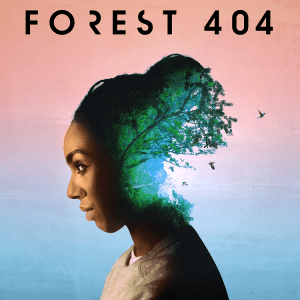 With the popularity of podcasting continuing to rise and BBC Sounds enjoying the fruits of that revolution, the medium is really beginning to be fully explored for the possibilities that it presents, especially in relation to how it can be used to tell stories. Greg D Smith attended a launch event at the Barbican on April 2 for a very different sort of proposition in audio drama – Forest 404.
Billed as an ecological sci-fi thriller, Forest 404 is much, much more than that simple tag might initially suggest. Arriving at the event, we were presented with wireless headphones playing a loop of different ‘soundscapes’ – all based in nature but with unsettling overtones lurking just at the edges – and invited to walk around the Garden gallery at the centre itself, taking in the environment of trees and a large pond filled with fish as the sounds washed over us. There was a rainforest, an underwater soundscape and what sounded like a variety of countryside noises, but every so often the title of the podcast itself would break through in an atonal delivery through a rush of static. Clearly, we were in for something a little different.
That done, we were invited to take seats and listen to an introduction to what Forest 404 is by Launch Director of BBC Sounds Charlotte Lock and BBC Radio 4 Digital Commissioning Editor Rhian Roberts, who commissioned it. The podcast was based on Roberts’ personal idea of forests – like a local one to her as a little girl which she used to walk through with her grandmother, and which was full of its own stories, both mystical and mundane, from spirits to flashers. She was also aware of how podcasting as a medium told stories that would get into her head in a unique way, and Forest 404 represented a decision to use that quality consciously – to structure something that would dig into the subconscious in specific ways.
 This leads to the meat of the thing. Forest 404 is unique in that it can be enjoyed on different levels. On one, it’s a nine-part drama. But alongside those nine instalments are nine episodes which explore the science and ideas behind the episode they’re attached to, and nine pure soundscapes from the episodes themselves. The idea is to draw out and pin down the concepts evinced in the episodes and explain the thinking and facts behind them, such as how the sounds we hear can affect our mental and even physical health, to more deeply immerse the listener in them.
The ten minute sample we then heard of the drama itself instantly drew the listener in, and as the sample unfolded we got a real taste for Pearl Mackie’s character, Pan and Tanya Moodie’s Daria, the former our main protagonist, the latter her oddly cold former boss. Mackie’s natural warmth and easy delivery immediately draw us to her character – however bad what she has done may be, we want to know a reason to forgive her. Meanwhile Moodie’s stilted, formal style reinforces that thought, while making us distrust her. The concept – that Pan is a kind of archivist whose job is to determine which sounds are worth retaining in a future where data is finite and harsh decisions must be made about what to keep – lends itself to occasional humour but also stands as starkly horrifying, especially when we reach the sound that changes everything for Pan, one that we might recognise but also take for granted right now. It’s thought-provoking without being preachy, and on the strength of this sample, something that will appeal to a wider audience than a stark precis of the idea might suggest.
 After the sample, a Q&A panel gave us insight from Director Becky Ripley, sound designer Graham Wild, writer Timothy X Atack and stars Pearl Mackie and Pippa Haywood. Ripley and Wild went into some detail about the specifics of audio engineering for podcasting, and the use of binaural recording to achieve true 3-D soundscapes in the ears of the listener. Atack – who is also a composer – explained how writing for audio dramas seems to use the same part of his brain as writing music, highlighting the uniqueness of the medium for storytelling. Asked why the entire cast was female, he said simply that that was how the characters spoke to him as he wrote, and that his default storytelling position is that unless there’s a good reason for them not to be, all his characters are female, and he looks forward to a time when this will be so normal as to no longer be worthy of note.
Haywood spoke of the particular challenges of playing her character – a 300 year old – ‘You get to an age as an actor where you’re starting to be asked to play people’s grandmother and then this!’ Mackie talked of the era in which her character lives and how that affects the sounds she hears – a tendency to take things as ‘mundane’ as an Obama speech or a Beyoncé song (which, she assured an audience member, she would never erase herself) for granted, but brought to a standstill by a sound (the rainforest) to which she cannot relate on any level, with no frame of reference, nothing she can say it sounds a bit like to her.
 With podcasting as ubiquitous as it is, and audio storytelling enjoying a huge renaissance through various platforms, it can be difficult to make an idea that stands out from the crowd. On the evidence of this launch though, Forest 404 has done just that, and I for one will be listening to the whole thing with interest.
Forest 404 is now available as a podcast boxed set on BBC Sounds.
 Doctor Who News Star Trek News
 Sci-Fi Bulletin: Exploring the Universes of SF, Fantasy, Horror and Spy-fi!