Dangerous Visions 2017: Interview: Writer Alan Harris
Alan Harris’ adaptation of Franz Kafka’s Metamorphosis opens the new season of Dangerous Visions on Radio 4, with the playwright bringing out some of the dark comedic elements inherent within […]



Alan Harris’ adaptation of Franz Kafka’s Metamorphosis opens the new season of Dangerous Visions on Radio 4, with the playwright bringing out some of the dark comedic elements inherent within […]
 Alan Harris’ adaptation of Franz Kafka’s Metamorphosis opens the new season of Dangerous Visions on Radio 4, with the playwright bringing out some of the dark comedic elements inherent within the original novella. Paul Simpson chatted with him about the challenges of updating the classic work…
How did you get involved in adapting Metamorphosis for Dangerous Visions?
I was originally approached by the producer, James Robinson, who’d done previous seasons of Dangerous Visions. There was a conversation between myself and James and also James and Jeremy Howe, the commissioner, about what sort of stories that they wanted for the new series and it was either James or Jeremy who said “What about Metamorphosis?”
James asked me if I knew the story, what did I think of it? I’ve always loved the story, but like a lot of people, I read it when I was quite young originally. It’s always stuck with me, one of those stories that sticks in your mind. It’s such a strong central metaphor in it, so of course I said to James I’d love to adapt it.
Normally with radio commissions it comes exclusively from the writer but on this occasion, I think it came from the producer.
That seems to be a hallmark of the Dangerous Visions season…
I think so. Excuse the pun, but they do have a vision of Dangerous Visions. I think that helps.
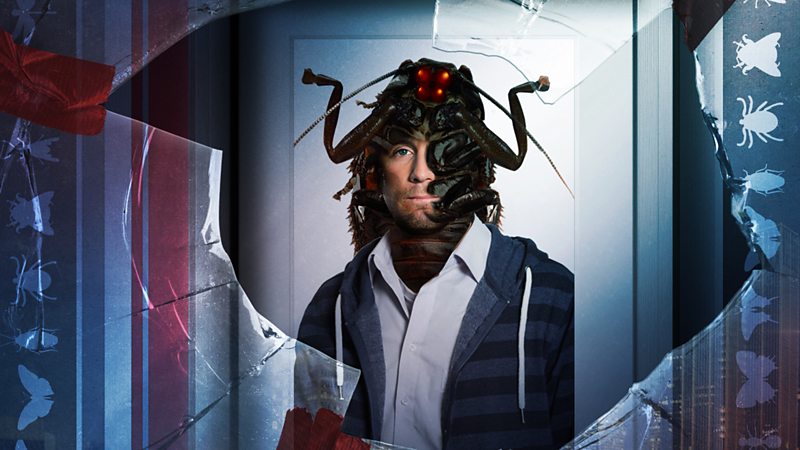 Definitely there’s a theme of metamorphosis, with the bookending of this and Koestler’s Darkness at Noon for the season – that feeling of alienation.
And those people in society who don’t quite fit into society and are finding their place in that society.
Was there ever any idea of keeping it as a period piece, or was it always going to be a 21st Century take?
I think it was always going to be a 21st Century take on the original story. The play is modern but not nailed down to a particular year, or a particular reality and there’s a sense of that in the original story. There is that sense of universality to it so I was interested in bringing it to a modern audience. As well, I think if you’re going to adapt something you’ve got to be quite bold about it anyway and kind of make it yours.
I have written period things, especially for Radio 4 – a play called The Lighthouse which was set in 1801 – so I’m not adverse to having things set in the past but I think there’s something about this story and people fitting into society and how they lose their place in society that I thought was very relevant and in tune with today. That was one of the reasons why it’s set in a contemporary world.
The broad strokes are very much in line with Kafka’s original story, but you’ve added to it – the pest controller I love as a character, “you’ve called me out and you won’t let me kill something?”. There’s a strong streak of black humour in this that I don’t recall being as strong in the original – was that something you consciously brought out?
I think so. To be honest, for this adaptation I read and reread the original and even though it is a deeply unsettling tale, I still it quite funny. I think Kafka’s version is laugh out loud funny at certain points so it does lean towards kind of being a dark comedy anyway. That’s what appealed to me so that’s what I brought out a little more.
 Did you go back to Kafka’s original or the various translations?
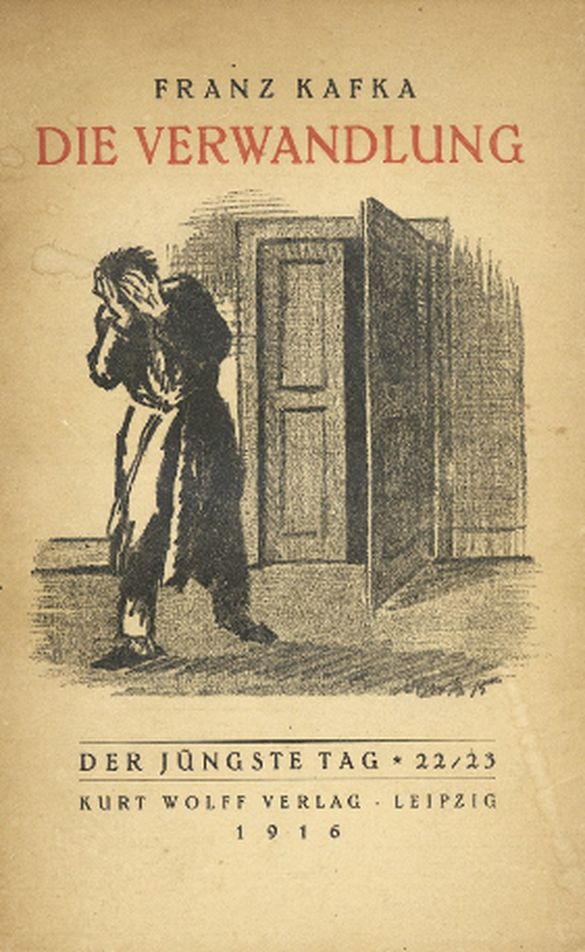
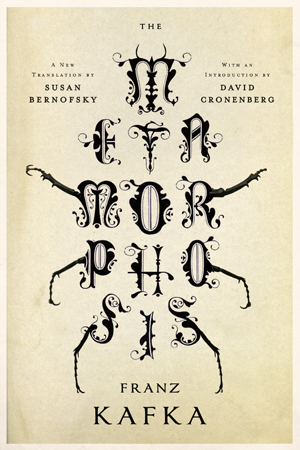
Translations – I don’t speak German. I read a couple of versions and there’s all this controversy about even the opening line, about what Gregor turns into, and the language of that. So there was a decision to be made there – but with any adaptation there are decisions to be made on the language and meaning, so that didn’t really bother me too much.
It’s quite surprising that there is no unanimity as to what it is he turns into!
Yes, some people say he turns into vermin, some into a cockroach, a beetle. There are various interpretations. I think the closest is a kind of vermin more than anything, but in the play it’s more cockroach.
For a radio play we needed something a little more specific. Everyone will have a different mind’s eye view of Gregor, but I can see him as this giant half-man, half-cockroach.
There’s a very heavy narrator element, more so than in a lot of radio plays: why did you go that route?
Again, I think that’s the influence of Kafka. The original book is really a novella and I think because Gregor is such a dominant character in the original story, his family don’t play such a large part as they do in the adaptation. I was influenced by Kafka’s strong voice for Gregor and I wanted to get that across in the radio play.
Was there a temptation to call the narrator “Franz Kafka”?
There was a temptation but I stayed away from it. I think sometimes that can be slightly too neat and slightly too clever – without disparaging any other adaptation. I think perhaps that’s a way of going about that is quite often used so I avoided it.
 What was the biggest challenge of this adaptation?
I think the biggest challenge – apart from of course adapting for radio which has its own specific challenges – was bringing it into the 21st Century which I wanted to do while still keeping to the spirit of the original book. Hopefully we’ve done that: kept that sense of what Gregor means to us, while then expanding the story.
It’s an hour long drama so just to concentrate on Gregor is too narrow. In this adaptation we concentrate very much on what the effect is on the family more than in the novel. That was the challenge, really, for Mama, Papa, Greta, all to be rounded characters, and then there are characters like the pest controller that are not in the novel at all. The challenge for me was to make them real and just as interesting and rounded as Gregor himself.
And the lodger who has a nasty agenda of his own – beautifully played…
I like Juri in an odd way! Underneath he’s a bit of a user!
That’s an understatement! In the original, Kafka indicates that the others hear Gregor’s speech differently – what indication did you give in the script to the director in terms of what you wanted his speech to sound like?
I think originally when he turns, in the script I said his voice almost becomes static, like TV static, white noise, and then of course during the recording we had lots of discussions about what the best treatment of that would be. I had an idea in the script but then a lot of that is down to the producer and the sound engineer.
What else are you currently working on?
I have a play that is going up to Edinburgh for the Fringe – Sugar Baby which is going to Summerhall in Edinburgh for the Festival – and Radio 4 did a series called Curious Under the Stars which is coming back and I’m writing an episode of that.
Metamorphosis is currently available on iPlayer or to download via the app
 Doctor Who News Star Trek News
 Sci-Fi Bulletin: Exploring the Universes of SF, Fantasy, Horror and Spy-fi!