Blood on Satan’s Claw: Interview: Mark Morris
Horror writer Mark Morris has recently novelised a number of movies in addition to his original work, and was approached by Bafflegab’s Simon Barnard to pen an audio adaptation of […]



Horror writer Mark Morris has recently novelised a number of movies in addition to his original work, and was approached by Bafflegab’s Simon Barnard to pen an audio adaptation of […]
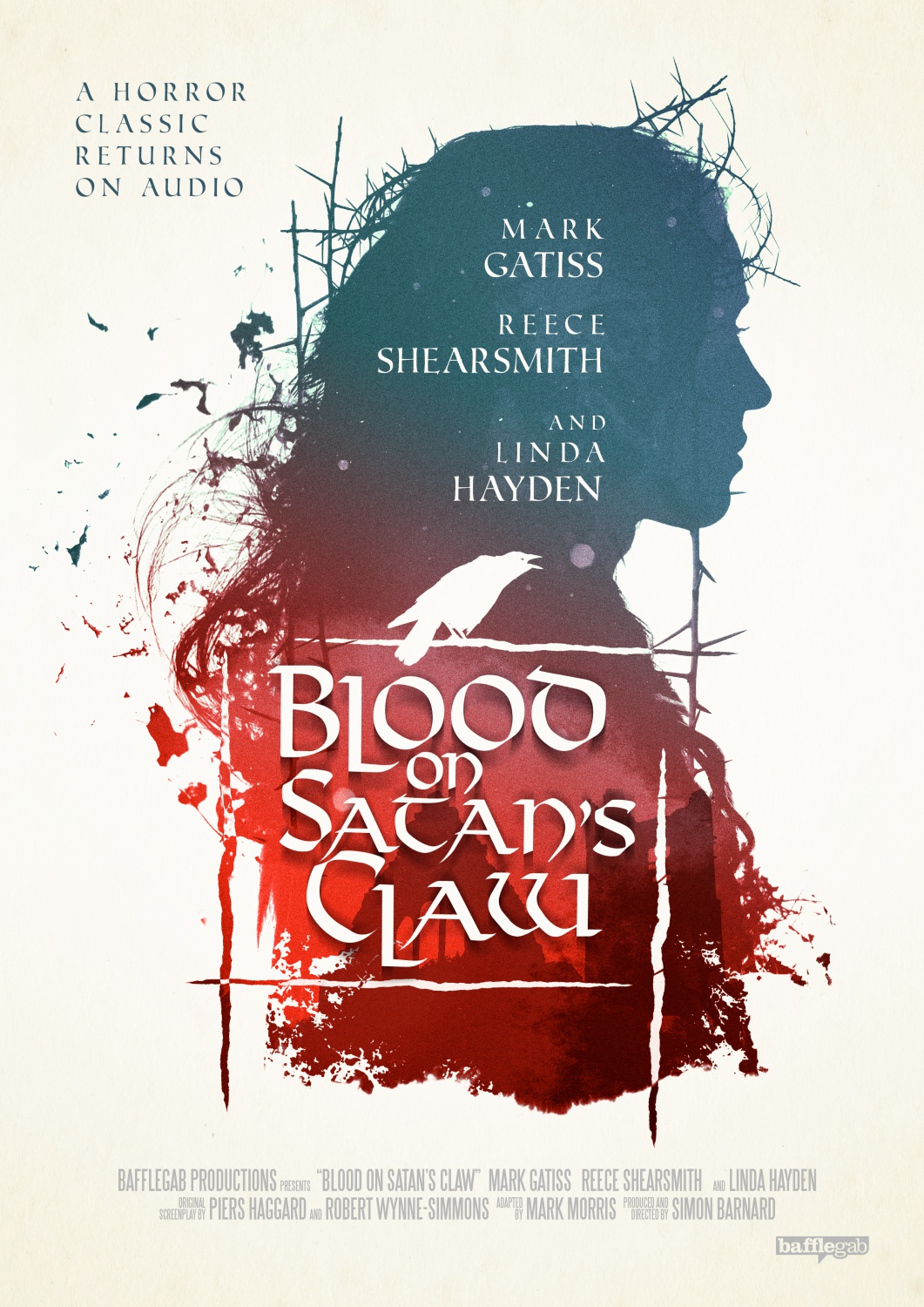
 Horror writer Mark Morris has recently novelised a number of movies in addition to his original work, and was approached by Bafflegab’s Simon Barnard to pen an audio adaptation of the 1971 Tigon movie The Blood on Satan’s Claw. The play, retitled Blood on Satan’s Claw, was released by Audible earlier this month – with a CD box-set including interviews with the cast to follow from Bafflegab in June – and Paul Simpson caught up with Morris to discuss the challenges of the production…
 How well did you know the original film, The Blood on Satan’s Claw, before you got involved?
I knew it incredibly well. The reason Simon got in touch with me to do it, from what he tells me, is he was looking for a writer and he wanted a horror writer who had some synergy with it. He looked on the Facebook page for the film to see if there were any writers who liked it or had it on their list and I was one of them. I’d worked with Simon before on the Hammer Chillers box set; he got in touch with me and asked if I’d be interested, and of course I was.
At that point I’d probably seen it myself half a dozen times; I had it on DVD. I’d certainly watched it within the last three to five years, and I was very familiar with it.
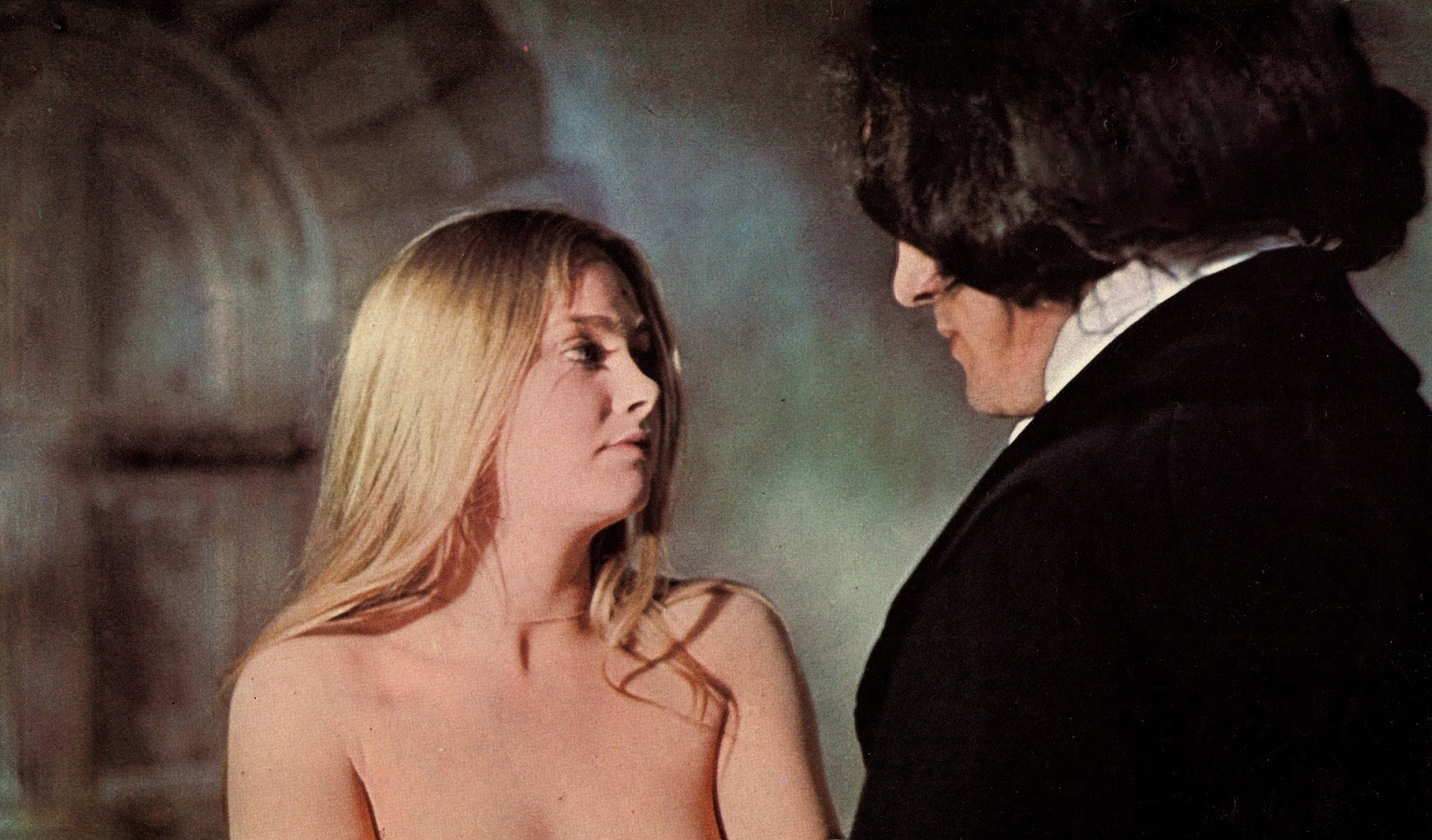 I still have very vivid memories of watching it when I was aged about12 or 13 for the first time on Appointment with Fear on ITV, back in the Seventies on Friday nights. Like most of my school chums at the time we used to look forward to it so much but we also used to dread it because you didn’t know what you were going to be faced with – it might be something that could utterly traumatise you at that age. It was that kind of era when horror films were a bit of an unknown quantity, which I kind of miss a little bit really. You stepped into them as if you were stepping into the unknown.
I think it was the first time I ever saw full frontal nudity on screen. I remember being incredibly embarrassed watching it with my mum, and both of us fixedly looking at the screen and not saying anything, me thinking “Oh my god there’s a naked girl here.” There are about three lines from the original film that I kept in the script, and one of them is Angel’s line, “Do you like what you see?” because that was vividly seared into my mind from watching it with my mum and being incredibly embarrassed.
It’s a 91 minute film and a 146 minute audio. Did you work from the script and adapt out, or work from the story and build from there – what was the process?
 It was a combination of things. If you read the script, it’s quite sketchy.
It was quite a hard thing to adapt in that a lot of the stuff that happens in the film is without dialogue – the scene in the attic, the scene in the field at the beginning when Ralph is actually on his own. There are lots of scenes in the film where things happen to people when they’re on their own, so obviously I had to have conversations in those scenes, and I had to have people interacting to get it across on audio.
I referenced the film a lot. The first thing I did was I put my DVD of the film on and literally stopped it every 30 seconds or so to made notes. I wanted to get the structure of the story itself so I literally did a sketchy structure of how the story worked.
I went through it like that in a very methodical analytical way, and made little notes that this happened here but I was going to have to have two people in a scene; working out which characters I could lose; which characters I could maybe amalgamate – like the Squire and the Judge, who is now one person. The Patrick Wymark character in the original film [the Judge] is there in the beginning, then disappears for a massive portion of the middle and turns up at the end with a magic sword. I had him running all the way through, amalgamating those two characters so he’s there for the action and knows what’s going on.
The original film was supposed to be a portmanteau movie…
 Did you ever see the portmanteau script version?
No, I only have the movie script and it was kind of annotated from the movie – I don’t think it was the original script. [Producer and co-writer] Piers Haggard decided quite late on I understand that he didn’t think it would work as a portmanteau and he wanted it to be a single film. But when you break the story down, so much of it doesn’t make sense.
There was so much where I was having to think, why did this happen here? The whole story in the attic was supposed to be a different story. I had to add lots of cement to fill in the gaps, change things around, swap stuff about, change characters around.
 You’ve got to have through lines for characters as well: in the original film you have characters that are there at the beginning, missing in the middle and there at the end; Michelle Dotrice’s character turns up two thirds of the way through the film and is there for pretty much the rest of the film. What I tried to do with a lot of these characters who pop in and out was make them one single character who had a proper through story, adding characters, beefing up a lot of the background material. I got rid of the doctor and had the local vicar doing a lot of his stuff – cutting off the Devil’s skin was originally the doctor and it’s now the vicar who performs an exorcism at the same time. I was trying to make the story more logical and more coherent.
The original film was supposed to be Victorian and was then pushed back a century, which makes me suspect the amount of research done into the period was somewhere between zero and none. How much did you go back into contemporary sources for the way a community was in those days, or did you build from what was there originally?
 I did a little bit but not a lot. I didn’t want to get bogged down in the research – and I didn’t have time to do tons of research. I did little bits and pieces – the basic structure of society and how things would work at that time, the village system, transport between villages. Lots of practicalities and basic things.
What jumped out the most was how insular people were and how much they stayed within their own particular environs – so when you have the children going off into the woods and doing all their nasty stuff in the ruins of the old church, just the idea that the village people wouldn’t know about those ruins is absolutely accurate. Most of them probably wouldn’t venture out that far and see them.
When I heard the line about that, I wondered if it was you repairing a plothole in the original…
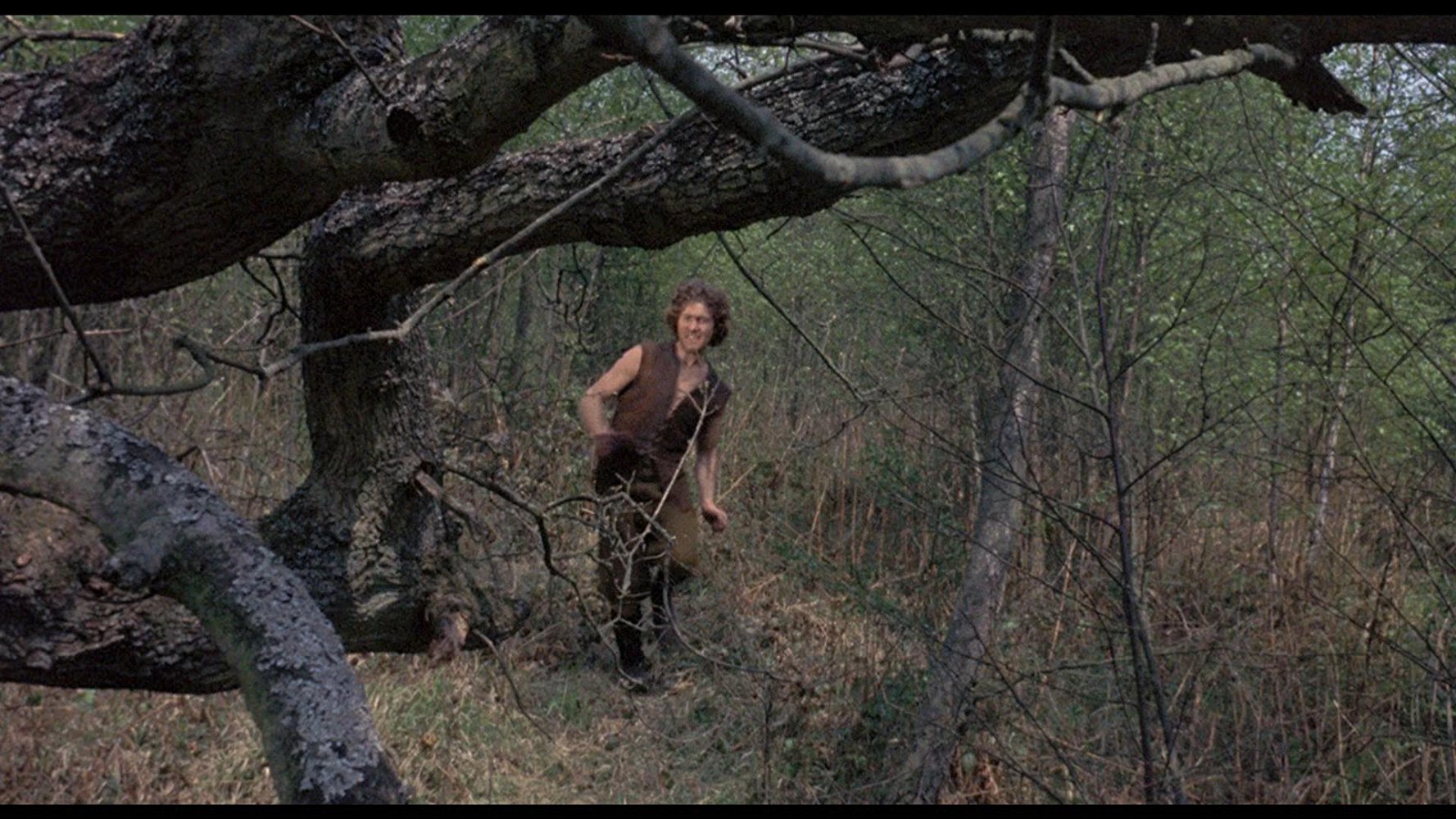 No, it’s not really. It’s just interesting how little they knew of their neighbours in some ways. If there was a market in the nearby town they would probably go to that market and meet people from other communities on market day but aside from that, they didn’t go off visiting one another and travelling around. For a start it was quite dangerous to do that and secondly the roads weren’t very good and there were transport problems. They had no need to do it – they were just very self-contained communities.
That was quite interesting. Trying to get that across is quite difficult because it’s so alien to the way we think now – you don’t imagine that you live in a small community and don’t know anything of what’s happening five or ten miles away but that’s how people lived in that time. It’s how tales of superstitions would grow up and people were very wary of strangers.
I suppose there is a small element of that even today: I live in Tadcaster, which is a small town ten miles outside York, and up to a few years ago, we had a cleaner who used to come in for four hours on a Monday. If you go the opposite way from York to us, there’s a little village called Boston Spa about three miles further down, and three miles further down there’s the small town of Wetherby. Our cleaner had never been to Wetherby. We were astonished – she said she’d never been to Boston Spa, she always went towards York and never went in the other direction… and she’s lived here all her life.
One of the themes of the film that felt stronger in this adaptation was good vs. evil and there’s the scene where the Squire is trying to be rational about everything that’s happened. Was that something you brought more to it?
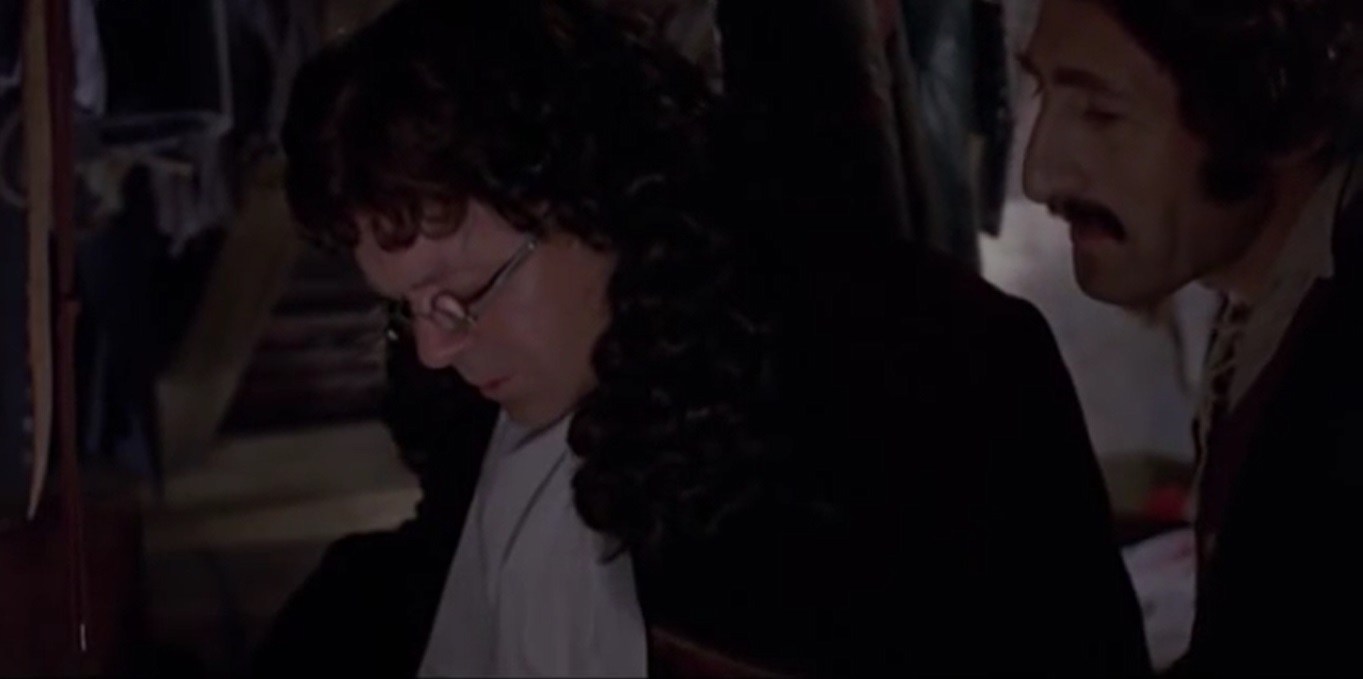 I think that was probably me. I think the Squire doesn’t initially believe and I made him far more rational, and that was one of the things I wanted to explore – superstition vs. the rational mind and how the church crosses between the two. The vicar character is the filling in the sandwich in a way. I think I did make the Squire a lot more rational and disbelieving than he is in the film: I think he goes with Ralph to see the fiend in the field and it’s gone and he dismisses it as local superstitions. But he’s quickly turned around when he gets the book with all the stories of the Devil in, so he gets this big magic sword and uses it. It’s a bit of a deus ex machina ending, which we tried to avoid.
 I liked the idea of the cross from the church…
Using the metal from it.
Iron against the devil – a quick Quatermass bit in there!
And we had the double whammy of the ending [which we won’t spoil here].
When Simon brought you on board, did he have particular ideas as to what he wanted to do with the story? Or was it left to you?
 He sent me a bunch of notes. The things I remember most was that we wanted to get away from the Mummerset accent-type characters because the original film is set down Dorset/Somerset area so you’ve got the “oo-ar” locals which now comes across as slightly comedic. We wanted to make it northern and gritty, and set it in the north. Originally we were going to set it in the north-east and try to employ actors who were Geordie actors but we realised how limited that was so it became a generic northern feel.
Another thing we wanted to get over was the fear that the old have of the young, this sense that the young are unruly and violent and unpredictable.
 Were you aware that Mark Gatiss and Reece Shearsmith were going to be involved?
Mark’s a friend of mine anyway of quite long standing and I mentioned to him that I was doing it. He was fairly keen and upfront about wanting to play the Squire. He’s a massive fan of the film and he would often quote that line where he salutes the king and throws his glass into the fire, so that was one line I deliberately kept in for him because I knew he would relish it.
Mark was on board pretty early on, and when I spoke to Simon I said I was pretty sure I could get him involved and then through Mark we got Reece. I’d met Reece a few times so half-knew him but I thought he would be really keen. The rest were up to Simon – once we got Mark involved, lots of people jumped on board and were really keen to do it, because he gave it a certain amount of gravitas.
Presumably since it was originally intended as a double CD, you were restricted as to length?
Simon said, “Just develop it as much as you want and don’t worry about the length of it.” We did get slightly crossed wires, because when I first sent my script in he said it was great but far too long – it was a good forty-five minutes longer than it actually came out. He said we could do two CDs, so I did cut it down. I probably cut out two or three scenes and the rest was trimming, making it leaner, which made it better in the end anyway. Make it move along when it needs to move along, and when it’s atmospheric and creepy, you can take your time with those scenes.
 What overall was the biggest challenge for you?
The biggest challenge was that so much of the film is without dialogue. There are a lot of physical scenes that I didn’t want to lose but I had to try to think of some way of doing them. Which is why you’ve got some of the dream sequences – we wanted to make it more ethereal – and that was a big advantage to me because I could explain things more by using things like that. The physical thing is probably the hardest in any audio adaptation; when you’re writing your own thing you can get round that by reducing those scenes as much as possible.
For instance, where the Reverend is on his own in the church at night, and Angel Blake comes in: how do you get across the opening of that scene? You have to make it quite atmospheric, you can’t just have her knocking on the door. You have to have him working away in the vestry, he hears something… just getting that across, little moments like that are quite tricky.
 And if you had to pick one moment as the one you’re most pleased that works?
That’s a good question… I do like the very end scene with the Squire and Angel in the cell where you get the little twist.
A lot of it came out of the performance on the day. There are things that you write that you think are fairly inconsequential at the time or are just moving the story along but they played so well that you think, “That really works, they got the beats right.” So much is in the performance of the actors.
Has it whetted your appetite to do another such adaptation ?
Oh absolutely, I’d love to. We’ve talked about things but the trick is getting the rights to things that are worth doing.
Blood on Satan’s Claw can be downloaded now from Audible, and will be available in a deluxe CD box set from June from Bafflegab.
 Doctor Who News Star Trek News
 Sci-Fi Bulletin: Exploring the Universes of SF, Fantasy, Horror and Spy-fi!