ATA Girl: Interview: Louise Jameson
To mark International Women’s Day in 2020, Big Finish are releasing a second set of the Big Finish Originals featuring the ATA Girls – a fictionalised retelling of the work […]



To mark International Women’s Day in 2020, Big Finish are releasing a second set of the Big Finish Originals featuring the ATA Girls – a fictionalised retelling of the work […]
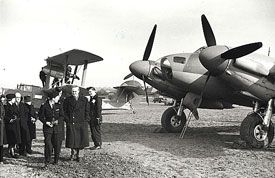
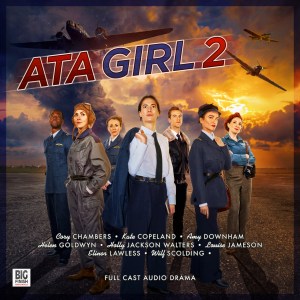 To mark International Women’s Day in 2020, Big Finish are releasing a second set of the Big Finish Originals featuring the ATA Girls – a fictionalised retelling of the work of the women who flew for Air Transport Auxiliary during the Second World War, founded by Pauline Gower and based out of White Waltham. The stories are by producers Louise Jameson and Helen Goldwyn – familiar names to Big Finish listeners. Louise – still best known for her role as Leela on Doctor Who – chatted with Paul Simpson about the show (as well as how to train dogs to wear coats!)…
We have new tales of the ATA Girls coming this weekend – I won’t call them ‘adventures’ because it’s not really that sort of drama, is it?
No, in a way it’s on the lines of Tenko. We’ve taken a lot of true stories and then woven them into a fiction.
Going back a few years, what was the genesis of the project?
It was a chat almost two decades ago with a friend and we said, “Wouldn’t it make a good series?” I did tout it around a bit to a few film companies very early on, before CGI had taken off the way it was, and everyone went, “wonderful idea, too expensive”. Then I chatted it through with [Big Finish producer] David Richardson who said, “Why don’t you just pitch it? We’re accepting pitches tomorrow.” So I pitched it as an audio – which you can take anywhere, you don’t have to worry about the budget in the same way – and within 24 hours they got back to me and said yes please.
What were your parameters for that first series?
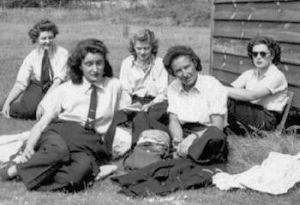
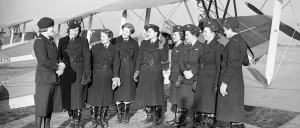 We very much wanted all female writers; we had an overall idea of what we wanted but we also wanted other creatives to put their input in as well, so in a way it was a very collective effort. We started with the heroine of the piece for me, which is Pauline Gower, who initiated the first eight women, saying women could do the same job as men. She got equal pay for them in 1942 – we’re still fighting that battle. She was only 29 when the war started – but they were all incredibly young. We even discovered somebody who was 17 delivering aircraft.
We did a lot of research about those eight women and fed that out to our own writers, who also did their own research. [ATA Girl 1 writer] Victoria Saxton even took herself on a flying lesson to get the feel of what it would be like in the cockpit and I believe ended up taking up flying since.
 A legitimate expense as a writer!
It is, isn’t it! A collective effort but we gave the guiding thought.
ATA Girl 1 got good critical response…
…and won a little thing from the BBC!
…and did well enough for it to return. How far in advance did you know it was going to return for this Women’s Day, 8 March 2020?
This was a really quick turnaround and also was just two episodes so Helen [Goldwyn] and I decided because it was such a quick turnaround that she and I should also write it. I think I’m right in saying the first draft had to be in by October, and then the sound people worked incredibly hard. Both of them – [sound designer] Iain [Meadows] and Helen [as director] – worked their magic; it just wouldn’t work without them.
 How did it work in terms of the scripting – were you effectively co-writing or were you doing your own script and then the other came in and made comments?
Helen and I bashed out a story arc for two episodes and then luckily she preferred one story arc to the other, and so did I, and it wasn’t the same one! (laughs) So we took an episode each and did the first draft, then sent it backwards and forwards with various notes. Basically it was an episode each, but it was very collaborative.
And John Dorney was script editing again?
Yes – we did think we ought to have one man’s voice in there somewhere, keeping us under control. (laughs)
 What was the biggest challenge in terms of writing for this one rather than the first series?
We finish a story that started in the first episode way back so I’m slightly relying on having a loyal base who will know where they’re coming from but it was also our premise to make it a standalone story. Being able to tie it up with episode 1 and not reiterate too much, keeping the forward thrust of the story going without having to reiterate, was the hardest challenge.
We met at the studio when your first script for Tom Baker was being recorded, and you were understandably a bit nervous about how it would be received. Since then you’ve written a lot more – has it become easier?
I wouldn’t say easier; I would say it’s become more confident. I’m not frightened of pressing SEND on that first draft any more. And because Helen and I do work collaboratively, we are a witness to each other’s journey. She’s incredibly good at dotting the i’s and crossing the t’s, getting the timeline right and that area, and I think my forte is pushing the emotion as far as it can go, let it get messy – let it get really dark, really funny. I think we complement each other really well.
 With audio you always have that element where you need to dial it up slightly because you haven’t got the visual.
That’s a very good way of putting it and that’s where all the music and sound effects help too. But you’re right, it is like doing Shakespeare, or pantomime, which really requires very similar skills – just that little bit more than you might give if it was a close up on camera.
I’ve always thought that although it sounds counterintuitive, there’s a degree of mask acting as well – the mask is the headphones…
That’s absolutely right, and it also has to be that clean. If you’re wearing a mask and you muddy something you lose your audience and you also remind them that you’re wearing a mask. You have to be very clear in your head exactly what effect you’re trying to have on who with what line.
Do you find directing from your own material easier than working from someone else’s script? Or do you have to put a second head on, so to speak, and look at it as somebody else’s?
I have to remind myself to step back, to step back and allow someone else’s layer. I think sometimes when actors direct, they know exactly how they want it, and I think you negate whoever you have employed if you do that. I have to wait and see what they bring.
But that’s almost a general directing thing, isn’t it? As one of your Big Finish colleagues said to me, you never tell the actor how to say the line, but give the mood or the feel…
Exactly that. Never the how, always the why.
Even with children, if they know why, you get a better performance.
Especially if they have to repeat it. You can get them up to scratch in rehearsal, but if you’ve done that by demonstrating then come next week they won’t remember it because it won’t be in their DNA with their thought process.
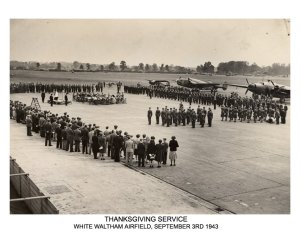 These two new stories come either end of the war; The Hardest Day is based on a true incident – does that make it harder when you know you’re dealing with real lives?
I think because Helen liked that one and chose that one to write, she was very scrupulous about the timeline of it. Sometimes when you give very strict rules to yourself, it really does free you up. It’s like mask work again. It has to start on this day, it has to finish on this day, bombs only drop here, here and here – because she didn’t want anyone writing in and saying “you couldn’t have had a bomb drop there”. It’s so well documented, but you’re free to let your characters go anywhere within that framework.
And weird coincidences and happenstances happen in real life.
There’s one scene where a young lad dies – he’s a very minor character in the piece – and she had researched a young lad that died. It wasn’t till we recorded the scene that she said into the cans that that was a genuine lad. She called him by the same name. Everybody just had a moment.
It reminded me why we are doing this series: these women were so brave and so fearless and courageous – and they didn’t think they were. They were ordinary women doing extraordinary things.
I think that element in people is still there, despite what we might fear.
Yes, how people are in a crisis is amazing. My mother used to talk about the war like it was the best time of her life.
She was very beautiful, she was surrounded by all th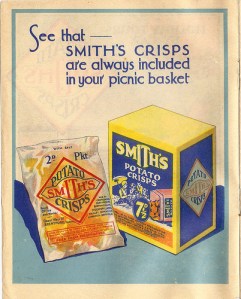 ese men who adored her. She was feeding 600 servicemen, and some of her stories I’ve tried to filter through because it was absolutely first-hand information she was giving me.
I haven’t been able to get this in yet but she said, one day a bomb dropped when she was coming home from school and she was flung against a tree, whisked up into the air and all she can remember is it was raining Smiths crisps packets because the bomb had fallen on the factory. These crisps were everywhere – an extraordinary image.
She also said she was machinegunned – I used this image in mine and changed it slightly. They were tobogganing one day and [the Germans] machine gunned the kids while they were playing. Nobody got killed – but of course in my story someone does. They all shot off into the woods.
Some of the women involved probably didn’t talk about what they did after the war – but is there a lot of material out there to draw on?
There’s quite a lot about the ATA in general and at the museum, there’s a room devoted solely to the women. We have had some very good sources to work from, and the day before we started to record the first series, the last ATA woman died. She was 94.
This is something maybe for the future but I know that Pauline Gower had twins, and we can’t quite uncover what happened; she didn’t die at the birth but she died a few years later. I would love to track down the twins if I could and see what the story was, just to do something on her specifically from beginning to end. She was extraordinary, such a short life and achieved so much.
What else are you up to?
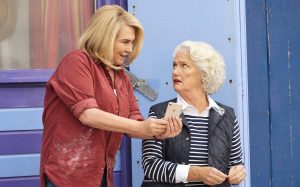 I’ve just completed a sitcom with Amanda Redman – it’s called Bumps about a 60 year old woman getting pregnant (which is her), going off to Amsterdam and the turkey baster and whatever. I’m the very disapproving older sister, a mini Margaret Thatcher. A very funny script and we’ve had terrific feedback – it went out in February and we got nearly 2 million, which was good particularly as it was out opposite Gogglebox. Hopefully that’ll go to commission. There’s nothing else quite like it.
I’ve just directed a play called Revenge, a commercial play which is out on tour : it’s a two-hander with Nigel Fairs and Kate Ashmead. I’m in a series called Secret Life of Boys for CBBC which is going ahead next summer, and I’m doing so much for Big Finish. Tomorrow I’m directing [redacted] and I’ve got a couple of 4th Doctor stories coming up.
 For people who’ve not encountered ATA Girl, what are they going to experience that sets it apart from an “ordinary” Big Finish production?
Anyone who’s remotely interested in World War 2, it uncovers stories of these eight women. It’s a very female based project, with John Dorney as the courtesy distaff on board.
What you’ve got is how women cope in adversity, rather than the ‘I’m going to kill you / No you’re not’ aspect of war. I think that’s what interesting. There’s a lot of time sitting around in the mess, talks of pregnancies and boyfriends, and also these women doing a man’s job, so you see the adrenalin-fuelled side of them which often, up until the war, hadn’t been allowed to show.
ATA Girl 2 is out now; click here to order from Big Finish
Thanks to Steve Berry for help in arranging this interview.
 Doctor Who News Star Trek News
 Sci-Fi Bulletin: Exploring the Universes of SF, Fantasy, Horror and Spy-fi!