ATA Girl: Interview: Helen Goldwyn
Helen Goldwyn is producer and director of the ATA Girl Big Finish Original series, and with a second set released to mark International Women’s Day 2020, she chatted with Paul […]



Helen Goldwyn is producer and director of the ATA Girl Big Finish Original series, and with a second set released to mark International Women’s Day 2020, she chatted with Paul […]
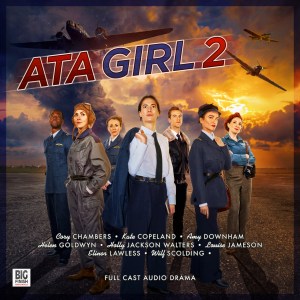
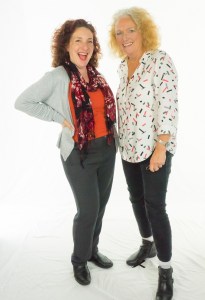 Helen Goldwyn is producer and director of the ATA Girl Big Finish Original series, and with a second set released to mark International Women’s Day 2020, she chatted with Paul Simpson about the responsibilities and challenges of retelling the lives of the women of the Air Transport Auxiliary…
What were the challenges of producing a show that is so heavily based on fact compared with something like, say, Timeslip?
That’s the most challenging part for me partly because I am incredibly pedantic about facts, slightly OCD about accuracy. It’s a real conflict for me that we have to create drama, essentially make stuff up within the context of true events.
I was very adamant that the historical events had to be accurate – so for example in ATA Girl 1, we had an air raid happening in episode 4 and I knew that the date that episode was set, there would not have been an air raid in that area at that time. I couldn’t get my head around that at the time, so I had to push the air raid a bit further away because it couldn’t be over White Waltham because that wasn’t historically accurate.
I feel a great responsibility to people who are fans of that era. Lots of people are very devoted to the history of the 1940s and I wouldn’t want anyone to think “That didn’t happen. We didn’t have an air raid then at that point in history.” So it’s been quite a headache for me to get that right.
 And yet there are many successful dramas such as Secret Army and Tenko that used the war as signposts almost. If you’ve needed to be that accurate – the Germans dropped 17 bombs or whatever on that day – has that been constricting to you in terms of being a writer?
For me, [writing my episode] The Hardest Day, it was actually quite liberating because I had the signposts throughout the day. I had lots of information about what happened when so it was fitting the drama around those events. That worked really well as a skeleton for creating the drama.
It gave me a framework and I love to have a good foundation for where to build the drama from. It helped to know that can’t happen because we’ve got this historic event that happens at this point. It helps to shape the drama, and takes some of the decision making process out of your hands, and I quite like that.
What about the geography? Presumably that’s well documented.
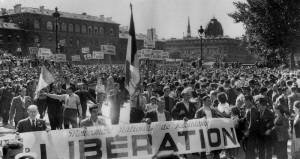 Absolutely. We had to do a load of research – for Lou’s episode [Au Revoir], it’s after the liberation of Paris, so we had to understand where the Americans were, where the British people were, who had arrived in which area at what time, and what was happening to the stranded people. We’ve got this storyline of our missing pilot who has to find her way back to London ultimately and gets taken to Paris. We had to have the correct process for that; we couldn’t just make it up. It had to be what genuinely happened at that time after Liberation.
So you’re amalgamating various different people’s experiences into a fictional character?
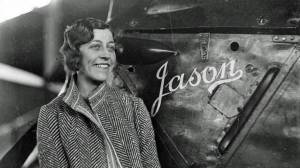 Yes, and as I’ve said before, all of these characters are an amalgamation and are inspired by the real women. Although we have made up most of these characters they are all inspired by people we have read about and researched. They’ve got a mixture of elements but we’ve tried to keep the spirit of the women in these fictionalised characters.
For example my character, Daphne, in ATA Girl 1, her story was influenced by Amy Johnson. Even though she wasn’t an Amy Johnson character, it was just about the trajectory of Amy Johnson’s career, that she achieved all these things and was very much respected and then she died anyway. She survived all the perilous flying but died in this very peculiar mysterious way. That inspired the storyline for me.
Has there been a line you’ve felt that shouldn’t be crossed?
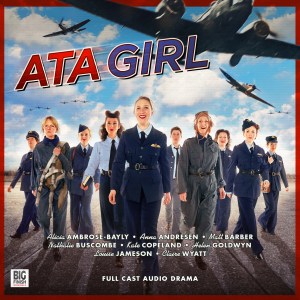 Certainly we were very certain about what we were doing with Pauline Gower [the founder of the ATA Girls]. Louise and I talked a lot about making Pauline the focus of ATA Girl 2 and we wanted [to feature] her real life story. We wanted people to know she died in childbirth at the age of 36, which was absolutely tragic, but I feel such a responsibility to her descendants and her story that we don’t make stuff up about Pauline.
Yes, she’s involved in this fictional drama, but only in a capacity where she would only behave in that way. So for example we considered a storyline where she maybe had a miscarriage in one of our episodes in series 2, but I said to Louise I was just so uncomfortable writing it, I don’t want to make stuff up that didn’t happen to Pauline Gower. Big stuff like that feels really disrespectful. We changed that storyline and that felt appropriate.
When you’re working with real events, have you found there are things you discovered in the research that you wouldn’t believe as fiction…
(laughs) We haven’t come across coincidences as such but certainly nearly all of the women’s stories – their lives, their journeys – have been extraordinary on the way to becoming part of the ATA. They came from mostly moderately wealthy backgrounds, but they were the free spirits. They were the women who wanted to learn to fly – that was almost unheard of.
Many of them had learned to fly before the war, which was highly unusual in itself and you could only do that if you had the means to do it. Some of them were stunt pilots, some of them worked in the air circuses and were doing tricks at the air shows. They were unusual personalities which made it so exciting; they weren’t your common or garden women.
 This is a bunch of extraordinary people who were extraordinary before they worked for the ATA. That makes for all sorts of possibilities.
ATA Girl 2 is out now; click here to order from Big Finish
Thanks to Steve Berry for help in arranging this interview.
 Doctor Who News Star Trek News
 Sci-Fi Bulletin: Exploring the Universes of SF, Fantasy, Horror and Spy-fi!